
Sold Out at $1,900, Slashed at the Mid-Tier: The Consumer Device Market's Great Bifurcation

When U.S. airlines retired the $99 round-trip fare, they discovered a counterintuitive truth: they could earn more by flying fewer, fuller, higher-fare cabins. The consumer device industry reached the same conclusion this week.
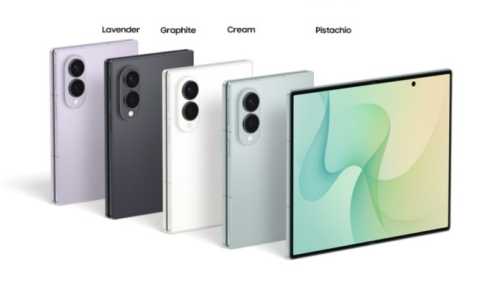
At its Made by Google event in New York on August 12, Google launched the Pixel 11 family — Tensor G6 silicon, Gemini-first software, a Pro Fold flagship and a Pixel Watch 5 — on the same morning Samsung confirmed it will build one million additional Galaxy Z Fold 8 units after the $1,899 foldable sold out, and reports surfaced that Apple is preparing a 15–30% production cut for the iPhone 17 line alongside fresh price increases [[4]][[16]][[12]]. Five data points, one direction of travel: the device market is deliberately shrinking its unit base to harvest margin per unit.
Inflation by Bill of Materials
Mainstream coverage frames this week's price signals as vendor greed. The deeper driver is the bill of materials.
“Soaring memory costs are projected to drive worldwide PC shipments to decline 10.4% and smartphone shipments to drop by 8.4% in 2026.” — Gartner, February 2026
With Counterpoint Research putting the resulting smartphone average-selling-price increase at 6.9%, the sub-$300 tier — the industry's on-ramp and its emerging-market volume engine — becomes mathematically unviable for Western brands [[63]]. The unseen implication for the consumer device ecosystem is a structural contraction of the addressable unit base: smartphones shift from a growth category to a replacement-only category, longer device lifecycles weaken the accessory, app and carrier-upgrade economy, and the $500–800 mid-tier is quietly repositioned as refurbished territory rather than new inventory.
“Sold Out” Is a Supply Statement, Not a Demand Verdict
The bullish reading of this week needs a counterweight. Samsung's record pre-orders — approximately 271,000 units of Z Fold 8 and Z Flip 8 in the first 72 hours — are impressive for a foldable but a rounding error against the company's quarter-billion-plus annual handset run rate [[21]]. A sellout at constrained allocation proves pricing power over a niche, not mass-market pull. And Apple's reported 15–30% iPhone 17 cut is the clearest evidence yet that the premium tier has a ceiling: even the industry's strongest brand cannot raise prices indefinitely inside a shrinking unit market [[12]]. Premiumization is therefore best understood as margin harvesting from a shrinking base — rational per vendor, but not proof that consumers have accepted $1,900 as the new normal.
Gemini as the New Walled Garden
The second overlooked implication sits in Google's launch strategy. Tensor G6 with Gemini-first, on-device AI is not a feature list; it is a segmentation tool. By gating the most visible AI functions to new silicon, Google can render a two-year-old flagship functionally second-tier without touching its hardware quality — a software-defined obsolescence cycle that accelerates premium-tier replacement while making the mid-tier feel stale. For the ecosystem, this shifts monetization from hardware margin toward services, subscriptions and data loops, and raises switching costs at precisely the moment competitors deploy their own assistants. The risk is a market in which the upgrade decision is made by the assistant you are locked into, not the phone you want.
Detroit Already Ran This Playbook
The closest historical parallel is not in tech at all. Between 2018 and 2023, Detroit retired the sedan — the Chevrolet Cruze, the Ford Fusion — and bet the balance sheet on trucks and SUVs, pushing average transaction prices from the mid-$30,000s toward $48,000. Per-unit profits hit records, exactly as they now do at handset vendors. The lesson arrived when rates rose: with no affordable inventory, the volume tier was ceded to imports and, eventually, to Chinese EV makers with entirely different cost structures. Premiumization is rational per vendor but collectively self-defeating at the entry tier; the margin harvest works until the macro turns, and then the missing volume tier becomes an existential gap. Handset vendors repeating Detroit's playbook should note who inherited Detroit's customers.
The Wearable Correction Is a Recalibration, Not a Funeral
CCS Insight forecasts global smartwatch shipments will fall 4% in 2026 while average prices rise 12%, citing “replacement fatigue” [[29]][[42]]. The headline reads as decline; the subtext is vendor-friendly consolidation. Fewer units at higher ASPs means the market is shedding casual buyers and retaining committed, health-motivated users — precisely the cohort insurers, clinical programs and subscription health services monetize. The specialization visible at CES 2026 — smart rings, screenless bands, single-purpose trackers — is segmentation, not decay [[36]]. The unseen risk is upstream: if wearables become a premium health niche, the mass-market habit pipeline that fed the category for a decade stops filling, and the next billion health-data users will be onboarded by whoever prices for them.
The Volume Vacuum Has a New Landlord
The counter-argument to the hollowing-out thesis is visible in the value tier, where innovation is currently fastest. Xiaomi's Redmi Note 17 5G, launched August 6, ships an 8,000mAh battery at roughly ₹25,000–31,000 — hardware specifications Western flagships barely match at five times the price [[55]][[59]]. Chinese OEMs are absorbing the units Western vendors are abandoning, compounding installed-base advantage across India, Southeast Asia and Africa. The ecosystem is not shrinking uniformly; it is migrating — geographically toward emerging markets, and by price tier toward Chinese cost structures. A Western vendor that ends this cycle as a luxury niche player will have ceded the data, services and platform leverage that only volume provides.
The Buyer's and Retailer's Playbook for H2 2026
For consumers: if your phone is two to three years old and functional, hold. If a purchase is unavoidable, buy before memory-driven price increases land across the channel in Q4; previous-generation flagships and certified refurbished units are the best value on the shelf, and trade-in subsidies remain generous precisely because vendors need to prop up premium mix. Prioritize battery capacity and repairability over AI features you cannot test in-store. For independent retailers and small businesses:
- Shift floor space toward refurbished inventory and trade-in processing; the margin is migrating from new-unit commission to circulation fees.
- Build service revenue lines — data migration, battery replacement, health-device onboarding — for devices held longer.
- Extend enterprise fleet refresh cycles from 24 to 36 months and renegotiate device-as-a-service contracts before ASP increases are baked in.
February 2027: The Bifurcated Shelf
Six months out, expect the shelf to bifurcate cleanly. Global smartphone units will be down mid-single digits with ASPs up roughly 7%; foldables will cross 3% of shipments, with Apple's first foldable capturing about a quarter of foldable panel demand inside Counterpoint's forecast of 21% segment growth [[47]][[51]]. The Western mid-tier becomes largely refurbished territory; wearables stabilize at lower unit volume and higher revenue per user, with smart rings normalized as a second device. Regulatory noise around device affordability and repairability will grow as the entry tier empties. The consumer device market of February 2027 will look less like consumer electronics and more like the airline industry that inspired this week's strategy: fewer seats, higher fares, and a loyalty program doing the heavy lifting.
Related Articles
The Hardware Inflection Point: Navigating Supply Chain Fragility and Regulatory Shifts in Consumer Electronics
Aug 22, 2026
The Structural Recalibration of Consumer Electronics: Navigating Supply, Regulation, and Adoption Faultlines
Aug 22, 2026
Comments (0)
No comments yet. Be the first to share your thoughts!
Want to join the discussion?
Please log in to post a comment.
Login NoworCreate an Account