
SpaceX Starship Completes First Fully Autonomous Orbital Refueling, Clearing Path for Lunar and Mars Missions

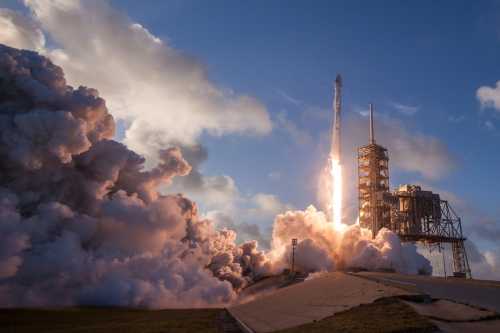
The Final Puzzle Piece for Deep Space Exploration
SpaceX has successfully executed the first fully autonomous orbital propellant transfer between two Starship vehicles, a critical milestone that removes the final major technological barrier to the company's lunar landing architecture and eventual crewed missions to Mars . The operation, conducted in low Earth orbit (LEO) at an altitude of 250 kilometers, involved a "depot" Starship and a "client" Starship performing a complex, AI-guided rendezvous, docking, and the transfer of 150 metric tons of cryogenic liquid methane and liquid oxygen . This achievement validates the "fill-in-orbit" strategy that is central to Elon Musk's vision of making humanity multi-planetary, proving that massive spacecraft can be refueled in the microgravity environment without human intervention, thereby maximizing payload capacity for deep-space trajectories.
The technical challenges of orbital refueling are immense, particularly when dealing with cryogenic fluids that are prone to boiling and unpredictable sloshing in zero gravity. To overcome this, SpaceX developed a proprietary "Autonomous Fluid Management System" that utilizes advanced machine learning algorithms to control the ullage pressure and manage the two-phase flow of the propellants during transfer . The AI system continuously monitors thousands of sensor inputs, adjusting valve positions and pump speeds in real-time to ensure a stable, bubble-free flow of liquid oxygen, which is critical to prevent engine cavitation upon the client vehicle's subsequent ignition. The entire docking and transfer sequence was managed by the Starship's onboard flight computers, communicating via a localized laser-link network to ensure sub-millisecond latency and absolute precision.
Artemis Integration and the Mars Architecture
This success is a massive relief for NASA's Artemis program, which relies entirely on SpaceX's Starship HLS (Human Landing System) to return humans to the lunar surface. Under the mission profile, a dedicated Starship must be refueled in orbit multiple times before it can depart for the Moon, ensuring it has sufficient propellant to decelerate and land softly on the lunar regolith . With the refueling technology now proven, NASA and SpaceX can proceed with confidence toward the Artemis III crewed landing, scheduled for late 2027. The ability to refuel in orbit also opens the door to the deployment of massive space stations, orbital manufacturing facilities, and deep-space telescopes that would otherwise be impossible to launch in a single payload.
Looking further ahead, the implications for the Mars architecture are transformative. A crewed Mars mission requires thousands of tons of propellant in Earth orbit. SpaceX plans to establish an autonomous "propellant depot" in LEO, serviced by a fleet of uncrewed tanker Starships launched on a rapid cadence . Once the Mars-bound vehicle is fully fueled, it can execute a high-energy transfer window injection, significantly reducing the transit time to the Red Planet. The successful demonstration of autonomous orbital refueling not only cements SpaceX's dominance in the commercial space sector but also accelerates the timeline for humanity's expansion into the solar system, turning the once-distant dream of interplanetary travel into an imminent engineering reality.
Related Articles

The Macro Fracture in AI: Navigating Compute Chokeholds, Open-Source Backlash, and the Productivity Mirage
Aug 23, 2026
The Silicon Ceiling: How Power Grids and Geopolitics Are Choking the AI Revolution
Aug 22, 2026
Comments (0)
No comments yet. Be the first to share your thoughts!
Want to join the discussion?
Please log in to post a comment.
Login NoworCreate an Account