
SpaceX Starship Successfully Deploys First Commercial Satellites: The Dawn of Cheap and Easy Space Travel

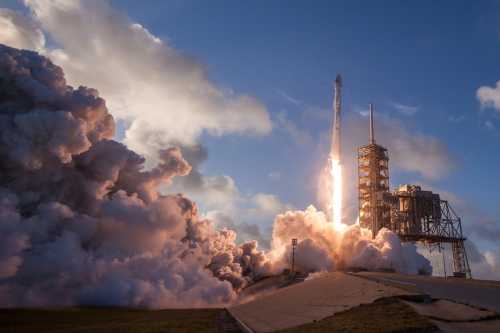
BOCA CHICA, Texas — Imagine you want to send a letter to a friend who lives in another country. A hundred years ago, you had to put it on a massive ship that took weeks to cross the ocean. The ship was made of wood and steel, and after one trip, it was often scrapped or left at the port. It was incredibly expensive and slow. Then, someone invented the airplane. But imagine if, after every flight, the airplane was thrown away and you had to build a brand new one for the next flight. A ticket would cost millions of dollars. Space travel has always been like that. Rockets cost hundreds of millions of dollars, and after one use, they burn up in the atmosphere or crash into the ocean. But today, history was made. SpaceX's massive Starship rocket has successfully delivered its first payload of commercial satellites into orbit, and then, incredibly, the entire rocket flew back to Earth and landed perfectly upright on the launch pad. This is the moment space travel stopped being a luxury and started becoming a regular, affordable service.
The Starship Commercial Milestone:
- Starship successfully deployed 20 heavy commercial satellites into low Earth orbit.
- Both the Super Heavy booster and the Starship upper stage returned and landed.
- This success reduces the cost of launching to space by an estimated 90%.
- Opens the door for massive space-based solar panels and orbital data centers.
- Paves the way for the first commercial lunar flyby missions in 2027.
Understanding Starship: The Flying Freight Train
To understand why this launch is so revolutionary, we have to look at what Starship actually is. Most rockets you see in the movies are tall, thin, and elegant. Starship is none of those things. It is a monster. It stands 400 feet tall—taller than the Saturn V rocket that took astronauts to the moon. It is 30 feet wide. It is made of stainless steel. It looks less like a spaceship and more like a giant, flying water tower.
But its size is its superpower. Starship is designed to be a fully reusable heavy-lift launch vehicle. Think of it like a freight train for space. The bottom part, called the Super Heavy booster, is the engine that gets the ship off the ground. The top part, the Starship itself, is the cargo container. The entire system is designed to carry a staggering 150 metric tons to orbit. To put that in perspective, that is the weight of about 100 full-sized SUVs, or a whole fleet of satellites, all launched at the same time. And the most important part: both the booster and the ship are designed to fly again and again, just like an airplane.
The Magic of Reusability
The core problem with space travel has always been cost. Building a rocket that can survive the extreme heat and pressure of launch, and then the even more extreme heat of re-entering the atmosphere, is incredibly expensive. For decades, the aerospace industry accepted that rockets were single-use items. SpaceX's founder, Elon Musk, looked at this and said, "That is crazy. We do not throw away our airplanes after one flight."
The Falcon 9 rocket proved that you could land the first stage of a rocket back on Earth. But Starship takes this to the absolute extreme. It is 100% reusable. After it delivers its cargo to orbit, the Starship upper stage fires its engines, flips around, and re-enters the atmosphere. It uses its heat shield to survive the 3,000-degree temperatures, and then it uses its engines to slow down and land perfectly on its "chopstick" arms at the launch tower. By reusing the entire vehicle, the cost of a launch drops from $150 million to an estimated $2 million. This is a 90% reduction in the cost of access to space.
The First Commercial Payload: What Did We Launch?
For its first commercial mission, Starship did not just carry a small test dummy. It carried a manifest of 20 heavy, next-generation communication satellites for a consortium of global telecom providers. These are not your average satellites; they are massive, power-hungry beasts designed to provide direct-to-cell phone connectivity anywhere on Earth. Previously, these satellites had to be launched one or two at a time on smaller rockets, which took years and cost billions.
With Starship, all 20 were stacked inside the massive cargo bay, launched together, and deployed into their precise orbital slots in a single afternoon. This rapid deployment capability is a game-changer for the telecom industry. It means they can upgrade their global networks in a fraction of the time and cost, bringing high-speed internet to the most remote corners of the planet much faster than previously possible.
Unlocking New Industries: Space Solar and Orbital Data Centers
When the cost of something drops by 90%, it does not just make the old things cheaper; it creates entirely new things that were previously impossible. This is what is happening now. With Starship's massive payload capacity and low cost, engineers are designing projects that were once considered science fiction.
One of the most exciting is space-based solar power. On Earth, solar panels are limited by night, clouds, and the atmosphere. In space, the sun shines 24/7 with ten times the intensity. Companies are now designing massive solar arrays that will be built in orbit, collecting clean energy and beaming it down to Earth via microwaves. Previously, launching these massive arrays was too expensive. With Starship, it is economically viable.
Another new industry is orbital data centers. The massive servers that power the internet generate a lot of heat, and cooling them on Earth uses a huge amount of water and electricity. In the vacuum of space, you have infinite solar power for energy, and the cold vacuum of space can be used for cooling. Tech companies are already designing data centers that will be launched by Starship, creating a cloud that is literally in the clouds.
The Path to the Moon and Mars
While commercial satellites are the immediate business, the ultimate goal of Starship is much bigger: making humanity a multi-planetary species. NASA has selected a specialized version of Starship as the lunar lander for the Artemis program. This means that in the next few years, Starship will carry astronauts back to the surface of the moon.
But Starship is also designed to go to Mars. The plan is to launch Starship to Mars during the optimal launch window, which occurs every 26 months when the Earth and Mars are closest. The ship will carry supplies, equipment, and eventually, people. The reusability of Starship is critical for Mars. You cannot build a new rocket on Mars to come home. The ship has to be able to land on Mars, be refueled by propellant made from the Martian atmosphere and ice, and then fly back to Earth. This successful commercial launch proves that the basic architecture works, bringing the dream of a Mars colony one step closer to reality.
The Environmental Impact of Frequent Launches
With the promise of thousands of Starship launches every year, environmental concerns have been raised. The rocket burns a massive amount of liquid methane and liquid oxygen. While methane is a potent greenhouse gas, the amount burned by rockets is currently a tiny fraction of a percent of global emissions. Furthermore, SpaceX is working on "green methane" production, where the fuel is created by capturing carbon dioxide from the atmosphere and combining it with hydrogen. If successful, Starship could actually be a carbon-neutral launch vehicle, creating a closed-loop system where the fuel used to go to space is made from the very air we breathe.
There are also concerns about the impact on the local ecosystem around the launch site in Boca Chica, Texas, which is a sensitive wildlife area. SpaceX has been working closely with environmental agencies to mitigate noise, light, and physical impacts, and has invested millions in restoring and preserving nearby wildlife refuges. As launch frequency increases, managing this environmental footprint will be a critical challenge.
Geopolitics and the New Space Race
The success of Starship has not gone unnoticed by other nations. It has triggered a new space race, but this time, it is not just about national prestige; it is about economic and military dominance in orbit. China has accelerated its own reusable rocket programs, and the European Space Agency is scrambling to develop a competitive heavy-lift launcher. The US currently has a massive lead in launch capability, thanks to SpaceX, but other nations are investing heavily to close the gap.
There is also the military aspect. The US Space Force is closely watching Starship's development. The ability to rapidly launch massive amounts of cargo, or even troops, to any point on Earth or in orbit has profound strategic implications. The military is exploring the use of Starship for "point-to-point" transport on Earth, where a rocket could carry cargo from New York to Tokyo in under an hour, revolutionizing military logistics.
Space Tourism for the Masses?
Finally, we have to ask the question: will regular people be able to go to space? For now, space tourism is only for the ultra-rich, who pay tens of millions of dollars for a few minutes in a small capsule. But the economics of Starship change everything. If the cost of a launch drops to $2 million, and the ship can carry 100 people, the cost per seat drops to $20,000. While that is still a lot of money for a vacation, it is the price of a luxury car, not a private island.
SpaceX has already announced plans for the first commercial lunar flyby mission, funded by private citizens, in 2027. As the technology matures and the flight rate increases, the price will continue to drop. Within a decade, it is entirely possible that a trip to a space hotel in low Earth orbit will be as common and as affordable as a cruise ship vacation is today. The successful commercial deployment of satellites is the first step on that long, exciting journey.
The Bottom Line: SpaceX's successful Starship commercial launch is the Wright Brothers moment for the space industry. By proving that a massive, fully reusable rocket can reliably deliver commercial payloads and return home, they have shattered the cost barrier to space. This unlocks a future of orbital solar power, lunar bases, Mars colonies, and eventually, space travel for the masses. The age of easy access to the stars has officially begun.
Related Articles

The Compute Reckoning: Navigating Sovereign AI, Quantum Tipping Points, and Antitrust Friction
Aug 23, 2026
The Structural Recalibration of Global Technology: Navigating Compute, Cryptography, and Geopolitical Faultlines
Aug 22, 2026
Comments (0)
No comments yet. Be the first to share your thoughts!
Want to join the discussion?
Please log in to post a comment.
Login NoworCreate an Account