
Special Technology Zones Authority Launches Billion-Rupee Fund for Chip Packaging Startups in Pakistan

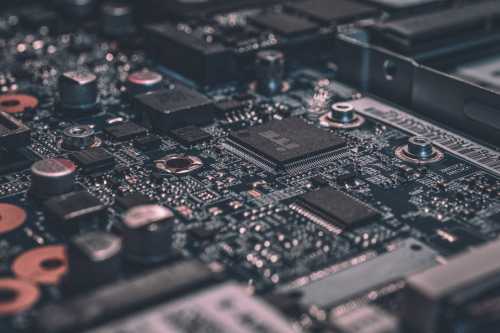
ISLAMABAD — Have you ever wondered what is actually inside your smartphone, your laptop, or even your car? Beneath the glass screen and the metal casing, there are tiny, intricate green boards covered in little black squares. Those black squares are microchips, the tiny brains that make all our modern technology possible. But making these tiny brains is one of the most complex, expensive, and difficult things humans have ever figured out how to do. For decades, Pakistan has only been a consumer of these chips, buying them from other countries. Today, that story begins to change. The Special Technology Zones Authority (STZA) has officially announced the launch of a massive one billion rupee venture fund dedicated exclusively to semiconductor chip packaging and testing startups in Pakistan, marking the country's first serious, funded step into the global hardware supply chain.
The Billion-Rupee Initiative:
- STZA allocates Rs 1 billion for semiconductor packaging startups.
- Focus is on Assembly, Testing, and Packaging (ATP), not full fabrication.
- Aims to create 10,000 high-tech engineering jobs in the next 5 years.
- Partnerships formed with international tech giants for knowledge transfer.
- Startups will receive tax holidays, land, and direct funding.
Understanding Semiconductors: The Brains of the Modern World
To understand why this news is so exciting, we need to understand what a semiconductor actually is. Imagine you are building a city. You need power plants, water treatment facilities, roads, and buildings. A microchip is like a microscopic city. Instead of buildings, it has billions of tiny switches called transistors. These transistors turn electricity on and off, creating the 1s and 0s of binary code that computers understand. The more transistors you can fit on a chip, the smarter and faster the chip is.
Making these chips requires creating features that are so small they are measured in nanometers. To put that in perspective, a single human hair is about 100,000 nanometers thick. We are building cities on a space smaller than a fraction of a single hair. This requires incredibly pure materials, perfectly clean rooms, and machines that cost hundreds of millions of dollars. Because it is so hard and so expensive, only a few companies in the world—like TSMC in Taiwan, Samsung in South Korea, and Intel in the US—actually manufacture the raw silicon wafers.
Why Pakistan is Focusing on "Packaging" First
You might be wondering, if making chips is so important, why is Pakistan starting with "packaging"? This is the most brilliant part of the STZA's strategy. The semiconductor supply chain is divided into three main steps: Design, Fabrication (making the raw silicon wafer), and Assembly, Testing, and Packaging (ATP).
Fabrication is the hardest and most expensive part. Building a single modern fabrication plant (a "fab") can cost upwards of $20 billion. It is simply not realistic for Pakistan to jump straight into that. However, after the fragile silicon wafer is made, it needs to be carefully cut into individual chips, tested to make sure they work, and "packaged" in a protective casing with tiny wire connections so it can be soldered onto a circuit board. This ATP step is highly specialized, requires a lot of precision engineering, but it is much less capital-intensive than building a fab. It is the perfect entry point for a developing tech nation.
The STZA Fund: How It Will Work
The one billion rupee fund is not just a simple loan; it is a comprehensive venture capital initiative designed to de-risk the hardware startup journey. Hardware is notoriously difficult to startup. Unlike software, where you can write code in a bedroom, hardware requires physical equipment, clean rooms, and expensive materials. The STZA fund will provide early-stage capital to help startups purchase the necessary testing equipment, set up clean room facilities, and hire specialized engineers.
But the money is only one part of the package. Startups that receive funding will also be placed within the Special Technology Zones. This means they will get access to subsidized land, reliable and cheap electricity, and high-speed fiber optic connectivity. More importantly, they will enjoy a ten-year tax holiday on their exports and profits. This creates a highly attractive environment for both local entrepreneurs and foreign investors looking to set up regional ATP facilities.
Creating a New Class of High-Tech Engineers
One of the most significant impacts of this initiative will be on Pakistan's workforce. For years, Pakistan's tech sector has been heavily focused on software and IT services. While this has been great for exports, it has left a gap in hardware engineering. There are very few engineers in the country who understand semiconductor physics, materials science, or micro-electronics.
The STZA is working closely with top universities like NUST, LUMS, and GIKI to revamp their electrical engineering curricula. They are setting up specialized micro-electronics labs where students can get hands-on experience with testing and packaging equipment. The goal is to create a pipeline of 10,000 highly skilled hardware engineers over the next five years. These are not just regular IT jobs; these are high-paying, deeply technical careers that will elevate the entire engineering ecosystem in the country.
Global Partnerships and Knowledge Transfer
Pakistan cannot do this alone. The STZA has been in active negotiations with major global players in the semiconductor supply chain. While the specific names are kept confidential under Non-Disclosure Agreements (NDAs), sources indicate that several multinational companies from Malaysia, China, and the Philippines—countries that are already global hubs for semiconductor packaging—are in advanced talks to set up joint ventures with local Pakistani startups.
These joint ventures are crucial for knowledge transfer. It is not just about bringing in money; it is about bringing in expertise. The foreign partners will train the local workforce, share best practices for quality control, and integrate the Pakistani startups into their global supply chains. This means a chip packaged in a Special Technology Zone in Lahore could end up inside a smartphone sold in Europe or a car manufactured in Japan.
Strategic Importance: Securing the Supply Chain
The global semiconductor shortage during the pandemic taught the world a harsh lesson: relying on a single region for your tech supply chain is incredibly dangerous. When factories in one part of the world shut down, car manufacturers in Germany and phone makers in the US had to stop production because they could not get the tiny chips they needed. Countries are now desperately trying to diversify their supply chains, a strategy known as "China Plus One" or "friend-shoring."
Pakistan is perfectly positioned to benefit from this global shift. With a young, English-speaking population, a strategic geographic location, and the new incentives provided by the STZA, Pakistan can offer a stable, cost-effective alternative for semiconductor packaging. This is not just an economic opportunity; it is a matter of national strategic importance. By building a domestic capability in chip packaging, Pakistan ensures that its own critical infrastructure, defense systems, and communication networks are not entirely dependent on foreign hardware supply chains.
Beyond Phones: Electric Vehicles and Renewable Energy
While smartphones and laptops get all the attention, the biggest growth area for semiconductors is actually in Electric Vehicles (EVs) and renewable energy. A traditional gas-powered car might have a few hundred chips in it. A modern electric vehicle can have over 3,000 chips, managing everything from the battery temperature to the autonomous braking system. Similarly, solar inverters and smart grid technology rely heavily on power semiconductors.
As Pakistan slowly transitions towards electric mobility and solar energy, the demand for these power chips will skyrocket. By developing a local packaging industry, Pakistan can eventually supply the specific types of chips needed for its own EV and renewable energy sectors, reducing the import bill and making the green transition more affordable and sustainable.
The Roadmap: From Packaging to Design
The STZA views this billion-rupee fund as just the first step in a much longer journey. The roadmap is clear: first, master Assembly, Testing, and Packaging. Build a strong, reliable workforce and integrate into the global supply chain. Once that foundation is solid, the next step will be to move up the value chain into Chip Design.
Chip design is where the real intellectual property lies. It requires brilliant minds, but it does not require the massive physical factories of fabrication. Pakistan already has a strong base of software engineers and mathematicians, which is a great foundation for chip design. By starting with packaging, the country is building the physical infrastructure and the industry connections that will eventually support a thriving domestic chip design ecosystem. The dream is that one day, a microchip will be designed in Pakistan, packaged in Pakistan, and power the devices used all over the world.
The Bottom Line: The STZA's billion-rupee fund for semiconductor packaging is a bold, strategic masterstroke. By targeting the accessible but critical ATP segment of the supply chain, Pakistan is planting the seeds for a high-tech hardware revolution. It will create thousands of elite engineering jobs, attract foreign investment, and finally give the country a foothold in the most important industry of the 21st century.
Related Articles
The Compute Reckoning: Navigating Sovereign AI, Quantum Tipping Points, and Antitrust Friction
Aug 23, 2026
The Structural Recalibration of Global Technology: Navigating Compute, Cryptography, and Geopolitical Faultlines
Aug 22, 2026
Comments (0)
No comments yet. Be the first to share your thoughts!
Want to join the discussion?
Please log in to post a comment.
Login NoworCreate an Account