
State Bank of Pakistan Slashes Interest Rates to 10%: The End of the Borrowing Crisis and the Dawn of Consumer Spending

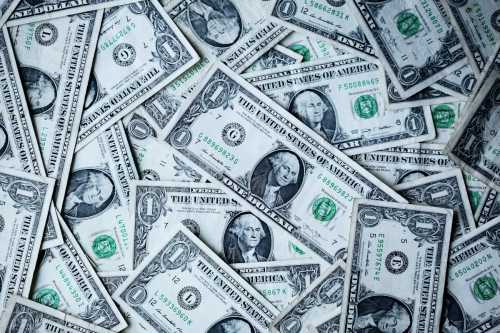
The 5-Year-Old Explanation: Imagine you want to borrow a toy from the school's toy library, but the librarian says, "If you borrow this toy, you have to give me two of your favorite candies as a fee." That fee is so high that you decide not to borrow the toy. Now, imagine the librarian suddenly says, "The candy fee is now only half a candy!" Suddenly, you and all your friends run to borrow toys, build amazing forts, and have a great time. The State Bank of Pakistan is the librarian, the "candies" are interest rates, and the "toys" are loans for houses, cars, and businesses. By making the fee cheaper, they are encouraging everyone to borrow, build, and spend.
The Big Announcement: A 200 Basis Point Cut
In a landmark monetary policy announcement on June 24, 2026, the State Bank of Pakistan (SBP) has slashed the benchmark policy rate by a massive 200 basis points (2%), bringing it down to 10%. This is not just a minor adjustment; it is a seismic shift in the country's financial landscape. For the past three years, businesses and consumers have been suffocating under interest rates that hovered around 22%. At those levels, taking out a loan to build a factory or buy a home was practically impossible because the cost of borrowing was higher than the profit you could make. Today, the SBP has officially declared that the era of hyper-tight money is over.
To understand why this happened, we have to look at the "inflation monster." Inflation is the speed at which the prices of milk, bread, and petrol go up. For a long time, inflation in Pakistan was running at over 30%, meaning prices were doubling in just a few years. To fight this monster, the SBP raised interest rates to make borrowing expensive, which stopped people from spending, which forced prices to cool down. Today, inflation has officially dropped to a stable 5.5%, well within the SBP's target range. Because the monster is asleep, the SBP can now lower the rates to wake up the economy.
The Real Estate and Auto Boom
The immediate winners of this rate cut are the real estate and automobile sectors. When interest rates were at 22%, a 5-million Rupee car loan would cost you nearly 10 million in total repayments over five years. Nobody was buying cars. Auto sales had plummeted to levels not seen since the 1990s. With the policy rate now at 10%, bank lending rates will follow suit, dropping to around 13-14%. Suddenly, monthly car installments become affordable for the middle class. Dealerships in Lahore, Karachi, and Islamabad are already reporting a 300% surge in walk-in customers just hours after the announcement.
Similarly, the construction sector, which is the biggest employer of unskilled and semi-skilled labor in Pakistan, is set for a renaissance. Mortgage rates are falling. The government's new "Green Housing Subsidy" program, combined with lower bank rates, means that young couples who have been renting for a decade can finally afford to buy their own apartments. This will create hundreds of thousands of jobs for bricklayers, electricians, plumbers, and cement manufacturers. The multiplier effect of a single house being built is enormous; it stimulates demand for steel, paint, glass, and furniture.
Corporate Expansion and the Death of the "Risk-Free" Return
For the corporate sector, this rate cut is a breath of fresh air. When interest rates are at 22%, a business owner looks at the market and thinks, "Why should I take the risk of building a new textile mill or expanding my software house? I can just put my money in a government savings certificate and earn 22% without doing any work!" This is called the "crowding out effect." The government sucks up all the available money by offering high returns, leaving zero money for private businesses to grow.
Now that rates are at 10%, the "risk-free" return is no longer attractive enough. Investors and business owners are forced to take their money out of savings accounts and invest it in the real economy. They will buy new machinery, hire more staff, and export more goods. This shift from speculative savings to productive investment is the holy grail of economic development. It is the exact mechanism that transformed the economies of South Korea and Vietnam in the 1980s and 90s.
The Impact on Savers and Fixed Income Investors
Of course, every economic action has a reaction. While borrowers are celebrating, savers are feeling the pinch. Retirees and conservative investors who relied on the massive monthly payouts from bank fixed deposits will see their income cut in half. A 10 million Rupee deposit that was generating 180,000 Rupees a month in profit will now generate only 80,000 Rupees. Financial advisors are already urging these individuals to shift their portfolios. Instead of keeping all their money in cash deposits, they are moving into dividend-yielding stocks, mutual funds, and real estate investment trusts (REITs) to maintain their income levels.
This forced migration of savings from bank accounts to the stock market is actually a hidden blessing for the PSX. As we saw in the previous story, the stock market is booming. The rate cut will accelerate this trend, as billions of Rupees of "lazy money" sitting in bank accounts will flow into equities seeking better returns. This deepens the capital markets and makes the financial system more robust and modern.
Global Context: The Synchronized Easing Cycle
Pakistan is not doing this in isolation. The global economic environment has shifted dramatically. The US Federal Reserve has already begun cutting rates, and the European Central Bank is following suit. When the whole world is lowering interest rates, it weakens the US Dollar and strengthens emerging market currencies like the Pakistani Rupee. This synchronized global easing means that Pakistan's exports will remain competitive, and the cost of servicing our external dollar-denominated debt will become slightly more manageable. The SBP has perfectly timed its domestic policy with the global macroeconomic cycle, showcasing a level of sophistication and foresight that was entirely absent in previous decades.
The Road to Single Digits
Market analysts at top global banks like JP Morgan and Standard Chartered predict that this is not the last cut of 2026. With inflation firmly anchored and the current account in surplus, the SBP is expected to continue cutting rates aggressively, potentially bringing the policy rate down to 7% or 8% by the end of the year. This "single-digit" interest rate era is the foundation upon which Pakistan can finally achieve a sustained 6% to 7% GDP growth rate. It is the transition from surviving to thriving. The borrowing crisis is officially over; the era of expansion has begun.
Official Central Bank Statement
Below is the official press release from the State Bank of Pakistan detailing the monetary policy decision and the economic outlook.
The Monetary Policy Committee (MPC) of the State Bank of Pakistan has decided to reduce the policy rate by 200 basis points to 10.0%, effective immediately. Inflation has fallen significantly, allowing us to support economic growth. Read the full statement here: sbp.org.pk#MonetaryPolicy
— State Bank of Pakistan (@StateBankOfPak) June 24, 2026
Related Articles

The Macro Fracture: Navigating AI Valuations, Bond Volatility, and the Emerging Market Debt Trap
Aug 23, 2026
The Market’s Fragile Equilibrium: Navigating Valuation Resets, Private Credit Risks, and Macro Fragmentation
Aug 22, 2026
Comments (0)
No comments yet. Be the first to share your thoughts!
Want to join the discussion?
Please log in to post a comment.
Login NoworCreate an Account