
Supreme Court Rules on AI Training Data: Establishes 'Opt-Out Royalty' Framework in Landmark Copyright Decision

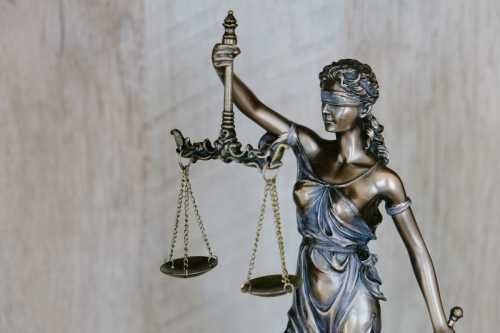
WASHINGTON D.C. — The legal ambiguity surrounding the foundation of modern artificial intelligence has been resolved by the highest court in the land. On June 18, 2026, the United States Supreme Court issued its highly anticipated ruling in the consolidated cases of Authors Guild v. OpenAI and Getty Images v. Stability AI, establishing a definitive legal framework for the use of copyrighted material in AI training. In a nuanced 6-3 decision, the Court ruled that the ingestion of copyrighted works for the purpose of machine learning constitutes "transformative fair use," thereby protecting the fundamental right to train AI models. However, to protect the economic rights of creators, the Court simultaneously mandated the implementation of a micro-royalty system for any AI-generated output that is substantially similar to the ingested works.
The Ruling: Balancing Innovation and Creation
Writing for the majority, Chief Justice John Roberts articulated a legal philosophy that seeks to harmonize the Copyright Clause's dual mandate: to promote the progress of science and useful arts by protecting authors, while also ensuring that knowledge and ideas remain free for public use. The Court determined that an AI model "reading" millions of books or analyzing billions of images to learn the statistical patterns of human language and visual composition is a fundamentally transformative act. The AI does not store or reproduce the original works; it extracts abstract concepts. Therefore, the training process itself does not infringe on copyright.
ELI5 Explanation: Imagine a music student who listens to every Beatles song ever recorded to learn how to write a catchy melody. The student isn't stealing the songs; they are learning the underlying rules of music. The Court said AI doing this is fine. But, if the student then writes a song that sounds exactly like "Hey Jude" and sells it, they have to pay the Beatles a tiny fee. The Court created a system where AI companies must pay a small royalty if their output is too similar to the original copyrighted work.
The Micro-Royalty Mechanism
The most groundbreaking aspect of the decision is the creation of the "Opt-Out Royalty" framework. The Court ordered the Copyright Office to establish a centralized, blockchain-based registry where creators can register their works. AI companies will be required to pay a nominal, fractional-cent fee into a collective pool for every registered work ingested into their training data. Furthermore, if an AI generates an output that a cryptographic similarity algorithm determines is derivative of a specific registered work, a micro-royalty is automatically triggered and paid to the original creator. This system ensures that authors, journalists, and artists are compensated for the value their work provides to the AI ecosystem, without stifling the ability of companies to build foundational models.
"The Copyright Clause was written for a world of printing presses, but its principles are timeless. We must protect the economic incentive of the creator without freezing the technological progress of the machine. Today's ruling builds a bridge between the human mind and the artificial neural network." — Chief Justice John Roberts
Industry Reaction: Relief and Compliance
The tech industry breathed a massive sigh of relief at the validation of the training process. The threat of statutory damages for ingesting billions of copyrighted works could have bankrupted the entire AI sector. "This ruling secures the foundation of American AI leadership," stated a spokesperson for the Information Technology Industry Council. However, the implementation of the micro-royalty system will require a massive engineering effort to integrate cryptographic watermarking and automated payment rails into every AI generation pipeline. Conversely, the Authors Guild hailed the financial mechanism as a historic victory. "For the first time, the machines that profit from our life's work will finally pay us our due," said the Guild's president.
The Supreme Court's decision on June 18, 2026, will be studied in law and technology schools for generations. By refusing to choose between the creator and the algorithm, the Court has forged a new social contract for the digital age. The AI revolution will continue to accelerate, but it will no longer do so on the uncompensated labor of human creativity. The bridge has been built, and both humanity and its machines may now cross it together.
Related Articles

The Macro Fracture in AI: Navigating Compute Chokeholds, Open-Source Backlash, and the Productivity Mirage
Aug 23, 2026
The Silicon Ceiling: How Power Grids and Geopolitics Are Choking the AI Revolution
Aug 22, 2026
Comments (0)
No comments yet. Be the first to share your thoughts!
Want to join the discussion?
Please log in to post a comment.
Login NoworCreate an Account