
Tesla Stock Soars 20% After Unveiling Next-Gen Solid-State Battery and Robotaxi Fleet

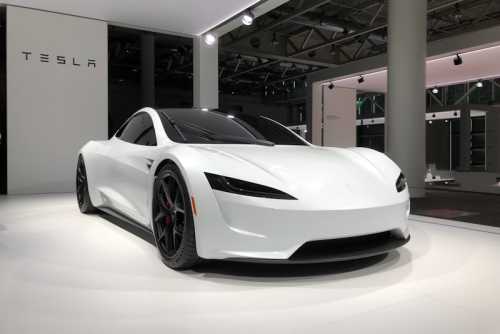
A Technological Leap in Electric Mobility
Shares of Tesla Inc. experienced a massive twenty percent surge in pre-market trading following the company's highly anticipated "Master Plan Part 4" reveal event, where CEO Elon Musk unveiled a revolutionary next-generation solid-state battery and a fully autonomous, purpose-built robotaxi fleet. The announcement, which had been teased for months on social media, delivered on the most critical promises made to investors: a dramatic reduction in battery costs and a viable path to unsupervised full self-driving. The new solid-state battery technology, which Tesla claims will be ready for mass production by early 2027, offers double the energy density of current lithium-ion cells, charges in under ten minutes, and eliminates the highly flammable liquid electrolyte, virtually removing the risk of thermal runaway fires. This breakthrough effectively solves the two biggest consumer pain points regarding electric vehicles: range anxiety and charging time.
Equally impactful was the reveal of the Cybercab, a sleek, steering-wheel-less vehicle designed exclusively for Tesla's upcoming robotaxi network. Musk demonstrated a live, unsupervised ride through the crowded streets of Austin, Texas, showcasing the vehicle's ability to navigate complex urban environments, handle unexpected road closures, and interact with pedestrians flawlessly using the company's latest end-to-end neural network AI. The unit economics presented during the event were staggering; Tesla projects that the Cybercab will cost less than $30,000 to manufacture and can be operated for as little as twenty cents per mile, undercutting the cost of public transit and traditional ride-hailing services by a massive margin. If Tesla can achieve even a fraction of these projections, it will fundamentally disrupt the multi-trillion-dollar global transportation and logistics industries.
The financial implications of this dual breakthrough are profound. For years, Tesla has been valued by the market not just as an automaker, but as an AI and robotics company. However, persistent delays in achieving Level 5 autonomy and intense competition in the EV space from Chinese manufacturers like BYD had compressed its valuation multiples. The successful demonstration of the solid-state battery and the Cybercab instantly reignites the "tech multiple" narrative. Analysts at major Wall Street firms immediately raised their price targets, citing the potential for high-margin software and network revenue to dwarf the relatively low-margin hardware sales of traditional vehicles. The robotaxi network operates on an asset-heavy, high-utilization model; every mile driven by a Cybercab generates pure software and service revenue, which commands a vastly higher valuation multiple than selling a car to a single consumer.
Despite the market's euphoric reaction, significant hurdles remain before Tesla's vision can be fully realized. The transition from a prototype solid-state battery to mass manufacturing at a competitive cost is notoriously difficult, and the company has a history of overly optimistic production timelines, often referred to by critics as "Elon time." Furthermore, the regulatory landscape for unsupervised autonomous vehicles remains a patchwork of state and federal laws. While Texas and a few other states have permitted testing, obtaining nationwide approval for a steering-wheel-less vehicle to operate on public roads will require a monumental battle with the National Highway Traffic Safety Administration (NHTSA) and various insurance and liability frameworks. A single high-profile accident involving the robotaxi fleet could trigger a regulatory crackdown that sets the program back by years.
Nevertheless, the events of today have undeniably shifted the momentum back in Tesla's favor. Legacy automakers, which have spent hundreds of billions of dollars trying to catch up in the EV space, now find themselves facing a technological chasm in battery chemistry and AI autonomy that will be incredibly difficult and expensive to bridge. The unveiling of the solid-state battery and the Cybercab is not just a product launch; it is a declaration of dominance that reaffirms Tesla's position at the absolute cutting edge of the transportation revolution. As the dust settles on the stock surge, the market will now closely watch the company's execution over the coming quarters, knowing that the transition from these spectacular promises to mass-produced reality will determine whether Tesla's new valuation is justified or merely another speculative peak.
Related Articles

The Macro Fracture: Navigating AI Valuations, Bond Volatility, and the Emerging Market Debt Trap
Aug 23, 2026
The Market’s Fragile Equilibrium: Navigating Valuation Resets, Private Credit Risks, and Macro Fragmentation
Aug 22, 2026
Comments (0)
No comments yet. Be the first to share your thoughts!
Want to join the discussion?
Please log in to post a comment.
Login NoworCreate an Account