
The $1 Trillion Blind Spot: Navigating Market Concentration and the Commodity Squeeze

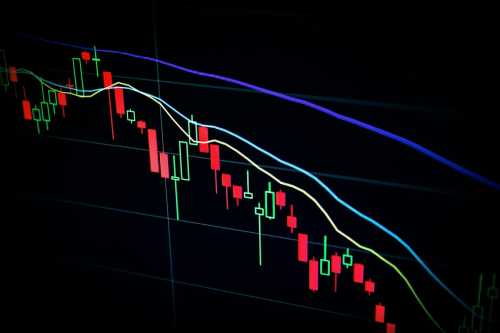
Managing global capital markets in 2026 is akin to steering a supertanker through a narrowing strait with conflicting navigational charts; the vessel maintains momentum purely through inertia, while hidden shoals threaten to breach the hull. The current market equilibrium is defined by a paradoxical convergence: artificial intelligence capital expenditures are approaching $1 trillion annually, creating a concentrated macroeconomic risk, while elevated US Treasury yields and persistent commodity supply constraints simultaneously compress corporate profit margins www.jpmorgan.com , www.pgpf.org .
The Capital Expenditure Concentration Risk
Mainstream equity analysis frequently celebrates the robust earnings of mega-cap technology firms, yet it systematically underprices the systemic fragility of this concentration. AI capital expenditures are projected to approach $1 trillion in 2026, representing a concentrated risk to the macroeconomy as a whole kentclarkcenter.org . When a single thematic narrative absorbs such a disproportionate share of global liquidity, the market becomes hypersensitive to any deviation in hyperscaler return-on-investment metrics. This dynamic creates a hidden leverage point; if enterprise software adoption fails to monetize these infrastructure outlays at the anticipated pace, the subsequent multiple compression will not be isolated to the technology sector. It will cascade through the broader equity indices, which are historically correlated to the performance of these dominant market weights.
The Productivity Premium: A Valid Counter-Perspective
While the concentration of AI capital expenditure is frequently flagged as a systemic vulnerability, proponents argue this infrastructure buildout is a necessary deflationary force. They contend that the automation of complex cognitive tasks will ultimately expand total addressable markets and offset near-term margin compression. From this viewpoint, the current valuation multiples are not a reflection of speculative excess, but rather a rational, forward-looking pricing of sustained productivity gains that will structurally lower corporate operating costs over the next decade.
The Physical Bottleneck: Commodities as the New Collateral
Beyond the digital realm, the physical economy is signaling severe distress through commodity markets, a reality often overshadowed by equity market rallies. Copper and gold are experiencing structural inflection points driven by AI-driven data center demand, renewable energy transitions, and entrenched supply chain constraints www.spglobal.com , www.linkedin.com . The mining landscape is defined not by transient impulses, but by enduring capital expenditure deficits over the past decade, meaning supply cannot rapidly respond to demand shocks medium.com . Consequently, commodities are transitioning from cyclical trading vehicles to strategic collateral, forcing industrial manufacturers to absorb higher input costs that directly threaten their pricing power.
Echoes of the Fiber-Optic Buildout: Lessons from 2000
To contextualize the current capital expenditure cycle, market participants must examine the late-1990s telecommunications fiber-optic buildout. During that period, massive, unchecked capital was deployed into physical infrastructure based on exponential traffic growth projections. While the underlying thesis of increased data consumption was ultimately correct, the timeframe for monetization was vastly overestimated, leading to a catastrophic collapse in sector valuations and widespread bankruptcies among over-leveraged providers. The lesson for today’s investors is that being fundamentally right about a technological paradigm does not protect against the financial devastation of overpaying for the infrastructure required to build it.
The Sovereign-Bank Nexus and the Yield Curve Trap
Simultaneously, the fixed-income landscape presents a formidable challenge to global liquidity. The 2026 yield curve remains comparatively elevated and flat, reflecting persistent inflation concerns and a Federal Reserve committed to restrictive monetary policy www.pgpf.org . This environment places acute pressure on emerging markets, where domestic debt restructuring could require sizable recapitalization of local banking systems www.imf.org . As cross-border portfolio flows become increasingly volatile, developing nations face a dual threat: the high cost of servicing dollar-denominated debt and the domestic financial instability triggered by attempting to restructure local currency obligations.
The Resilience Thesis: Why Emerging Markets May Weather the Storm
Skeptics of the emerging market debt crisis narrative emphasize that post-2020 macroeconomic reforms have fundamentally altered the sovereign-bank nexus. They point out that many developing nations have proactively extended debt maturities, accumulated larger foreign exchange reserves, and diversified their creditor base away from traditional bilateral lenders. This structural evolution, they argue, has insulated domestic financial systems from the abrupt capital flight and currency collapses that characterized previous default cycles, rendering historical comparisons to past emerging market crises largely obsolete.
Strategic Imperatives for Capital Allocation
For institutional investors and corporate treasurers, navigating this asymmetric risk environment requires defensive agility. First, portfolios must be rebalanced to reduce concentration risk in mega-cap technology, rotating capital into sectors with tangible pricing power, such as specialized industrial manufacturing and resource extraction. Second, businesses heavily reliant on global supply chains must secure long-term fixed-price contracts for critical commodities like copper to hedge against inevitable supply-driven price spikes. Finally, corporate balance sheets should prioritize the reduction of floating-rate debt, as net profit margins are estimated at 15.0 percent, and any further margin compression from sticky prices will severely limit the capacity to service variable interest obligations hbkswealth.com , www.linkedin.com .
The Six-Month Horizon: Asymmetric Volatility
Over the next six months, the global market landscape will be defined by asymmetric volatility and a widening dispersion in asset class performance. The baseline scenario indicates that elevated Treasury yields will persist, continuing to act as a gravitational drag on equity valuation multiples. Meanwhile, the physical commodity squeeze will intensify, creating distinct winners among resource-rich jurisdictions and distinct losers among import-dependent manufacturers. Investors should expect a market environment where stock-picking and sector rotation outperform broad index strategies, as the era of synchronized, liquidity-driven rallies gives way to a more discerning, fundamentals-driven reality.
Related Articles

The Torsional Stress of Credit: How the Yen Carry Trade Unwind is Shattering Global Liquidity Anchorages
Nov 21, 2026
The Bifurcated Ledger: Navigating the Illusion of Market Breadth and the Reality of Refinancing Risk
Nov 19, 2026
Comments (0)
No comments yet. Be the first to share your thoughts!
Want to join the discussion?
Please log in to post a comment.
Login NoworCreate an Account