
The $12.5 Billion Lakers: How One Sale Re-Priced Every Team in Sports

In residential real estate, appraisers call it the comp effect: one outlier sale on a street re-prices every home on the block, whether the neighbors list or not. Professional sports just received its outlier.
The Comp That Reset the Market
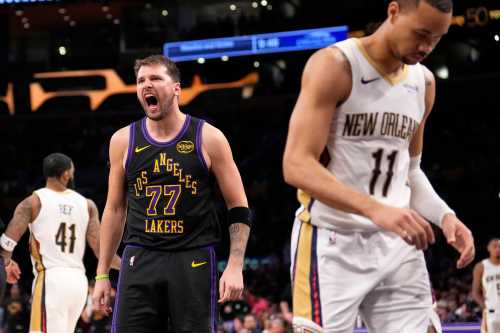
A Kushner–Iger group has agreed to purchase the Los Angeles Lakers for $12.5 billion, the highest price ever paid for a professional sports franchise, handing Mark Walter a $2.5 billion profit 14 months after he paid $10 billion for the same asset. The transaction is the loudest tick in a sector-wide repricing: the Seattle Seahawks changed hands this year at $9.6 billion, and Sportico's 2026 NFL valuations place the 32 teams at a combined $299 billion, the average up 31% in a single year — the largest one-year gain since the index launched.
The Broncos Echo
The last time the market moved like this was August 2022, when the Walton family paid $4.65 billion for the Denver Broncos, more than double the prior North American record. What followed is the template: every seller's ask re-anchored upward (Commanders at $6.05 billion in 2023, Celtics at $6.1 billion in 2025), the NFL normalized private-equity minority stakes, and stadium-adjacent real estate moved from sideshow to the center of the ownership thesis. The lesson for 2026 is that a record price is not a verdict on one team's cash flow; it becomes the league's new discount rate, re-anchoring expansion fees, borrowing capacity and revenue-share mathematics. A second lesson is less comfortable: the post-Broncos ownership cohort is more balance-sheet than operations in orientation, and the franchise now behaves as an alternative asset with a fixture list attached.
Three Ripples the Box Score Won't Show
First, capital structure becomes league politics. At $12.5 billion, the Lakers' multiple stretches past any framework used for operating businesses, and that stretch transmits into labor and expansion economics. NBA expansion discussions for Las Vegas and Seattle will price off this comp, while owners carrying trophy-asset debt will demand cost certainty in the next collective bargaining cycle — the salary-cap architecture that has defined league labor peace becomes a negotiation about who services the valuation. The inflation in capital is colliding with governance structures elsewhere: the NFL's plan to renegotiate its media agreements is on hold, and the Protect College Sports Act, advanced 19–9 from the Senate Commerce Committee, floats pooled FBS media rights that the SEC and Big Ten are actively fighting. The entire rights economy is being re-litigated at the exact moment asset prices assume perpetual growth.
Second, monetization is meeting regulation. The valuation boom is partly built on betting-liquidity tailwinds, and Washington is now pressing that seam. The bipartisan Prediction Markets Are Gambling Act, introduced by Senators Curtis and Schiff, would ban sports-event contracts on platforms such as Kalshi and Polymarket, and Minnesota has already become the first state to ban the platforms outright, triggering a federal lawsuit. Mainstream coverage treats this as a fintech story; it is a sports-revenue story, because the marginal dollar that justifies a $12.5 billion multiple is the same dollar the legislation targets.
Third, civic economics. When franchise values soar, municipal leverage evaporates: a city negotiating an arena lease against a $12.5 billion comp is a city without a BATNA. The costs land in the game-day economy — premium seating repriced, sponsorship inventory premiumized, and small businesses that feed on arena traffic absorbing the pass-through. The fan base stops being the constituency and becomes the balance sheet's extraction target.
In Defense of the "Irrational" Price
The bubble label deserves scrutiny. Supply is fixed at 30 NBA franchises, media and international revenues are still compounding, and sports assets have historically avoided prolonged drawdowns even when public equities did not. The 31% NFL jump tracks rights-fee appreciation rather than speculative froth, and the buyers are not leveraged flippers: "As lifelong NBA fans, we are deeply honored for the opportunity to become stewards of the Los Angeles Lakers," Kushner and Iger said in their statement, committing to honor the five-year agreement keeping Jeanie Buss as governor. For family offices, a franchise is a positional good with utility returns — prestige, content optionality, real-estate synergies — that no discounted-cash-flow model captures.
Positioning Before the Re-Anchor
For operators and citizens, the window between the headline and the re-anchor is the cheapest time to move. Arena-adjacent businesses should lock multi-year sponsorship and lease terms before new ownership reprices inventory. Season-ticket holders should document tenure and exercise grandfathering windows now, because price restructuring typically follows control changes within two seasons. Municipal officials should resist renegotiating leases against the new comp and use the league's own approval process as leverage to capture non-tax revenue. Investors should treat marquee minority stakes as a crowded trade and look to second-derivative assets: ticketing infrastructure, regional sports networks, and women's leagues — the Los Angeles Sparks, notably, were excluded from this deal and remain a separate, cheaper asset class.
The Stewardship Discount
Yet the defense of the price should not obscure the structure of the transaction: a 14-month, $2.5 billion flip converts a civic institution into a tradable asset, and Walter's exit — however rational — signals that control premiums are now harvested, not cultivated. Every prior flip in this market was followed by intensified monetization: more inventory, more premium seating, more betting integration. That is precisely the conduct inviting the legislative backlash now moving through Congress and state houses. If the cost of capital resets, or the rights cycle plateaus, the last steward holds an illiquid asset bought at a peak multiple — and the fans who subsidized the multiple will have financed their own pricing-out.
Six Months Out
By February 2027, expect the NBA's board of governors to approve the sale with conditions, and at least two other owners to quietly retain banks to test the market, producing a shadow-comp wave that pushes the average NBA valuation past $6 billion on the next rankings. Expansion fees for Las Vegas and Seattle will anchor above $5 billion. The federal prediction-market bill will stall, but state-level bans will multiply and litigation will deepen. Ticket-price inflation will run materially ahead of CPI in every major market. The organizing question of the sports economy will shift from "what is a team worth" to "who is the team for" — and the answer will be written in the capital structure.
Related Articles

The Metabolic Realignment: How Pharmacology, Regulation, and Algorithms Are Rewiring the Wellness Economy
Aug 22, 2026
The Pharmacological and Regulatory Recalibration of the Global Wellness Economy
Aug 22, 2026
Comments (0)
No comments yet. Be the first to share your thoughts!
Want to join the discussion?
Please log in to post a comment.
Login NoworCreate an Account