
The 2026 AI Trilemma: Regulatory Bifurcation, Grid Paralysis, and the End of Infinite Tokens


The Silicon-Grid Collision: A Catalyst for Structural Realignment
Scaling a global artificial intelligence network in late 2026 is akin to engineering a high-speed maglev rail system while simultaneously rewriting the local laws of thermodynamics to accommodate the trains. The theoretical velocity is limitless, but the physical tracks are melting under the friction. This week, the theoretical collided with the physical as the European Union commenced aggressive enforcement of the AI Act’s high-risk and transparency mandates, a regulatory shockwave that arrived precisely as hyperscalers deployed next-generation frontier models like OpenAI’s GPT-5.6 and Google DeepMind’s Gemini 3.7 Flash digital-strategy.ec.europa.eu , deepmind.google , openai.com . This convergence is not merely a news cycle event; it is a structural inflection point that will permanently rewire the capital expenditure models, software architectures, and geopolitical supply chains of the global innovation economy.
The Bifurcation of the Global Inference Stack
Mainstream technology coverage has largely treated the EU AI Act as a bureaucratic hurdle, ignoring its profound impact on low-level compute architecture. The mandate requires cryptographic watermarking and provenance tracking for all synthetic content generated by general-purpose AI systems. Crucially, "Generative AI systems placed on the market before August 2, 2026 have until December 2, 2026 to meet the Article 50(2) marking and detection" standards www.certivo.com . Embedding these cryptographic checks directly into the inference pipeline introduces non-trivial latency and compute overhead. Consequently, foundational model providers are being forced to fork their development stacks. We are witnessing the emergence of a heavily regulated, high-latency "Euro-spec" tier optimized for compliance, and a raw-performance tier optimized for speed in less restrictive jurisdictions. This architectural bifurcation destroys the economic viability of a single, unified global API, forcing enterprise integrators to maintain parallel deployment environments and effectively doubling their operational overhead.
The Thermodynamics of Frontier Intelligence
While regulators focus on algorithmic alignment, the physical layer of the AI economy is approaching a critical breaking point. The deployment of trillion-parameter models requires continuous, massive-scale matrix multiplication that is fundamentally incompatible with legacy municipal power grids. Recent infrastructure data indicates that "U.S. data center electricity demand has tripled in the past decade — and is projected to double again by 2028" www.electricchoice.com . The primary bottleneck for AI innovation has decisively shifted from semiconductor fabrication yields to high-voltage transmission capacity and substation availability. Hyperscalers are no longer just hoarding NVIDIA silicon; they are aggressively acquiring multi-year power purchase agreements (PPAs) and lobbying for localized grid deregulation. This physical scarcity is pricing out mid-tier AI startups, consolidating frontier model development into the hands of a few well-capitalized conglomerates that possess the balance sheets to finance dedicated nuclear or geothermal power plants.
The Efficiency Dividend: A Counterweight to Grid Paralysis
Critics of the energy-doom narrative rightly point out that hardware-software co-design is rapidly outpacing raw consumption metrics. The proliferation of sparse Mixture-of-Experts (MoE) architectures and advanced liquid cooling systems means that the computational work required per trillion tokens is dropping exponentially. While industry forecasts warn that "By 2030, AI data center power consumption could reach 8-12% of total U.S. electricity demand, up from 3-4% today," this metric ignores the macroeconomic value generated per kilowatt-hour www.bloomenergy.com . From this perspective, the energy strain is a temporary friction cost of a massive deflationary transition. As AI agents automate complex scientific research and logistics, the economic output generated by these data centers will vastly outstrip their marginal energy costs, effectively decoupling compute growth from raw grid strain over the long term.
Echoes of 2018: The GDPR Precedent and Compliance Moats
To understand the trajectory of AI regulation, one must examine the rollout of the General Data Protection Regulation (GDPR) in 2018. Prior to its enforcement, consensus held that GDPR would stifle European tech innovation and cement the dominance of unregulated foreign competitors. Instead, it created massive compliance moats that favored Big Tech, who could afford the legal and engineering armies required to adapt, while simultaneously birthing a multi-billion-dollar privacy-tech and cybersecurity industry. The historical lesson for 2026 is clear: regulatory friction initially depresses startup velocity but ultimately forces architectural maturity. The impending AI Act enforcement will not kill the industry; it will catalyze a massive B2B boom in synthetic data generation, automated red-teaming, and compliance-as-a-service infrastructure. Companies that build the "picks and shovels" for AI compliance will capture the most durable margins in the next economic cycle, creating highly lucrative niches for specialized enterprise software providers who understand both transformer architectures and European administrative law.
The Open-Source Arbitrage and Regulatory Leakage
Conversely, the decentralized nature of modern machine learning suggests that regulatory moats are inherently porous. The open-source community argues that heavy compliance burdens on centralized API providers like OpenAI and Google will simply accelerate the commoditization of frontier capabilities. As the cost of compliance rises for closed-source models, enterprise adoption will inevitably pivot toward ungoverned, localized open-weights stacks that bypass Article 50 transparency mandates entirely. This "regulatory leakage" means that the EU's attempts to enforce algorithmic safety may inadvertently drive the most critical, high-stakes AI deployments into the shadows of decentralized, peer-to-peer inference networks where oversight is mathematically impossible.
Strategic Capital Allocation and Infrastructure Hedging
Local businesses and enterprise architects must immediately pivot from passive software procurement to active infrastructure hedging. First, audit all existing AI vendor contracts for compliance indemnification clauses; if your provider fails to meet the December 2 watermarking deadline, your enterprise assumes the regulatory liability and the associated financial penalties. Second, capital allocation committees should aggressively rotate investments away from pure-play AI wrapper startups—whose margins are being crushed by API price wars—and toward the physical infrastructure layer: advanced two-phase immersion cooling systems, small modular reactors (SMRs), and grid-scale battery storage. For retail investors and citizens, monitoring municipal bond markets and local zoning boards is essential. Local governments in tech-hub counties are increasingly leveraging data center tax revenues to fund civic infrastructure, creating localized, tax-advantaged economic booms that offer unique real estate and municipal debt opportunities goodjobsfirst.org . Finally, organizations must begin training internal "AI compliance officers," a role that will soon be as legally mandatory and structurally vital as a Chief Information Security Officer.
The Six-Month Horizon: The End of the Infinite Token Era
Looking six months ahead, the AI landscape will be defined by a "compute-cap" reality. Expect the first major regulatory enforcement action against a hyperscaler for failing to meet AI Act transparency deadlines, triggering a sector-wide repricing of AI software multiples. Simultaneously, the physical scarcity of power will force a violent consolidation in the data center real estate market, with well-capitalized investment trusts acquiring distressed, power-strapped facilities at a premium. The era of infinite, subsidized API tokens is ending. The market is transitioning into an era of premium, compliance-guaranteed, energy-backed intelligence, where the cost of compute will be inextricably linked to the local price of industrial electricity.
As of August 2, 2026, the EU AI Act's transparency provisions, Article 50, apply to many organizations publishing digital content into the EU
— Cloudinary (@cloudinary) August 2, 2026
Related Articles

The Macro Fracture in AI: Navigating Compute Chokeholds, Open-Source Backlash, and the Productivity Mirage
Aug 23, 2026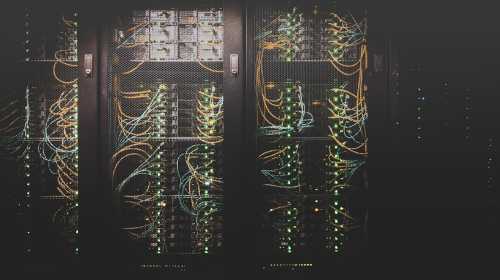
The Silicon Ceiling: How Power Grids and Geopolitics Are Choking the AI Revolution
Aug 22, 2026
Comments (0)
No comments yet. Be the first to share your thoughts!
Want to join the discussion?
Please log in to post a comment.
Login NoworCreate an Account