
The 2026 Macro-Political Tightrope: Electoral Fractures, Inflation, and the Regulatory Pendulum

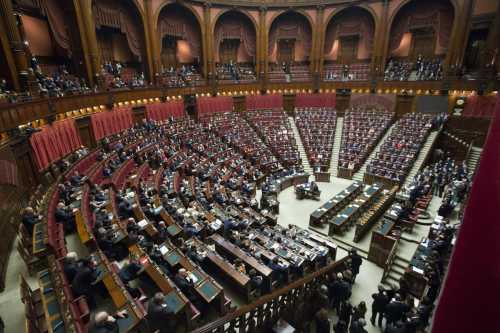
The Macro-Political Tightrope Navigating the current U.S. political economy is akin to steering a heavily laden cargo ship through a narrowing strait while the crew actively debates the validity of the compass. The core event defining this moment is the simultaneous escalation of the 2026 midterm electoral cycle, marked by a Supreme Court decision permitting the use of a modified federal voter verification database, intersecting with renewed inflationary pressures that complicate Federal Reserve monetary policy www.newyorkfed.org www.scotusblog.com . This convergence has transformed routine governance into a high-stakes arena where electoral integrity, macroeconomic stability, and regulatory overreach are inextricably linked, demanding a sober assessment that extends far beyond the daily news cycle.
The Unseen Implications: Structural Fractures Mainstream coverage frequently fixates on horse-race polling, which currently shows Democrats holding a narrow national advantage heading into November www.facebook.com . However, the deeper implication lies in the structural erosion of institutional trust. Recent polling data highlights a deep divide, showing that Republicans and independents express critically low trust in election integrity, a metric that directly correlates with depressed turnout and heightened volatility in down-ballot races www.aljazeera.com . When a significant portion of the electorate operates under the assumption of systemic manipulation, the resulting political friction paralyzes legislative productivity and invites continuous, destabilizing judicial intervention.
Furthermore, the macroeconomic implications are obscured by superficial optimism regarding growth projections. While output growth is forecasted to strengthen due to recent legislative reconciliation acts, the central bank faces a deteriorating sentiment landscape www.cbo.gov . Recent economic data indicates that short- and medium-term inflation expectations have demonstrably increased, signaling that the psychological anchor of the target rate is slipping among consumers and markets alike www.newyorkfed.org . With the economy operating at full employment, the persistent stickiness of core services inflation forces monetary policymakers into a precarious position, where any rate adjustment will inevitably be weaponized by opposing political factions.
Finally, the bipartisan momentum for aggressive technology regulation represents a quiet but seismic shift in American industrial policy yougov.com . Historically, domestic tech oversight operated on a doctrine of strategic patience, allowing innovation to outpace regulatory frameworks www.newamerica.org . Today, legislative proposals, including stringent bans on certain artificial intelligence developments with criminal penalties, signal a definitive pivot toward preemptive, heavy-handed federal oversight www.aichatdaily.com . This regulatory tightening will inevitably reshape the competitive landscape, favoring incumbent firms with the capital to absorb compliance costs while potentially stifling grassroots innovation.
Counter-Argument: The Resilience of Institutional Guardrails Despite the prevailing narrative of institutional decay, it is analytically myopic to ignore the robustness of constitutional guardrails. Critics of the democratic backsliding thesis argue that the very mechanisms being debated, such as Supreme Court interventions and intense legislative scrutiny of monopolies, demonstrate the system’s self-correcting nature www.acslaw.org . The judiciary’s willingness to engage with complex voting rights issues, rather than abdicate them, suggests an active, albeit contentious, stewardship of electoral mechanics. Furthermore, the rare bipartisan consensus on technology regulation indicates that the political system can still achieve functional alignment on existential national interests, contradicting the notion of total legislative paralysis.
Echoes of 1978: The Perils of Policy Paralysis The current confluence of stagflationary anxieties, institutional distrust, and regulatory overreach bears a striking resemblance to the U.S. political climate of 1978. During that period, the administration grappled with double-digit inflation, a profound crisis of confidence in government institutions following Watergate, and clumsy, reactive attempts to manage both deregulation and populist backlash. The lesson from that era is clear: when monetary policy is held hostage by political cycles and institutional legitimacy is questioned, the resulting policy paralysis leads to prolonged economic malaise. Resolving such a crisis historically requires inflicting severe short-term economic pain to reset expectations, inevitably realigning the political landscape for a generation.
Counter-Argument: The Innovation Imperative in Regulation Similarly, the assumption that stringent tech regulation will inherently stifle innovation overlooks the strategic necessity of establishing clear operational boundaries. Proponents of frameworks akin to the European Union’s Digital Services Act argue that predictable, albeit strict, regulatory environments actually attract long-term capital by mitigating existential legal risks www.thenation.com . By establishing federal preemption over a fragmented patchwork of state-level artificial intelligence laws, the nation can create a unified compliance standard statt.com . While costly upfront, this unified approach provides the legal certainty required for sustainable, large-scale technological deployment, as legal scholars analyzing this regulatory shift observe: 'the strategic patience of U.S. tech regulation has contributed to an environment where innovation can flourish,' warning that abrupt, heavy-handed federal mandates could inadvertently cede global technological leadership netchoice.org .
Strategic Imperatives for Stakeholders For local businesses and citizens, the macroeconomic and political volatility demands proactive risk mitigation. Corporate leaders must immediately stress-test their supply chains and capital structures against the possibility of abrupt regulatory shifts, particularly in the technology and data sectors. Diversifying lobbying efforts to engage with both sides of the aisle is no longer optional; it is a fiduciary necessity. For individual citizens and retail investors, persistent inflationary pressure suggests that traditional cash holdings will continue to lose real purchasing power. Allocating capital toward inflation-protected securities, tangible assets, or equities in sectors insulated from discretionary spending cuts remains the most prudent defensive strategy. Additionally, voters should prioritize local and state-level races, where policy outcomes have a more immediate and measurable impact on daily economic conditions than federal gridlock.
The Six-Month Horizon Looking six months ahead, the political and economic landscape will likely reach a critical inflection point following the November midterms. If the elections result in a divided government, expect an immediate escalation in oversight hearings, particularly targeting the technology sector and federal spending protocols. The central bank will likely be forced to maintain a 'higher for longer' interest rate posture to anchor inflation expectations, regardless of the political pressure to ease monetary conditions www.newyorkfed.org . Consequently, the cost of capital will remain elevated, constraining corporate expansion and keeping the housing market subdued. The nation will not experience a dramatic collapse, but rather a prolonged period of managed stagnation, where political survival consistently trumps long-term economic optimization.



Comments (0)
No comments yet. Be the first to share your thoughts!
Want to join the discussion?
Please log in to post a comment.
Login NoworCreate an Account