
The 2026 Midterm Chessboard: US House National Security Bill Shapes Political Battleground

WASHINGTON, June 23, 2026 — Imagine your school is updating its rulebook to make sure the hall monitors have the right tools to keep everyone safe from bullies. But the students can't agree on who the bullies are, or how much money the hall monitors should get to buy their equipment. Some students want to spend all the school's budget on new security cameras, while others want to spend that money on better cafeteria food and new books. This is exactly what is happening in the United States Congress on Tuesday, June 23, 2026, as the House of Representatives debates a massive National Security bill.
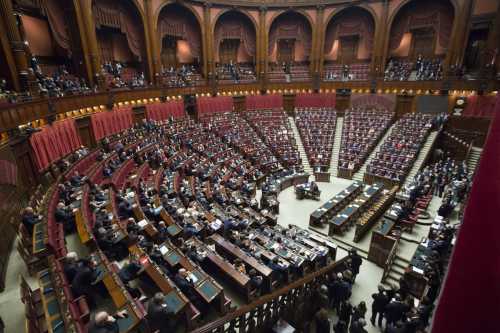
The US House of Representatives is in session today, heavily focused on H.R. 8595, a sprawling piece of legislation that touches on everything from military funding to cyber defense and foreign aid. While the title sounds dry and technical, this bill is actually the battlefield where the most important political war in America is being fought: the fight over the country's soul, its money, and its role in the world ahead of the 2026 midterm elections.
The "Explain It Like I'm Five" Reality of Government Spending
The US government has a giant piggy bank, and it is filled with money collected from taxes. Every year, the politicians have to decide how to spend the money in that piggy bank. This is called the budget. The National Security bill is a promise to spend a huge chunk of that money on keeping the country safe from enemies. But here is the catch: every dollar spent on a tank or a missile is a dollar that cannot be spent on fixing roads, building schools, or helping poor people.
The politicians arguing over this bill are trying to show the voters that they are the best guardians of the piggy bank. One side says, "The world is very dangerous, and we need to buy the biggest swords to scare the monsters away." The other side says, "The monsters aren't at our door, but our own house is falling apart, and we need to fix the roof before we buy more swords." The voters are watching this argument very closely, and in November, they will fire the politicians they think made the wrong choice.
The Professional Analysis: The Anatomy of H.R. 8595
From a defense journalism and legislative analysis perspective, H.R. 8595 is a reflection of the shifting threat landscape of the 2020s. The bill is not just about buying traditional munitions; it is heavily focused on next-generation warfare. Provisions within the bill allocate significant funding for cyber command operations, space force satellite hardening, and the integration of artificial intelligence into military logistics. This reflects the Pentagon's realization that the next major conflict will not just be fought with bullets, but with code, satellites, and algorithms.
Furthermore, the bill contains critical policy riders that have nothing to do with the military budget but are attached to ensure they pass. These riders often include controversial social policies, border security mandates, and restrictions on foreign aid. This practice, known as "legislative Christmas trees," makes the bill incredibly difficult to vote on. Members of Congress are forced to swallow policies they hate in order to fund the military operations they support. This creates a toxic political environment where compromise is punished, and purity tests reign supreme.
The Foreign Aid Flashpoint: Implications for Pakistan
For international observers, particularly in Pakistan, the most anxiety-inducing sections of the US National Security bill are those related to foreign aid and international alliances. In recent years, a strong faction within US politics has argued that the US should stop sending money to other countries entirely, adopting a strict "America First" isolationist posture. If H.R. 8595 includes stringent conditions on foreign assistance or cuts to economic support funds, it could have a direct impact on US-Pakistan relations.
Pakistan relies on a complex web of economic and security engagements with the United States. While direct military aid has dwindled compared to the 2000s, economic support, climate resilience funding, and educational exchanges are vital. If the US political climate turns decisively inward, these soft-power tools are usually the first to be slashed. The debate on June 23 is a microcosm of this broader strategic retreat. Every time a US politician stands up and says, "Why are we helping countries that don't help us?" it sends a chill through the diplomatic channels in Islamabad.
The Midterm Shadow
Everything happening on the House floor today is being recorded and weaponized for the November elections. The political parties are using the National Security bill to draw sharp contrasts. The party in power wants to pass the bill to show they are strong on defense and can govern effectively. The party out of power wants to highlight the flaws, the cost, and the controversial riders in the bill to prove that the government is wasteful and out of touch.
The Committee on Revision of Laws and other legislative bodies are working around the clock to finalize the text. The pressure is immense. A government shutdown looms if they cannot agree on how to keep the funding flowing. As the members of the House cast their votes on June 23, 2026, they are not just deciding how to protect the United States; they are deciding how to protect their own careers in the unforgiving arena of American electoral politics.
Legislative Proceedings: Watch the official proceedings of the US Congress as they debate national security and legislative revisions.
Watch Congress TV Digital: Committee ProceedingsRelated Articles
The Institutional Fault Line: How Judicial Overreach and Trade Wars Are Reshaping U.S. Markets
Aug 23, 2026
The Fractured Consensus: How Trade Volatility and Institutional Strain Are Rewiring U.S. Macroeconomics
Aug 22, 2026
Comments (0)
No comments yet. Be the first to share your thoughts!
Want to join the discussion?
Please log in to post a comment.
Login NoworCreate an Account