
The $4.6 Trillion Titan: How Nvidia and the AI Boom Are Reshaping the Global Business Landscape in 2026

In the vast and ever-changing world of global business, a new king has firmly cemented its throne, redefining the very nature of technological and economic power. As we navigate through the middle of 2026, the technology sector continues to dominate global financial markets, and at the very pinnacle of this mountain stands Nvidia Corporation moneymint.co.in . Valued at a staggering $4.62 trillion, Nvidia is not just a company; it is the foundational engine driving the artificial intelligence revolution that is transforming every industry on Earth moneymint.co.in . From the smartphones in our pockets to the massive data centers powering the internet, the demand for advanced computing power has created an economic boom of unprecedented scale. This story explores how a company that started by making graphics for video games became the most valuable business in the world, and what this means for the global economy, investors, and everyday consumers. To put this valuation into perspective, Nvidia has surpassed traditional giants like Apple, which sits at $4.04 trillion, and Microsoft, at $3.07 trillion, to claim the top spot in the global market capitalization rankings moneymint.co.in . This shift represents a fundamental change in what the world values most in the 21st century: the ability to compute, analyze, and generate intelligence at scale.
Understanding Tech Stocks and the AI Brain
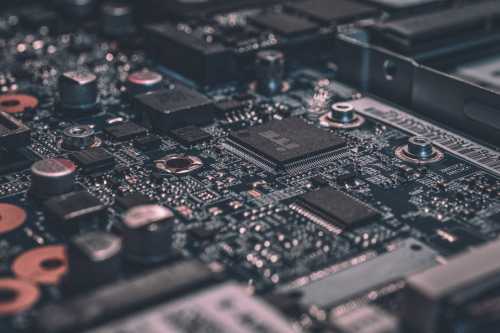
To understand why Nvidia is so valuable, we first need to break down the concepts of tech stocks and artificial intelligence into simple, everyday terms. Imagine you are building a giant, incredibly smart robot. This robot needs a brain to think, learn, and solve complex problems. In the computer world, that brain is called a microchip or a processor. For a long time, regular computer chips, known as Central Processing Units (CPUs), were good enough for basic tasks like writing documents, browsing the web, or running simple programs. You can think of a CPU as a genius mathematician who can solve one very difficult equation at a time, extremely quickly. But artificial intelligence is different. AI needs to look at billions of pictures, read millions of books, and make complex decisions all at the exact same time. A genius mathematician, no matter how smart, would take forever to do this. Nvidia makes special chips, called Graphics Processing Units (GPUs), that are like having an army of a million elementary school students who can all do basic math at the exact same time. While each student isn't a genius, together they can process massive amounts of simple calculations simultaneously, which is exactly how AI learns and thinks. This fundamental difference in architecture is why Nvidia's chips are the undisputed "King of AI Compute" finance.yahoo.com .
The Rise of the Titans and the AI Boom
Nvidia's journey to a $4.6 trillion valuation is one of the most remarkable business stories in history, fueled by a perfect storm of visionary leadership and explosive market demand. Just a few years ago, the company was primarily known by gamers who used their graphics cards to play high-end video games with beautiful, realistic visuals. But the visionary leaders at Nvidia, particularly CEO Jensen Huang, saw a future that others missed. They realized that the same technology used to render 3D graphics could be repurposed to train artificial intelligence models. When the AI boom exploded in the early 2020s, every major technology company—from Microsoft to Meta, from Google to Amazon—suddenly realized they needed Nvidia's chips to build their AI systems. The demand was so massive that it outstripped the supply, allowing Nvidia to charge premium prices and generate record-breaking profits. By 2026, this dominance has translated into unparalleled financial success. The company's stock has been on a tear, with analysts predicting continued growth as the global transition from traditional software to AI-driven solutions accelerates www.fool.com . Nvidia is no longer just a hardware company; it is the essential infrastructure provider for the new digital age.
The Real-World Impact of the AI Revolution
This isn't just a story about one company making a lot of money; it is about a fundamental shift in how the global economy operates and how we solve humanity's biggest challenges. The "AI boom" is often compared to the invention of the internet or the steam engine because it is a general-purpose technology that will eventually touch every single sector. In healthcare, AI powered by Nvidia's chips is helping doctors discover new life-saving drugs in a fraction of the time it used to take, simulating molecular interactions that would be impossible to test physically. In agriculture, it is analyzing satellite imagery and soil data to help farmers grow more food with less water, addressing global food security. In the financial sector, it is detecting fraud and managing risks with incredible accuracy, protecting consumers and institutions alike. Because Nvidia provides the essential hardware for all of these advancements, its financial success is a direct reflection of the massive investments being poured into AI infrastructure worldwide. The company's technology is the bedrock upon which the future of medicine, food production, and global finance is being built.
The Bubble Debate and Geopolitical Risks
However, whenever a single company or sector grows this fast, it naturally raises questions about sustainability, risk, and the potential for a market correction. Financial analysts and economists are constantly debating whether the tech sector, and Nvidia in particular, is in a "bubble." A bubble occurs when the price of an asset grows far beyond its actual, underlying value, driven by wild speculation rather than real-world results. Critics point out that while the AI technology is incredibly impressive, the massive amounts of money being spent by tech giants to buy Nvidia's chips need to eventually result in profitable consumer products. If companies spend hundreds of billions on AI infrastructure but fail to generate enough revenue from AI applications to justify the cost, the spending could suddenly stop. This would cause a massive drop in demand for Nvidia's chips, potentially leading to a sharp decline in its stock price. Furthermore, geopolitical tensions add a layer of complexity and risk to Nvidia's global supply chain. The manufacturing of advanced semiconductors is highly concentrated in specific regions, and ongoing trade restrictions and export controls on advanced technology create significant uncertainty for the company's ability to sell its products in certain global markets.
Competition and the Future of Computing
Despite these risks and the intense scrutiny, the prevailing sentiment among major institutional investors remains overwhelmingly bullish on the long-term trajectory of artificial intelligence and Nvidia's role within it. The consensus is that we are still in the early innings of the AI revolution. Just as the internet required years of massive infrastructure investment before it gave rise to e-commerce, social media, and cloud computing, the AI revolution requires a massive build-out of computing power before it yields its full economic benefits. Nvidia is not resting on its laurels; the company continues to invest heavily in research and development, constantly releasing new, more powerful generations of its chips to stay ahead of the competition. They face pressure from traditional rivals like AMD and Intel, as well as from their own biggest customers—tech giants like Google and Amazon—who are designing their own custom AI chips to reduce their reliance on Nvidia. However, Nvidia's software ecosystem and continuous innovation have so far kept them firmly in the lead. For the everyday consumer, the dominance of Nvidia and the tech sector means that the devices and services we use will become increasingly intelligent, personalized, and capable. For the global economy, it represents a massive shift in wealth and power toward the companies and countries that control the critical technologies of the 21st century.
Official Alternative Source: For the most accurate and up-to-date financial data and official statements regarding Nvidia's market performance, please visit the official Nvidia Investor Relations page: Nvidia Investor Relations - Stock Quote & Chart


Comments (0)
No comments yet. Be the first to share your thoughts!
Want to join the discussion?
Please log in to post a comment.
Login NoworCreate an Account