
The Actuarial Collapse: How the WHO Treaty Failure and Egg-Dependency are Bankrupting Global Bio-Defense

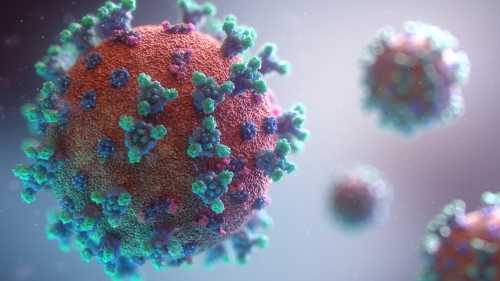
Think of the global public health apparatus not as a humanitarian shield, but as a multinational reinsurance syndicate where the world's largest policyholders are actively canceling their premiums while simultaneously hoarding the actuarial data required to price the next catastrophic risk. For the past two decades, the global bio-defense architecture relied on a delicate quid pro quo: the Global South shared pathogen genomic sequences in exchange for guaranteed access to the resulting vaccines and therapeutics produced by the Global North. Today, that contract is being violently torn up by the simultaneous weaponization of intellectual property and the retreat of hegemonic funding.
The Core Event
The definitive stalling of the WHO Pandemic Treaty negotiations over deep geopolitical rifts regarding pathogen-sharing and intellectual property annexes has occurred precisely as the United States formalizes its withdrawal from the global health body [[20], [24]]. This institutional fragmentation is colliding with a severe H5N1 avian influenza outbreak in dairy and poultry sectors, exposing the fatal vulnerabilities of an egg-dependent, underfunded bio-manufacturing supply chain [[4], [10]].
The Unseen Implications
The immediate shockwave impacting [[Global Health Security & Bio-Manufacturing Supply Chains]] is the total bifurcation of global genomic surveillance and the resulting "blind spots" in pandemic early-warning systems. The wide gaps in the pandemic treaty's annexes regarding pathogen access and benefit-sharing have effectively incentivized sovereign data hoarding genevasolutions.news . Developing nations, recognizing that the Global North will utilize export controls to hoard medical countermeasures during a crisis, are increasingly refusing to upload novel zoonotic sequences to open-access databases. According to a recent analysis in BMJ Global Health, this "implementation gap" driven by geopolitics means that the next pandemic pathogen will likely circulate undetected for critical months, rendering the WHO's early warning infrastructure functionally obsolete gh.bmj.com . The implication for global bio-surveillance is severe: we are returning to a pre-2000 era of fragmented, bilateral intelligence sharing where pathogens cross borders faster than the diplomatic cables reporting them.
The second unseen implication is the catastrophic fragility of the U.S. bio-manufacturing base, specifically its archaic reliance on embryonated chicken eggs for vaccine production. As H5N1 spreads through dairy cattle and poultry flocks, the physical supply chain required to manufacture traditional inactivated vaccines is being cannibalized by the very virus it is meant to fight [[3], [4]]. Recent industry analysis highlights how "mRNA vaccine cuts and egg dependency leave the U.S. exposed to a bird flu pandemic," as the culling of millions of layers destroys the biological substrate necessary for legacy vaccine production globalbiodefense.com . The implication for bio-manufacturing is that the U.S. lacks the surge capacity to produce a matched H5N1 human vaccine at scale without decimating the domestic food supply. The strategic pivot to cell-based and mRNA platforms has been severely undercapitalized due to shifting political priorities, leaving the national biodefense stockpile reliant on a 1950s-era biological substrate that is highly susceptible to zoonotic contamination.
Finally, this institutional collapse is accelerating the silent, cross-border proliferation of Antimicrobial Resistance (AMR), which operates as the ultimate shadow pandemic. Globalization continues to accelerate the international spread of AMR through increased travel, agricultural trade, and migration pmc.ncbi.nlm.nih.gov . With the WHO's normative authority fractured and the U.S. retreating from global health governance, there is no central mechanism to enforce agricultural antibiotic stewardship or track resistant plasmids moving through the global meat supply chain. The economics of AMR solutions remain fundamentally broken, as the market fails to reward the development of novel antibiotics that must be kept in reserve [[12], [13]]. The unseen reality is that without a coordinated global treaty to internalize the externalities of agricultural antibiotic overuse, the Global North will increasingly face untreatable post-operative infections imported via global trade routes, fundamentally altering the risk calculus for routine surgeries, oncology care, and organ transplantation.
The Historical Precedent
The closest historical analog is the collapse of the International Sanitary Conferences in the late 1930s, which were paralyzed by rising geopolitical nationalism and the refusal of imperial powers to share epidemiological data across contested borders. During that era, the lack of a unified reporting framework allowed diseases like cholera and plague to move freely along global shipping routes, as nations prioritized trade continuity over transparent quarantine protocols. The lesson from the 1930s is stark: when global health governance fractures along geopolitical lines, the resulting opacity does not stop the pathogen; it merely delays the public health response while the economic damage compounds. Just as the failure of the 1930s sanitary conferences necessitated the post-WWII creation of the WHO, the current collapse of the Pandemic Treaty will likely force a brutal, reactive restructuring of global bio-defense only after a high-mortality event exposes the fatal cost of sovereign data hoarding.
Actionable Takeaways
For hospital administrators and healthcare network executives, the immediate mandate is to aggressively audit surgical prophylaxis protocols and stockpile next-generation, non-beta-lactam antibiotics, anticipating a sharp rise in AMR surgical site infections driven by unregulated global agricultural imports. Biotech manufacturers and CDMOs must immediately pivot capital expenditure away from legacy egg-based bioreactors and secure long-term offtake agreements for cell-based and lipid nanoparticle (LNP) raw materials, as the federal government will inevitably be forced to subsidize a rapid, emergency modernization of the strategic national stockpile. For citizens and retail investors, the playbook requires a defensive rotation out of legacy, single-product vaccine manufacturers heavily exposed to avian supply chain risks, and into automated bio-foundries, diagnostic sequencing firms, and water-treatment infrastructure providers who profit from the localized containment of zoonotic and AMR threats.
Future Forecast
Over the next six months, the landscape will be defined by a quiet, bilateral "vaccine nationalism" arms race, where G7 nations will aggressively use foreign aid and sovereign debt relief to secure exclusive, off-the-books access to pathogen genomic data from key zoonotic hotspots in Southeast Asia and Sub-Saharan Africa. We will see a severe, localized culling event in the U.S. dairy and poultry sectors that forces the USDA to invoke the Defense Production Act to commandeer cell-culture facilities for emergency H5N1 vaccine production. Concurrently, expect the WHO to effectively devolve into a purely administrative shell, while the actual architecture of global bio-defense shifts to a fragmented network of regional military-medical commands and private bio-intelligence firms operating entirely outside traditional diplomatic oversight.
Related Articles

The Compute Reckoning: Navigating Sovereign AI, Quantum Tipping Points, and Antitrust Friction
Aug 23, 2026
The Structural Recalibration of Global Technology: Navigating Compute, Cryptography, and Geopolitical Faultlines
Aug 22, 2026
Comments (0)
No comments yet. Be the first to share your thoughts!
Want to join the discussion?
Please log in to post a comment.
Login NoworCreate an Account