
The AI Doctor: 2026 Marks the Year Artificial Intelligence Becomes Essential in Drug Discovery and Biology

The Super-Smart Computer Brain
Imagine you have a friend who has read every single book in the world, remembers every single fact, and can think a million times faster than you. If you ask this friend a question, they can give you the answer in one second. This friend is not a human; it is an Artificial Intelligence, or AI. AI is a computer program that can learn and think. For a long time, AI was just a toy. It could play chess, write simple poems, or recognize your face in a photo. But in 2026, AI has grown up. It has become a powerful tool that is changing the world of science forever. The biggest change is happening in medicine. Scientists have announced that 2026 is the year AI stops being optional in drug discovery. It is no longer just a helper; it is the core of how we find new cures for diseases. Let us meet the AI doctor and see how it is saving lives.
The Old Way vs. The AI Way of Finding Medicines
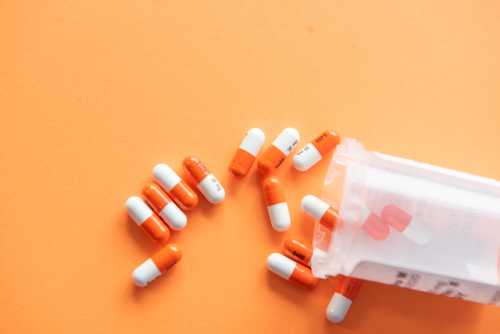
To understand how amazing this is, you have to know how hard it is to make a new medicine. In the old days, finding a new drug was like trying to find a specific key to open a lock, but you had billions of keys and you did not know what the lock looked like. Scientists would mix chemicals in test tubes, one by one, and test them on cells. It took ten years and billions of dollars to find just one medicine. Most of the time, they failed. But now, the AI does it differently. The AI has looked at every protein, every cell, and every disease in the human body. It knows exactly what the lock looks like. In a few hours, the AI can design a million different keys (molecules) on its computer screen. It simulates how each key will fit into the lock. Then, it picks the best ten keys and tells the human scientists, Make these ten. The AI has turned a ten-year journey into a ten-week journey. It is like magic, but it is actually math and data.
Understanding the Language of Life
The AI is not just good at making drugs; it is good at understanding biology itself. Our bodies are made of cells, and inside the cells is DNA, which is like a giant instruction manual. For a long time, the manual was written in a language we could not read. But the AI has learned the language. In 2026, AI models can predict how a cell will react to a virus, how a gene will mutate, or how a tumor will grow. This is called AI-enabled scientific discovery. The AI can look at the data from a patient's blood test and spot patterns that a human doctor would miss. It can say, This person is going to get sick in five years unless we change their diet. It is like having a crystal ball that is based on real science. By understanding the language of life, the AI is helping us move from fixing people when they are sick to keeping them healthy before they even get sick.
Will the AI Replace Human Doctors?
This is a very common question. If the AI is so smart, do we still need human doctors? The answer is yes! The AI is like a super-powered tool, but it still needs a human to hold it. An AI can look at a thousand X-rays in one second and find the tiny shadow of a tumor. But the AI cannot hold the patient's hand, look into their eyes, and understand their fears. The AI cannot make the complex moral decisions about what is the best quality of life for a specific person. The future of medicine is not AI instead of humans; it is AI plus humans. A doctor who uses AI will be able to cure ten times more people than a doctor who does not. The AI will do the boring, heavy lifting of analyzing the data, freeing up the human doctors to do what they do best: care for the patient with empathy, kindness, and wisdom. It is a partnership between the speed of the machine and the heart of the human.
Making Medicine Cheaper and Fairer
One of the biggest problems in the world is that medicines are very expensive. Because it costs a billion dollars to invent a new drug, the companies have to charge a lot of money to get their money back. But if the AI can invent a drug in a few weeks for a few thousand dollars, the cost of medicine will drop dramatically. This is a huge deal for poor countries and for regular people who struggle to pay for their prescriptions. In 2026, we are seeing the first AI-designed drugs that are cheap to produce and easy to distribute. The AI is also helping to design medicines for rare diseases that the big companies ignored because there was no money in them. The AI does not care about money; it just cares about solving the puzzle. By making drug discovery faster and cheaper, the AI is making healthcare fairer for everyone on the planet.
Preparing for the Next Pandemic
We all remember how scary it was when a new virus appeared and the whole world had to stop. The biggest fear is that another new virus will jump from animals to humans. But now, we have the AI watching. The AI is constantly scanning the news, the animal populations, and the hospital data around the world. If it sees a strange pattern of coughing in a remote village, it can alert the scientists immediately. Then, the AI can design a vaccine for the new virus in a single day. Instead of waiting two years to stop the pandemic, we can stop it in two weeks. The AI is like a global immune system for humanity. It is always awake, always watching, and always ready to design the shield we need to protect ourselves. This is perhaps the most important gift the AI has given us: the power to stay safe from the invisible threats of nature.
The Future of Human Health
The year 2026 is a turning point in history. We have crossed the threshold where artificial intelligence is no longer just a cool trick; it is an essential partner in the quest for human health. From the deep underground labs catching neutrinos to the golden telescopes looking at black holes, and now to the silent, thinking computers designing the cures for cancer and heart disease, science is advancing faster than ever before. The AI doctor is here, and it is ready to work. It will help us live longer, healthier, and happier lives. It will help us conquer diseases that have plagued humanity for thousands of years. As we embrace this new era, we must remember to use this powerful tool wisely, with kindness and fairness, so that the benefits of the AI revolution are shared by every child, in every country, across our beautiful, fragile world. The future of medicine is bright, and it is powered by the brilliant partnership of human creativity and artificial intelligence.
Related Articles
The Healthcare Quadruple Bypass: Navigating Price Controls, Workforce Attrition, and Rural Desertification
Aug 22, 2026
The Fractured Laboratory: How Geopolitical Friction is Rewiring Global Science Economics
Aug 19, 2026
Comments (0)
No comments yet. Be the first to share your thoughts!
Want to join the discussion?
Please log in to post a comment.
Login NoworCreate an Account