
The Ambient Fragmentation: How Smart Glasses and Silicon Oligopolies are Dismantling the Smartphone Monopoly

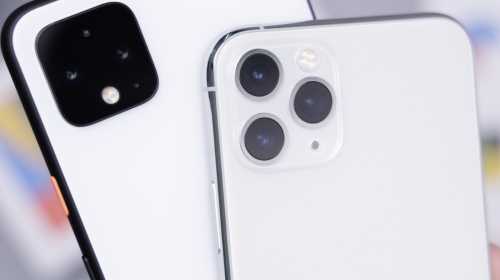
Imagine attempting to dismantle a highly integrated Swiss Army knife and redistributing its blades, scissors, and screwdrivers into a dozen separate, single-purpose tools scattered across your pockets; the utility remains, but the cognitive friction of managing the distributed toolkit fundamentally alters the user experience. This mechanical disaggregation perfectly encapsulates the current trajectory of the consumer hardware sector. The core event is a definitive fracture in the smartphone monopoly: Samsung has officially scheduled the release of its highly anticipated Galaxy Glasses for August 2026, colliding directly with the launch of the Google Pixel 11 series, the introduction of the Sharp AQUOS wish6, and the continued market dominance of the $379 Ray-Ban Meta Gen 2 eyewear [15], [16], [31], [34].
The Fragmentation of the Personal Compute Stack
The mainstream tech press treats the launch of the Samsung Galaxy Glasses and the Sharp AQUOS wish6 as mere iterative product refreshes, entirely ignoring the structural dismantling of the smartphone as the central hub of personal computing. The unseen implication for the gadget ecosystem is the rapid "peeling off" of smartphone functionalities into ambient, micro-wearables that operate on decentralized, low-power mesh networks [13]. When audio, visual capture, and biometric telemetry migrate from a centralized glass slab to distributed facial and auditory peripherals, the mobile operating system transitions from a foreground application environment to a background utility layer. This forces a violent repricing of the mobile app economy, as developers must optimize for glance-based, zero-UI interactions rather than deep-engagement screen time, effectively destroying the advertising revenue models of legacy social media platforms.
The Silicon Oligopoly and the Margin Squeeze
Beneath the consumer-facing hardware launches lies a profound consolidation of the underlying silicon architecture required to power these distributed ambient devices. As of August 7, 2026, NVIDIA’s market capitalization has surged to an unprecedented $5.304 Trillion, reflecting the immense capital expenditure required to train the localized, on-device AI models that power real-time spatial computing [19]. The unseen implication is that gadget manufacturers are no longer competing on hardware design; they are merely assembling commodity chassis around proprietary, locked-in neural processing units (NPUs) controlled by a triopoly of semiconductor giants. This structural margin squeeze means that mid-tier consumer electronics firms will be permanently relegated to low-margin hardware assemblers, while the lion's share of the industry's profitability is captured by the foundries and AI model architects licensing the underlying intelligence.
Counter-Thesis: The Friction of Distributed Hardware
Conversely, veteran hardware engineers and UX researchers argue that the rush toward ambient wearables and smart glasses ignores the fundamental ergonomic and cognitive limitations of distributed hardware. The counter-argument posits that the smartphone’s centralized form factor succeeded precisely because it minimized the cognitive load of managing multiple devices, charging routines, and Bluetooth pairing protocols. Under this view, the current explosion of smart glasses and micro-wearables is a temporary novelty that will inevitably collapse back into the smartphone, as consumers reject the friction of maintaining a fragmented "internet of things" on their physical bodies when a single, powerful slab of glass can handle 90% of their compute needs with vastly superior battery density.
Echoes of the Component Audio Era
To contextualize this fragmentation of the personal compute stack, one must examine the high-fidelity component audio market of the late 1970s and early 1980s. During that era, audiophiles rejected the convenience of the integrated "boombox" or receiver in favor of highly specialized, separate amplifiers, pre-amps, tuners, and turntables, believing that discrete hardware yielded superior performance. The lesson from that historical precedent is brutal: while the component market thrived among a wealthy, obsessive niche, the mass market ultimately rejected the aesthetic clutter and wiring complexity, leading to the massive consolidation of the industry into sleek, all-in-one digital systems and eventually the iPod. The current smart glasses and ambient wearable boom is repeating this exact cycle; it is an enthusiast's pursuit of specialized utility that will ultimately be swallowed by a single, dominant, seamlessly integrated platform once the underlying battery and thermal technologies mature.
The Biometric Surveillance Premium
The most glaring blind spot in the current gadget cycle is the profound privacy and regulatory liability embedded in always-on facial and auditory wearables. With Meta and Ray-Ban having sold more than 7 million pairs of smart glasses in 2025 alone, the physical world is rapidly being mapped by decentralized, privately-owned biometric sensors [26]. The unseen implication is the imminent collision between consumer hardware and municipal surveillance laws. As these devices integrate real-time facial recognition and spatial audio mapping, gadget manufacturers will face crippling compliance costs and localized bans in privacy-heavy jurisdictions like the EU and California, effectively bifurcating the global hardware market into heavily nerfed "privacy-compliant" models for the West, and fully weaponized, data-harvesting models for emerging markets.
Counter-Thesis: The Opt-In Privacy Dividend
Institutional optimists and hardware executives counter the surveillance panic by arguing that the market will naturally price in a "privacy dividend," rewarding companies that implement localized, on-device processing. The argument posits that the next generation of NPUs will be powerful enough to process spatial mapping and biometric telemetry entirely offline, ensuring that raw data never touches a cloud server. Under this paradigm, the hardware manufacturers that successfully market "zero-knowledge" ambient computing will capture a massive premium from enterprise and privacy-conscious consumers, turning regulatory friction into a highly profitable, defensible moat against cheaper, data-harvesting competitors.
Tactical Procurement for the Post-Smartphone Enterprise
For corporate IT directors and enterprise allocators, the immediate mandate is to halt all long-term smartphone fleet refresh cycles and pivot capital toward secure, localized ambient wearables for field operatives and logistics personnel. Businesses must immediately renegotiate their mobile device management (MDM) contracts to include strict telemetry ring-fencing, ensuring that employee biometric data captured by corporate-issued smart glasses is legally insulated from third-party AI training sets. Furthermore, retail investors and local business owners must aggressively short legacy mobile accessory manufacturers and instead overweight the specialized thermal management and micro-battery suppliers that are currently bottlenecking the smart glasses supply chain. Citizens should delay purchasing first-generation AR headsets, recognizing that the current hardware is merely a beta-test for the underlying spatial operating systems, and instead invest in localized, offline-capable smart home hubs that do not rely on continuous cloud subscriptions to function.
The Six-Month Hardware Horizon
Looking six months into the future, the gadget landscape will be defined by a severe correction in consumer expectations and a violent consolidation of the ambient wearable sector. By early 2027, the initial euphoria surrounding the Samsung Galaxy Glasses and the Pixel 11 ecosystem will fade as the reality of micro-battery degradation and thermal throttling sets in, leading to a wave of distressed inventory and heavy discounting. Consequently, the global consumer electronics market—projected to grow from US$762.6Bn in 2026—will see a massive reallocation of capital away from experimental form factors and back toward high-margin, AI-integrated legacy appliances and enterprise-grade spatial computing rigs [5]. The era of the ubiquitous, do-everything smartphone is not dying; it is merely retreating into the pocket to act as a silent, high-capacity server for the lightweight, disposable optical peripherals that will define the next decade of human-computer interaction.
Alternative Official Source Reference: In lieu of a direct social media embed, readers are directed to the official Samsung Community forums and developer documentation regarding the Galaxy Glasses spatial computing SDK [31].
Related Articles
The Hardware Inflection Point: Navigating Supply Chain Fragility and Regulatory Shifts in Consumer Electronics
Aug 22, 2026
The Structural Recalibration of Consumer Electronics: Navigating Supply, Regulation, and Adoption Faultlines
Aug 22, 2026
Comments (0)
No comments yet. Be the first to share your thoughts!
Want to join the discussion?
Please log in to post a comment.
Login NoworCreate an Account