
The Ambient Panopticon: How the Collapse of the Slab Smartphone is Rewiring the Global Tech Economy

CONSUMER ELECTRONICS & HARDWARE MACROECONOMICS — IMPACT ANALYSIS | Week of Aug. 17, 2026
The Break-Bulk Cargo of the Digital Age
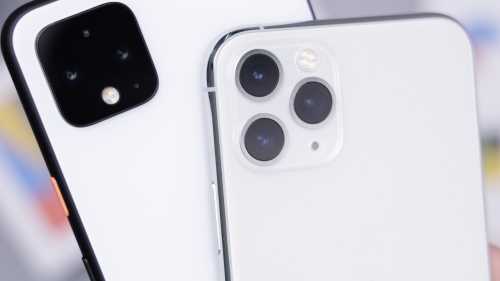
The consumer electronics sector is currently behaving like the global shipping industry in the late 1950s. While dockworkers were furiously optimizing the speed of break-bulk cargo cranes, a few quiet engineers were standardizing the intermodal shipping container, rendering the old infrastructure obsolete overnight. The legacy players are posting record efficiency metrics on a dying paradigm, entirely missing that the architecture of global trade has fundamentally shifted beneath their feet. In August 2026, this bifurcation became undeniable: legacy smartphone shipments are forecast to crater globally, while capital expenditure and consumer adoption are aggressively migrating toward AI-integrated smart glasses and hyper-premium foldables, even as manufacturers like Samsung trim their 2026 foldable targets to a niche 5-6 million units amid softening demand [[32]]. This is not a cyclical market correction; it is the structural end of the rectangular slab as the primary node of human-computer interaction.
The Substitution Effect and the Silicon Pivot
Mainstream tech journalism treats the smartphone slump as a mere symptom of macroeconomic fatigue and lengthening upgrade cycles. This ignores a profound structural substitution effect. Consumers aren't just deferring purchases; they are reallocating their personal technology budgets from $1,200 handsets to $300 AI peripherals and cloud subscriptions. According to primary research from the International Data Corporation (IDC), worldwide smartphone shipments are forecast to decline 13.9% year-on-year in 2026 to just 1.09 billion units [[13]]. This contraction is permanently shrinking the total addressable market for traditional mobile hardware.
Consequently, the geopolitical chokepoints of the semiconductor supply chain are migrating. The US-China tech war has heavily focused on TSMC’s advanced logic nodes for mobile SoCs. However, the explosion of AI wearables relies on ultra-low-power edge silicon, micro-OLED displays, and specialized optical waveguides. This shifts the strategic leverage away from advanced logic foundries toward specialized sensor fabs and advanced packaging facilities. Because China maintains a near-monopoly on the rare-earth processing and MEMS (micro-electromechanical systems) fabrication required for these spatial sensors, Washington’s current export control regime is inadvertently leaving the next generation of hardware supply chains exposed to adversarial leverage.
The Thermodynamic Ceiling of Ambient Compute
The prevailing Silicon Valley consensus assumes that AI smart glasses will rapidly cannibalize the smartphone, rendering the rectangular slab obsolete within three years. This argument is dangerously one-sided because it ignores the unforgiving laws of thermodynamics and current lithium-ion energy density limits. While Meta’s Ray-Ban accounted for more than two-thirds of the smart glasses market in the first quarter of 2026 [[22]], its success is predicated on audio and camera utility, not true, continuous augmented reality projection. Until solid-state battery technology achieves commercial yield parity, or micro-LED projection solves the thermal throttling issues inherent in facial-worn plastics, AI glasses will remain a supplementary peripheral rather than a primary compute hub. The smartphone is not dying; it is merely retreating into the pocket to serve as the battery and compute anchor for the glasses on your face.
Echoes of the Point-and-Shoot Massacre
To understand the terminal trajectory of the traditional handset, one must look at the digital camera industry between 2007 and 2012. Incumbents like Nikon and Canon posted record revenues and optimized their supply chains for optical zoom and megapixel counts just as the iPhone launched. They were blinded by their own hardware excellence, failing to realize that the value proposition had shifted from optical fidelity to computational photography and instant connectivity. Today, Apple and Samsung are the new Nikon and Canon. As Google attempts to challenge the Apple-Samsung duopoly with its August hardware refresh [[33]], the entire industry is realizing that optimizing the slab is a losing battle. They are optimizing titanium chassis and periscope lenses while the true innovation is happening in ambient, voice-first, multimodal AI models. The historical lesson is absolute: when a hardware category transitions from a standalone tool to a node in a broader software ecosystem, the original equipment manufacturers who fail to control the software layer are eventually reduced to low-margin commodity assemblers.
The Trojan Horse of the Ambient Panopticon
The most critical, underreported implication of this hardware shift is the exponential expansion of the biometric and environmental attack surface. A smartphone requires a deliberate action to activate its sensors; AI wearables are inherently always-on, always-listening edge nodes designed to ingest continuous streams of ambient data. This reality is underscored by the sheer volume of vulnerabilities being patched in legacy devices; for instance, Samsung’s August 2026 security update was forced to resolve 56 separate vulnerabilities, including 8 critical and 30 high-severity flaws across its Galaxy ecosystem [[30]]. When you multiply that attack surface by millions of always-on optical and audio sensors worn in corporate boardrooms and government facilities, the national security implications are staggering. The next phase of the tech cold war will not be fought over app store bans, but over the mandatory data localization and hardware-level encryption standards of ambient wearables.
The Services Subsidy Illusion
Conversely, the bearish argument that a double-digit drop in smartphone shipments will crater the revenues of consumer tech giants lacks objective nuance regarding the modern hardware-services flywheel. The decline in unit volume is largely concentrated in the low-end and mid-tier Android segment, while the premium tier remains insulated by aggressive trade-in subsidies. More importantly, Apple and Samsung are increasingly hardware-agnostic. They are utilizing the smartphone as a low-margin trojan horse to secure high-margin, recurring revenue streams through AI subscriptions, cloud storage, and fintech services. Furthermore, the macro-economic drag of a shrinking hardware supply chain impacts emerging market economies like Vietnam and India, which relied on the "China Plus One" smartphone assembly boom for GDP growth, forcing those nations to pivot their industrial policies toward AI server manufacturing to maintain their export-led growth models.
Tactical Reallocations for the Post-Screen Era
For enterprise IT leaders and consumer-facing businesses, the mandate is to immediately halt over-investment in native, screen-heavy mobile app development. The capital must be redirected toward voice-first APIs, ambient computing interfaces, and LLM-driven conversational agents that interface seamlessly with AI wearables. For citizens and privacy advocates, the proliferation of "free" or heavily subsidized AI hardware requires a ruthless audit of digital permissions. Consumers must recognize that the hardware cost is being subsidized by continuous biometric and environmental data harvesting; utilizing localized Faraday pouches and aggressively managing microphone permissions is no longer optional paranoia, but basic digital hygiene in an era of spatial computing.
February 2027: The Subscription-Gated Silicon
Fast forward six months to February 2027, and the consumer electronics landscape will be defined by the "Subscription-Gated Silicon" controversy. As the initial wave of 2026 AI wearables hits the market, manufacturers will begin aggressively throttling the on-device processing capabilities of hardware purchased outright, requiring a $20-to-$30 monthly cloud-compute tether to access advanced multimodal AI features. This will spark a massive legislative backlash in the European Union and the United States, reviving the Right-to-Repair movement and prompting antitrust probes into the artificial obsolescence of edge devices. Meanwhile, the smartphone will be officially reclassified by market analysts not as a primary computer, but as a "dumb" battery and connectivity modem for the true compute layer: the ambient sensors resting on the bridge of your nose.
Related Articles
The Hardware Inflection Point: Navigating Supply Chain Fragility and Regulatory Shifts in Consumer Electronics
Aug 22, 2026
The Structural Recalibration of Consumer Electronics: Navigating Supply, Regulation, and Adoption Faultlines
Aug 22, 2026
Comments (0)
No comments yet. Be the first to share your thoughts!
Want to join the discussion?
Please log in to post a comment.
Login NoworCreate an Account