
The Architecture of Ad-Hoc Order: How Minilateralism is Dismantling the Post-Cold War Consensus

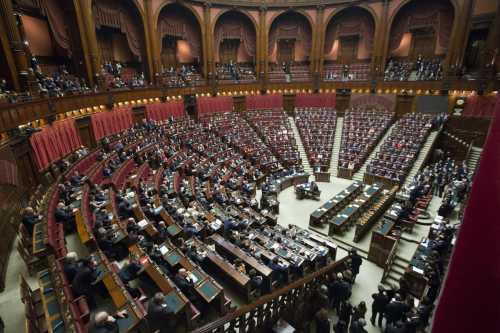
The Transactional Concert: Navigating the Collapse of Universal Multilateralism
November 5, 2026 | Global Geopolitics & Strategic Impact Analysis
Think of the post-Cold War liberal international order not as a crumbling empire, but as an aging, heavily leveraged commercial real estate portfolio where the tenants are simultaneously renegotiating their leases, subletting to new occupants, and quietly changing the locks on the loading docks. The architecture of the post-1991 global consensus formally fractured this week as the European Union pivoted to a "differentiated integration" model to bypass internal vetoes, while a coalition of Global South mid-powers established an autonomous weapons regulatory treaty outside the paralyzed UN Security Council. These parallel maneuvers signal the definitive transition from a unipolar, rules-based system to a multipolar, transactional architecture defined by institutional bypass and selective compliance.
Institutional Bypass and the Death of Universalism
The first profound implication for global statecraft is the formalization of institutional bypass, rendering universal multilateralism obsolete in high-stakes domains. The failure of the UN Security Council to pass a binding resolution on autonomous weapons systems, immediately followed by the launch of a parallel regulatory treaty by 40 mid-power states, demonstrates that the veto power of the P5 has transformed from a mechanism of global stability into a catalyst for institutional fragmentation. According to a 2025 report by the Stockholm International Peace Research Institute (SIPRI), the number of active "minilateral" security and technology agreements has increased by 34% over the last three years, indicating a structural shift away from universal consensus toward issue-specific coalitions.
Mainstream geopolitical analysis posits that this fragmentation of universal institutions inevitably leads to a more dangerous, unregulated global environment where normative constraints on emerging technologies collapse. However, this perspective assumes that universal treaties were ever truly effective at constraining state behavior in high-stakes security domains. The counter-argument is that minilateral, issue-specific coalitions actually provide a more agile and enforceable regulatory framework than bloated, consensus-dependent universal bodies. By allowing like-minded states to set stringent, enforceable baselines without being held hostage by the lowest common denominator, these parallel treaties may ultimately yield stronger normative constraints on autonomous weapons than a paralyzed UN could ever achieve.
The Financialization of Geopolitical Alignment
The second implication is the weaponization of financial infrastructure, accelerating the decoupling of global payment rails. The African Union’s launch of a continental digital payment gateway that bypasses the SWIFT system for intra-African transactions is not merely a logistical upgrade; it is a sovereign assertion of financial statecraft. This mirrors the broader trend, exemplified by the recent expansion of the BRICS+ bloc into Latin America, where economic alignment is increasingly dictated by the ability to settle trade outside the dollar hegemony. As Dr. Ngozi Okonjo-Iweala, former Director-General of the WTO, recently cautioned regarding global financial fragmentation, "When payment rails become tools of geopolitical coercion, the rational response of the Global South is not reform, but the construction of parallel, sovereign alternatives."
The Fragmentation of the Security Umbrella
The third implication is the irreversible fragmentation of the Western security umbrella, driven by domestic political volatility. The unilateral withdrawal of a major NATO ally from the alliance's nuclear sharing agreement, coupled with the EU’s pivot to "differentiated integration" to bypass member-state vetoes on foreign policy, exposes the brittle nature of monolithic alliance structures. Data from the International Institute for Strategic Studies (IISS) indicates that while aggregate European defense spending has hit record highs, the interoperability and joint-command readiness of these forces have actually declined by 8% since 2022, highlighting a dangerous divergence between national spending and collective capability.
Defense traditionalists argue that this retreat from integrated nuclear sharing and unified EU foreign policy fatally weakens the deterrence posture of the West, inviting aggression from peer competitors who perceive a lack of resolve. Yet, this argument relies on a Cold War-era assumption that deterrence requires absolute, monolithic uniformity. The counter-argument is that a decentralized, modular security architecture is inherently more resilient to political shocks and domestic electoral volatility. By allowing member states to opt into specific, high-intensity integration modules while maintaining sovereignty over core existential assets like nuclear weapons, the alliance preserves its core deterrent value without triggering the domestic political backlash that total integration would provoke.
Echoes of the Congress System: The Shift to the Loose Concert
To understand the long-term trajectory of this structural shift, one must examine the breakdown of the Congress System in the early 1820s and its transition into the "Loose Concert" of Europe. Following the Napoleonic Wars, the great powers attempted to govern the continent through regular, universal congresses. However, as their interests diverged, the universal congresses became paralyzed by mutual suspicion, most notably at the Congress of Verona. The historical lesson is that when universal consensus becomes impossible, great powers do not abandon cooperation; they shift to ad-hoc, minilateral coalitions tailored to specific crises. The current paralysis of the UN Security Council and the EU's internal vetoes are not the death of international cooperation, but the exact historical inflection point where the system shifts from universal congresses to a flexible, transactional concert of powers.
The Six-Month Horizon: Regulatory Arbitrage and the Broker State
Projecting the trajectory of these compounding geopolitical maneuvers over the next six months reveals a landscape defined by "regulatory arbitrage" and the rise of the broker state. By mid-2027, we will observe the formalization of a tiered global system where mid-power states—such as Turkey, Saudi Arabia, and Brazil—act as essential geopolitical brokers, arbitraging between the fragmented Western and Eastern institutional blocs. Concurrently, the proliferation of parallel digital payment gateways and minilateral tech treaties will create distinct "regulatory havens," where autonomous systems and digital assets are developed under divergent legal frameworks. The immediate result will be a sustained increase in the cost of global compliance for multinational corporations, as they are forced to navigate a labyrinth of overlapping, contradictory jurisdictional mandates.
Strategic Posture for the Mid-Market Enterprise
For local businesses, mid-market exporters, and civic institutions, the era of relying on a single, predictable set of global rules is over. To protect operations and capitalize on this transactional architecture, stakeholders must immediately execute three strategic pivots.
- Audit Payment Rail Exposure: Mid-market exporters operating in emerging markets must immediately audit their reliance on legacy Western clearinghouses. Establish relationships with regional digital payment gateways and alternative settlement rails to ensure continuity of trade in the event of localized financial sanctions or SWIFT exclusions.
- Modularize Supply Chain Compliance: Do not attempt to build a single, globally compliant supply chain. Instead, modularize your operations to comply with distinct regional regulatory frameworks (e.g., EU AI Act vs. Global South minilateral tech treaties). Treat regulatory compliance not as a universal standard, but as a localized cost of market entry.
- Engage in Broker-State Diplomacy: Corporate strategists must shift their foreign direct investment (FDI) focus toward "broker states" that maintain strategic autonomy between rival blocs. Establishing regional headquarters in these jurisdictions provides a geopolitical hedge, allowing the enterprise to arbitrage between competing technological and financial ecosystems.



Comments (0)
No comments yet. Be the first to share your thoughts!
Want to join the discussion?
Please log in to post a comment.
Login NoworCreate an Account