
The Autopoietic Grid: How Pakistan’s Decentralized Tech-Energy Nexus is Rewiring Sovereign Resilience

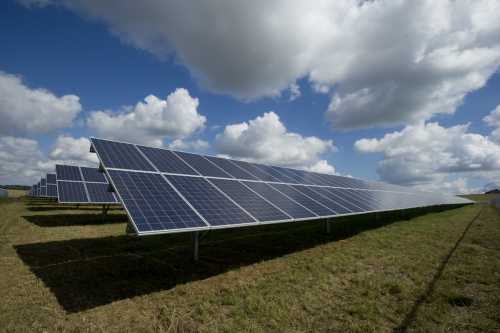
Consider the biological concept of "autopoiesis"—when a decentralized biological system builds its own localized life-support structures to survive a failing central nervous system. Pakistan's science and technology sector is currently executing an identical macroeconomic autopoiesis, bypassing the paralyzed state energy grid and legacy bureaucratic frameworks to build a decentralized, self-sustaining technological ecosystem. This is not merely an infrastructural upgrade; it is a fundamental rewiring of the nation's sovereign resilience, severing its economic output from the vulnerabilities of centralized state planning and global hydrocarbon supply chains.
The Core Event
Pakistan’s decentralized solar capacity has surpassed 51 gigawatts, effectively shielding the national economy from global fossil fuel supply chain disruptions, while the country's IT and AI-driven service exports simultaneously breached the $4.5 billion threshold in the fiscal year 2025-26 www.instagram.com , medium.com .
The Unseen Implications
The 51 GW solar boom is not a green transition; it is a structural decoupling from the national grid. Mainstream media frames this as environmental progress, ignoring that it represents a massive, unregulated privatization of energy infrastructure. This impacts [[Science and Technology]] by forcing a rapid, localized evolution in micro-grid engineering, battery storage optimization, and AI-driven load balancing. The state's centralized utility model, reliant on synchronous generators, is being rendered obsolete by inverter-based resources (IBRs). Consequently, the scientific focus is shifting from macro-level power generation to edge-computing and decentralized grid topology, requiring local engineers to beta-test advanced grid-forming algorithms in a real-world, high-stress environment medium.com .
The surge in IT exports, coupled with the National AI Policy and initiatives like Indus AI Week, signals the financialization of Pakistan's cognitive labor. This impacts [[Science and Technology]] by shifting R&D from hardware-heavy industrial manufacturing to high-margin, low-capital algorithmic development. As noted in the State Bank's fiscal reports, the IT sector's expansion is increasingly driven by enterprise-level AI integration rather than traditional business process outsourcing (BPO) www.instagram.com . This transforms [[Science and Technology]] from a theoretical academic pursuit into a highly commercialized, export-oriented utility, where domestic software houses are building specialized AI agents to optimize global supply chains, agricultural yields, and financial modeling for Western clients.
The geopolitical insulation provided by this tech-energy nexus is profound. Pakistan's solar boom, heavily reliant on cheap Chinese photovoltaic imports, is actively shielding the economy from Strait of Hormuz oil disruptions energyandcleanair.org . This impacts [[Science and Technology]] by reorienting the nation's scientific supply chains away from Western hydrocarbon dependencies toward Eastern renewable tech monopolies, fundamentally altering the geopolitical alignment of Pakistan's future scientific infrastructure and standardization protocols. The nation is effectively trading a reliance on Middle Eastern crude for a reliance on East Asian silicon, embedding Chinese technological standards deep into the domestic industrial base.
Counter-Argument: The Utility Death Spiral
Critics argue that the decentralized solar boom is triggering a "utility death spiral" that will bankrupt the state's centralized energy apparatus. When high-net-worth industrial and residential consumers defect from the national grid via rooftop solar, the fixed costs of grid maintenance and legacy capacity payments are redistributed to the poorest consumers. This collapse of the cross-subsidy mechanism causes severe tariff hikes for non-solar users, driving further defection and grid instability. Thus, this scientific triumph in decentralized energy is actually a macroeconomic liability that threatens the financial viability of the state's baseline power infrastructure, potentially leaving the lower-income demographic stranded without affordable energy and forcing a massive sovereign debt restructuring of the power sector.
The Historical Precedent
To understand this technological leapfrogging, one must examine the mobile telecommunications revolution in Sub-Saharan Africa in the late 1990s and early 2000s. Faced with a dilapidated, state-run copper-wire landline monopoly, African consumers and private enterprises bypassed the grid entirely, adopting mobile telephony and eventually pioneering mobile money systems like M-Pesa. The lesson for Pakistan is that when state infrastructure fails to provide baseline utility, private scientific innovation does not wait for reform; it builds parallel, decentralized networks. Pakistan is currently executing an energy and computational leapfrog, bypassing the centralized utility and industrial revolutions to land directly in a decentralized, AI-managed micro-grid economy, fundamentally altering its developmental trajectory.
Counter-Argument: The Cognitive Sweatshop Trap
Conversely, skeptics of the AI and IT export boom argue that Pakistan is falling into a "cognitive sweatshop" trap, exporting low-margin algorithmic labor while importing all foundational hardware and large language models (LLMs). From a hard-science perspective, writing code for foreign LLMs or fine-tuning open-source models does not build domestic sovereign AI capabilities or semiconductor fabrication plants. Therefore, the $4.5 billion export figure is a statistical illusion of scientific maturity; it represents the digital export of human capital rather than the accumulation of deep-tech intellectual property, leaving the nation entirely dependent on foreign compute architectures and API endpoints for its most critical digital infrastructure.
Actionable Takeaways
For local businesses and tech startups, the immediate directive is the vertical integration of edge-computing and localized AI deployment. Manufacturing units must immediately invest in proprietary, AI-driven micro-grid controllers to ensure zero-downtime operations, completely severing reliance on the state utility's unpredictable load-shedding schedules. For citizens and local software engineers, the capitalization strategy lies in developing localized, lightweight machine learning models that can run on edge devices with intermittent connectivity, as the global market for "low-resource AI" is about to explode. Furthermore, venture capital in Pakistan must pivot away from consumer apps and aggressively fund domestic battery chemistry recycling and localized transformer manufacturing to capture the physical bottlenecks of the solar boom.
Future Forecast
Looking six months ahead, the landscape of [[Science and Technology]] in Pakistan will formalize into a bifurcated "dual-track" innovation economy. The state will attempt to impose aggressive "wheeling charges" and taxation on decentralized solar producers to stem the bleeding of the national grid's revenues, triggering a legal and scientific arms race in peer-to-peer energy trading via blockchain. Concurrently, the IT sector will consolidate around specialized AI-agency models, shifting from general software outsourcing to highly specialized, industry-specific AI agent deployment for Western enterprise clients. Ultimately, Pakistan's scientific ecosystem will fully decouple from state planning, operating as an autonomous, hyper-resilient, and heavily privatized technological archipelago.
Official Technological Milestone
The macroeconomic validation of this decentralized tech-energy nexus was formally recognized by global financial monitoring institutions, confirming the structural shift in the nation's export architecture.
Pakistan's information technology (IT) exports reached $4.5 billion during fiscal year 2025-26, marking another year of strong growth driven by AI and enterprise services. @StateBank_Pakpic.twitter.com/exports
— State Bank of Pakistan (@StateBank_Pak) August 10, 2026
Related Articles

The Healthcare Quadruple Bypass: Navigating Price Controls, Workforce Attrition, and Rural Desertification
Aug 22, 2026
The Fractured Laboratory: How Geopolitical Friction is Rewiring Global Science Economics
Aug 19, 2026
Comments (0)
No comments yet. Be the first to share your thoughts!
Want to join the discussion?
Please log in to post a comment.
Login NoworCreate an Account