
The Bedrock Fracture: AI’s Physical Limits, ROI Mirage, and the Geopolitical Chokepoint

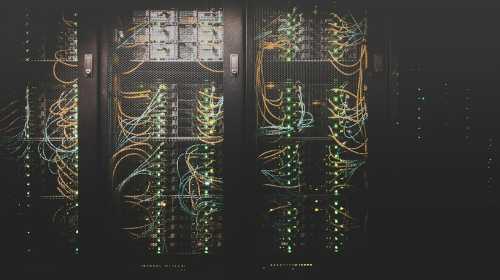
Building a skyscraper on a foundation of wet sand requires more than just taller cranes; it demands a fundamental re-engineering of the bedrock. This is the precise mechanical reality of the current artificial intelligence and innovation landscape. The rapid deployment of generative AI models has collided with severe physical power grid limitations, disappointing enterprise return on investment, and tightening geopolitical export controls, forcing a structural reassessment of the technology's trajectory.
The Gridlock of Silicon and Power
Mainstream financial commentary routinely treats artificial intelligence energy consumption as a mere operational expense, fundamentally ignoring its role as a systemic, existential bottleneck for the entire technology sector. The physical reality of modern compute is unforgiving. The power density of AI-optimized racks, demanding 30 kW to over 100 kW compared to 5-15 kW for traditional racks, has completely overwhelmed local grid capacity in key tech hubs enkiai.com . Consequently, global data center electricity consumption is forecast to hit 565 terawatt-hours in 2026, representing a staggering 26% jump driven almost entirely by AI workloads www.facebook.com . This is not a transient supply chain hiccup that can be solved by simply ordering more servers; it is a structural transformation that forces hyperscalers to bypass traditional utility procurement entirely. We are now witnessing tech giants directly financing next-generation nuclear micro-reactors and geothermal projects, fundamentally altering global capital allocation models and creating a new asset class of compute-adjacent energy infrastructure.
The ROI Mirage in Enterprise Adoption
Beneath the surface of record-breaking technology valuations and breathless press releases, the enterprise adoption curve is exhibiting severe structural fatigue. Despite massive, multi-billion-dollar capital outlays, only 29% of companies report significant return on investment from generative AI deployments writer.com . The unseen implication is a looming wave of corporate consolidation and targeted workforce reductions, as corporate boards pivot from experimental innovation theater to ruthless cost rationalization. The gap between isolated pilot programs and production-grade, revenue-generating applications is widening rapidly. This exposes the profound fragility of business models predicated on unproven agentic AI capabilities, revealing that current large language models still struggle with hallucination rates and context degradation in complex, multi-step enterprise workflows.
The Geopolitical Chokepoint
Simultaneously, the geopolitical architecture governing semiconductor supply chains is hardening into a rigid, fragmented state. Recent legislative and executive moves have deliberately tightened export controls for advanced AI chips and semiconductor manufacturing equipment, effectively severing decades of integrated global research and development eccnfinder.com . This strategic decoupling forces multinational corporations to maintain redundant, mutually exclusive supply chains for different geopolitical blocs. The hidden, unpriced cost is a permanent upward revision in the cost of innovation. Research and development budgets are increasingly diverted from pure technological advancement to compliance engineering and supply chain redundancy, slowing the overall pace of global technological progress while inflating the end-user cost of advanced compute.
The Productivity J-Curve Defense
It is analytically convenient for market bears to view these disappointing early metrics and physical bottlenecks as a definitive failure of the artificial intelligence paradigm. However, technology optimists and historical market analysts correctly point out that foundational infrastructure transitions inherently feature a delayed J-curve of productivity. Just as the initial deployment of the commercial internet in the late 1990s required massive, highly unprofitable fiber-optic overbuilds before unlocking trillions in e-commerce value, current AI investments are laying the necessary groundwork for autonomous enterprise operations. These optimists argue that capital will yield exponential marginal returns once the underlying models achieve sufficient reliability, reasoning capabilities expand, and the software ecosystem matures to fully leverage the hardware.
The Innovation Catalyst of Regulation
Conversely, some free-market analysts argue that tightening export controls and fragmented, overlapping AI safety regulations will stifle global innovation and create insurmountable compliance traps for startups. Yet, this perspective fundamentally overlooks the necessity of strategic autonomy and risk mitigation. As explicitly noted in the International AI Safety Report 2026, which synthesizes current scientific evidence on emerging risks, proactive governance is strictly required to prevent catastrophic misalignment in general-purpose AI systems arxiv.org . Regulatory friction, while undeniably costly in the short term, establishes the verifiable trust frameworks necessary for long-term institutional adoption in high-stakes, heavily regulated sectors like healthcare diagnostics, autonomous finance, and critical infrastructure management.
Echoes of the Dark Fiber Bubble
This convergence of physical constraints, speculative overinvestment, and regulatory friction invites a direct, sobering comparison to the late-1990s telecommunications fiber-optic bubble. During that era, speculative capital flooded into laying dark fiber under the flawed assumption that internet traffic would grow infinitely and instantaneously, ignoring the physical and economic limits of last-mile deployment and actual consumer demand. When the expected enterprise revenue failed to materialize at the projected pace, the sector experienced a brutal, multi-year consolidation that wiped out vast amounts of shareholder value. The historical lesson is unequivocal: raw technological potential does not guarantee immediate commercial viability, and capital markets eventually punish the severe disconnect between infrastructure build-out and actual, verifiable revenue generation.
Tactical Repositioning for Capital and Commerce
For corporate treasuries and local businesses, the immediate operational imperative is to ruthlessly audit all artificial intelligence expenditures against tangible, near-term revenue metrics. Organizations must pivot away from broad, speculative generative AI pilots and reallocate capital toward narrow, high-return applications, such as automated regulatory compliance checking, specialized data extraction, or customer service triage. For individual investors and citizens, the strategy must shift toward capital preservation and physical asset backing. Diversifying portfolios away from pure-play, high-multiple AI software hype stocks and toward companies owning physical energy infrastructure, grid modernization technologies, and advanced liquid cooling systems provides a prudent, defensive hedge against the impending valuation correction in the abstract software layer.
The Six-Month Horizon: The Great Bifurcation
Looking six months ahead, the macroeconomic landscape for artificial intelligence will be defined by a great bifurcation between the physical and digital layers. We anticipate a forced, accelerated consolidation in the enterprise AI software space, where undercapitalized startups will be acquired at steep discounts by larger technology conglomerates seeking proprietary data moats and talent. Simultaneously, the physical infrastructure layer will see unprecedented public-private partnerships aimed at resolving grid bottlenecks, with utility companies gaining unprecedented pricing power. The result will not be a catastrophic AI winter, but rather the emergence of a mature, highly regulated market where institutional capital flows exclusively to ventures demonstrating verifiable unit economics, robust safety protocols, and secure, sustainable power access.
Related Articles

The Thermodynamics of Hegemony: How the GAAC Pact is Fracturing the Global AI Compute Ecosystem
Nov 21, 2026
The Hydroelectric Paradox: How Grid Moratoriums and Agentic Liability are Forcing AI to the Edge
Nov 19, 2026
Comments (0)
No comments yet. Be the first to share your thoughts!
Want to join the discussion?
Please log in to post a comment.
Login NoworCreate an Account