
The Bifurcated Economy: Navigating the Silent Squeeze of Consumer Debt and Commercial Real Estate

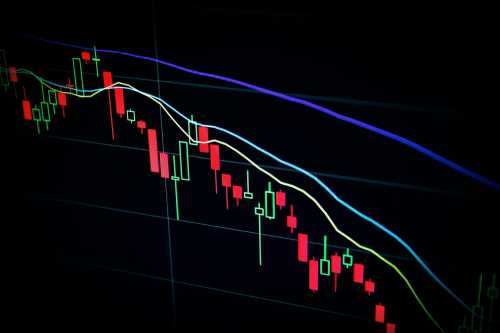
The Navigational Peril: A Structural Recalibration
Attempting to steer a massive cargo ship through a narrowing strait while the engine room reports rising temperatures and the navigation charts are actively being redrawn is an exercise in managed peril. This analogy precisely captures the current trajectory of the global and domestic economy. The defining economic event of this moment is the collision of resilient top-line employment metrics with a rapidly deteriorating consumer credit profile and a looming commercial real estate debt maturity wall, all occurring against a backdrop of downgraded global growth forecasts. This is not a transient cyclical soft patch; it is a structural recalibration that demands a radical reassessment of macroeconomic stability and the mechanisms of wealth preservation.
The Bifurcated Balance Sheet: A Silent Consumer Squeeze
Mainstream financial discourse frequently points to aggregate GDP resilience and headline job growth as definitive proof of enduring economic health, systematically ignoring the severe bifurcation occurring within the household balance sheet. The unseen implication for the broader economy is that top-line wage growth is being entirely neutralized by the compounding cost of living, persistent inflation, and elevated borrowing costs. As of the second quarter of 2026, Americans' total credit card balance reached $1.263 trillion, reflecting a heavy, unsustainable reliance on high-interest debt to maintain baseline consumption www.lendingtree.com . This dynamic creates a fragile foundation where any minor disruption in employment or unexpected medical expense will trigger a cascade of defaults. Effectively, this transfers the burden of macroeconomic adjustment directly onto the most vulnerable demographic segments, suppressing future aggregate demand and forcing a contraction in discretionary retail spending.
The Commercial Real Estate Contagion Vector
Beyond the consumer, the most systemic vulnerability lies in the commercial real estate sector, where the convergence of elevated interest rates and structural shifts in workplace behavior is creating a localized but potent contagion vector. While the sector historically contributed a robust $3.5 trillion to U.S. GDP, the underlying asset valuations are undergoing a severe, necessary repricing that the market has yet to fully digest www.credaglobal.org . The unseen implication is not merely a hit to regional bank balance sheets, but a profound, delayed erosion of municipal tax bases. As property valuations reset downward to reflect higher capitalization rates, local governments will face acute revenue shortfalls. This will force municipalities to either slash essential public services or disproportionately raise taxes on the remaining productive residential and industrial assets, thereby creating a negative feedback loop that actively stifles localized economic growth and deters new business formation.
The Global Growth Deceleration Feedback Loop
Furthermore, the domestic economy can no longer rely on robust external demand to absorb domestic overproduction or mask internal inefficiencies. The International Monetary Fund has downgraded its global growth forecast, projecting a modest 3.0 percent expansion for 2026 amid diverging geopolitical and technological crosscurrents www.imf.org . This deceleration means that export-oriented sectors will face significant headwinds, removing a traditional pressure valve for domestic inflation and corporate earnings. The global economy is no longer a rising tide lifting all boats; it is a fragmented, multipolar landscape where capital aggressively seeks safety. This exacerbates the cost of capital for emerging markets and developing nations, indirectly feeding back into the domestic economy through disrupted supply chains and volatile commodity pricing.
The Resilience Defense: Why 2008 Won't Repeat
It is analytically tempting to view these mounting consumer delinquencies and credit stress indicators as the definitive precursor to a systemic financial collapse akin to the late 2000s. However, this perspective dangerously overlooks the profound structural reforms implemented in the banking sector over the past decade and a half. Post-2008 regulatory frameworks have mandated significantly higher capital buffers, rigorous stress testing, and far more stringent underwriting standards for both mortgage and consumer credit. The current rise in delinquencies represents a normalization from historically abnormal, pandemic-era lows rather than a systemic solvency crisis. Consequently, the financial system is exceptionally well-capitalized to absorb these isolated, localized losses without triggering a broader, economy-wide credit freeze.
Echoes of 2007: The Credit-Fueled Illusion
The current economic architecture bears a striking, cautionary resemblance to the prelude of the 2007 financial crisis, specifically regarding the mechanism of debt-fueled consumption masking underlying wage stagnation. In the mid-2000s, aggregate economic indicators appeared remarkably robust, but the foundation was quietly eroded by a relentless expansion of subprime credit designed to bridge the widening gap between stagnant real incomes and rapidly rising asset costs. The historical lesson is unambiguous: when an economy relies on the continuous, exponential expansion of household leverage to sustain aggregate demand, the eventual mean reversion is swift, violent, and painful. Policymakers ignoring this precedent risk engineering a prolonged period of economic stagnation by attempting to treat a structural debt problem with superficial, short-term monetary tweaks.
The Correction, Not Collapse, Paradigm
Conversely, the pervasive doom-mongering surrounding the commercial real estate sector often ignores the highly heterogeneous nature of the asset class. While traditional office properties face undeniable, long-term structural headwinds due to remote work paradigms, the industrial, logistics, data center, and multifamily segments continue to demonstrate strong market fundamentals and robust capital inflows. Framing the entire CRE market as an impending, monolithic disaster is a gross oversimplification driven by headline anxiety. The current environment actually represents a necessary, healthy capital reallocation rather than a systemic failure, as institutional investment capital aggressively migrates from obsolete asset classes to those aligned with modern supply chain realities and demographic shifts.
Strategic Imperatives for Capital Preservation
For local businesses and corporate executives, this macroeconomic volatility necessitates immediate, pragmatic defensive posturing. Enterprises must proactively refinance existing variable-rate debt into fixed-rate instruments to hedge against the persistent, higher-for-longer interest rate environment, locking in predictability before further yield spikes occur. Furthermore, businesses should rigorously audit their consumer credit exposure and tighten B2B payment terms to mitigate the risk of cascading defaults from overleveraged partners. For individual citizens, the imperative is to aggressively prioritize the reduction of high-interest, variable-rate consumer debt. Allocating discretionary income toward building liquid emergency reserves, such as short-term Treasury bills or high-yield savings accounts, rather than speculative assets, provides the only reliable hedge against the increasing probability of localized labor market disruptions and unexpected economic shocks.
The Six-Month Horizon: An Era of Anemic Equilibrium
Looking six months ahead, the economic landscape will likely be defined by anemic equilibrium rather than a dramatic boom or bust. The Federal Reserve will maintain a cautious hold on interest rates, likely in the 3.50% to 3.75% range, to ensure inflation remains anchored without triggering a severe labor market contraction www.usbank.com . Commercial real estate defaults will tick upward, but these will be largely absorbed by specialized distressed debt funds and private credit vehicles rather than catalyzing a broad, systemic banking crisis. The result will be a muddling-through scenario: sufficient stability to avert a deep recession, but insufficient monetary easing or fiscal stimulus to ignite sustainable, broad-based growth, leaving the economy perpetually vulnerable to the next external supply shock.



Comments (0)
No comments yet. Be the first to share your thoughts!
Want to join the discussion?
Please log in to post a comment.
Login NoworCreate an Account