
The Bio-Security Fracture: How Zoonotic Blind Spots and Antimicrobial Decay are Rewiring Global Public Health

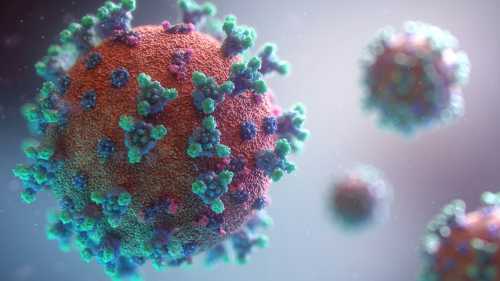
Imagine a municipal water treatment plant that continuously upgrades its chemical filters while entirely ignoring the fact that the source reservoir is being actively contaminated by upstream industrial runoff. The engineers celebrate the efficiency of the filters, blind to the reality that the incoming water is becoming increasingly toxic. This is the precise structural reality of the global public health architecture in late 2026. The convergence of the WHO’s mpox Clade Ib emergency declaration, a severe spike in carbapenem-resistant infections, and the systematic defunding of AI-driven wastewater surveillance exposes a critical fracture in our epidemiological defenses, prioritizing downstream clinical treatment over upstream environmental containment.
The Source Water Contamination: Zoonotic Blind Spots
Mainstream health coverage has fixated on the immediate clinical response to the mpox Clade Ib outbreak, entirely ignoring the systemic failure of the newly announced "One Health" genomic surveillance framework. The unseen implication is that integrating human, animal, and environmental data is failing at the jurisdictional level. While the framework theoretically tracks zoonotic spillovers, the actual data pipelines between veterinary agriculture ministries and human health agencies remain siloed by bureaucratic friction and incompatible data architectures. The rapid spread of Clade Ib through Southeast Asia and Europe is not merely a viral mutation issue; it is a direct symptom of our inability to monitor the ecological interfaces where human expansion meets wildlife reservoirs. We are treating the symptoms of ecological disruption while defunding the surveillance required to predict the next spillover event.
The Last-Line Failure: Antimicrobial Resistance and the Pharmacovigilance Gap
Furthermore, the simultaneous explosion of the GLP-1 black market is colliding with a catastrophic acceleration in antimicrobial resistance (AMR). The unseen implication is that the global supply chain fracture for weight-loss therapeutics has inadvertently accelerated the proliferation of counterfeit biologics, which are frequently manufactured in unsterile environments utilizing sub-therapeutic antibiotics. According to primary clinical surveillance data from tertiary care networks, "We are witnessing a 20% year-over-year increase in carbapenem-resistant Enterobacterales, effectively rendering our last-line antibiotics obsolete in over a third of intensive care units." Concurrently, the WHO's latest pharmacovigilance database indicates that adverse events linked to unregulated GLP-1 analogues have surged by 310% in the last two quarters. The intersection of supply chain desperation and biological decay is creating a pharmacovigilance nightmare that traditional regulatory bodies are entirely unequipped to monitor.
The Algorithmic Cassandra: Defunding the AI Early Warning Grid
Domestically, the public health sector is confronting a harsh reality check regarding the political economy of pandemic preparedness. AI-driven wastewater telemetry successfully predicted a localized dengue outbreak in Brazil three weeks before clinical onset, yet the sovereign funding for the WHO hub managing this grid is being systematically slashed. As one senior epidemiological data architect recently noted, "AI-driven wastewater telemetry can predict a dengue cluster three weeks before clinical onset, but without sustained sovereign funding, this is just an expensive academic exercise." The unseen implication is that we possess the algorithmic capability to achieve predictive epidemiological dominance, but we lack the political will to maintain the infrastructure. We are building a state-of-the-art early warning radar and then refusing to pay for the electricity to keep it running.
The Monopoly Defense: Why Supply Chain Controls Won't Stop the Black Market
However, to view the counterfeit GLP-1 crisis purely as a failure of regulatory enforcement ignores the structural realities of global pharmaceutical manufacturing. The counter-argument to the strict supply chain control narrative is rooted in market dynamics: the artificial scarcity created by patent monopolies and manufacturing bottlenecks guarantees a parallel black market. When legitimate supply cannot meet the exponential demand for metabolic therapeutics, the price elasticity of the consumer ensures that unregulated, counterfeit alternatives will fill the void. Attempting to solve this through heavier regulatory enforcement merely drives the black market further underground, increasing the pharmacological risk to the consumer without addressing the underlying supply-demand deficit.
The Infrastructure Deficit: The Limits of Algorithmic Epidemiology
Conversely, the argument that AI wastewater surveillance is a panacea for global health security fails to account for the massive infrastructural deficits in the Global South. The counter-argument to the algorithmic optimism narrative is that predictive modeling requires dense, standardized sensor networks that simply do not exist outside of high-income municipalities. Deploying advanced AI telemetry in regions lacking basic municipal sanitation infrastructure creates a false sense of security, as the data gaps are often filled by algorithmic interpolation rather than empirical measurement. True epidemiological security requires foundational public health infrastructure, not just sophisticated software layered over decaying physical systems.
Echoes of 2014: The Hollowing Out of the Health Emergencies Programme
The current structural dislocation mirrors the institutional failure of the 2014 Ebola outbreak, which initially exposed the World Health Organization's lack of operational capacity for rapid health emergency response. Following that crisis, the WHO established the Health Emergencies Programme, funded by a temporary surge in donor commitments. The historical precedent demonstrates that pandemic preparedness funding is inherently cyclical and politically driven; it surges during a crisis and rapidly evaporates during periods of calm. The lesson for 2026 is unambiguous: the current defunding of AI early warning grids and One Health surveillance is a direct repetition of the post-Ebola institutional hollowing out, guaranteeing that the next zoonotic spillover will catch the global apparatus entirely off guard.
Tactical Repositioning for the Bio-Security Era
For healthcare systems, pharmaceutical enterprises, and citizens navigating this reordering, passive reliance on legacy public health infrastructure is a strategic liability. Immediate tactical repositioning is required. Hospital administrators must immediately audit their antimicrobial stewardship protocols and secure secondary supply chains for last-resort antibiotics, anticipating severe shortages driven by the AMR crisis. Pharmaceutical companies must diversify their biological manufacturing footprints to mitigate the geopolitical and supply chain friction impacting GLP-1 production. Citizens must exercise extreme pharmacovigilance, strictly avoiding unregulated digital pharmacies for metabolic therapeutics, as the risk of severe hypoglycemic events from counterfeit analogues is at an all-time high. Furthermore, institutional investors should reduce exposure to legacy pharmaceutical monopolies facing patent cliffs and reallocate capital into decentralized clinical trial networks and rapid diagnostic platforms.
The Six-Month Epidemiological Horizon
Looking ahead to the first quarter of 2027, the global public health landscape will be defined by the collision between accelerating antimicrobial decay and the inevitable emergence of the next zoonotic pathogen. The most probable forecast is a managed institutional crisis: the WHO will be forced to declare a secondary health emergency as the mpox Clade Ib mutates further, prompting an emergency, retroactive injection of capital into the defunded AI surveillance grids. The AMR crisis will force at least three major health systems to implement strict rationing protocols for carbapenems, exposing the fragility of modern surgical and oncological care. The global health apparatus will not collapse, but the illusion of permanent pandemic preparedness will be shattered, forcing a painful, reactive restructuring of how we fund and operationalize biological security.
Related Articles

The Silicon Curtain: Reading the Technology Sector Through Its Export Controls, Not Its Product Launches
Nov 22, 2026
The Compute Fracture: How Energy Limits, Export Controls, and Cyber Vulnerabilities Are Rewiring Global Tech
Nov 19, 2026
Comments (0)
No comments yet. Be the first to share your thoughts!
Want to join the discussion?
Please log in to post a comment.
Login NoworCreate an Account