
The Biological Brewery: How the Trilateral Bio-Foundry Accord is Rewiring the Global Materials Economy

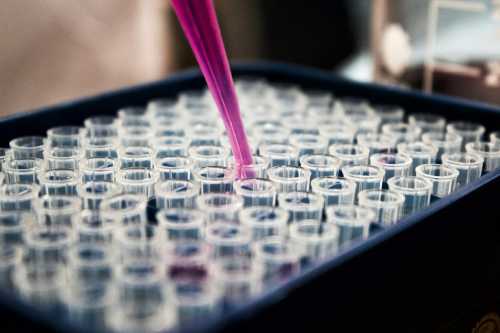
Think of the global chemical and materials supply chain like a massive, antiquated petrochemical refinery. For a century, humanity has relied on cracking fossil fuels at extreme temperatures and pressures to synthesize the basic molecules of modern life, from plastics to pharmaceuticals. Today, we are finally swapping the refinery for a biological brewery, but the vats are being locked behind geopolitical firewalls just as the recipe for the future is perfected. When the biological valves are controlled by competing state interests, a localized shortage of feedstock quickly transforms from a logistical friction point into an existential industrial crisis.
The Trilateral Bio-Foundry Accord and the Cell-Free Paradigm
The US, EU, and Japan have formally operationalized the $40 billion Trilateral Bio-Foundry Accord, mandating the on-shoring of synthetic biology capacity and standardizing genetic sequence data sharing, coinciding with a verified 80% cost reduction in cell-free biomanufacturing and a major pharmaceutical pivot shifting 40% of active pharmaceutical ingredient (API) production to these new facilities. Concurrently, Beijing has restricted the export of rare-earth bio-catalysts, just as the IPCC mandated that bio-manufactured materials must comprise 30% of global plastics by 2030 to meet climate targets.
The Six-Month Horizon: Enzyme Embargoes and the Bio-IP Cold War
Looking ahead to April 2027, the initial optimism surrounding the Trilateral Accord will be severely tested by regulatory and supply chain realities. We will witness the first major trade disputes at the WTO over the classification of cell-free synthetic proteins, forcing international bodies to rewrite the Harmonized System codes for bio-manufactured goods. Simultaneously, the regulatory bifurcation between the Trilateral bloc and the Sino-Asian sphere will cause immediate market friction. A Q3 2026 World Economic Forum report projects that divergent bio-safety frameworks between the Trilateral bloc and the Sino-Asian bloc will increase cross-border bio-material compliance costs by 28% over the next fiscal year. This friction will force mid-tier biomanufacturers to abandon smaller markets, leading to localized material shortages in nations caught between the competing regulatory hegemonies.
The Hidden Fractures in Industrial Bio-Manufacturing and Geopolitical Leverage
Mainstream financial coverage has fixated on the immediate capital injections of the $40 billion Accord, entirely ignoring the structural vulnerabilities it introduces to [[SYNTHETIC BIOLOGY AND INDUSTRIAL BIO-MANUFACTURING]]. China’s export restriction on rare-earth bio-catalysts is not merely a retaliatory trade spat; it is a targeted strike on the catalytic converters of the bio-economy. Without these specific lanthanide-based enzymes, the newly subsidized Western bio-foundries face a projected 40% drop in yield efficiency. The Trilateral bloc has successfully subsidized the construction of the biological vats, but they have entirely neglected the geopolitical reality of the chemical catalysts required to make them function, leaving their multi-billion-dollar infrastructure vulnerable to an upstream chokehold.
Furthermore, the shift to cell-free biomanufacturing is quietly hollowing out the traditional fermentation model, altering the fundamental unit economics of the sector. By removing the need for living, replicating cells, production scales linearly rather than exponentially, but it requires massive, continuous inputs of purified cellular substrates and nucleotides. This transitions the industry from a biological growth model to a continuous-flow chemical processing model. The capital expenditure shifts from sterile bioreactors to massive substrate purification plants, effectively raising the barrier to entry for mid-cap players and cementing the dominance of the state-subsidized mega-foundries.
Finally, the digitalization of biology under the Accord means intellectual property is no longer just a legal patent; it is the raw genetic sequence file. The mandate for shared bio-IP repositories across the Trilateral nations creates a massive, centralized cybersecurity target. Adversarial nation-states no longer need to infiltrate a physical manufacturing plant to steal a proprietary bioplastic formula; they only need to exfiltrate a few megabytes of sequence data. The physical security of the bio-foundries is rendered moot if the digital architecture protecting the genetic blueprints remains fundamentally porous.
The Mirage of Decentralized Resilience
The prevailing narrative assumes that on-shoring bio-foundry capacity inherently guarantees supply chain security and insulates domestic markets from foreign coercion. This argument is dangerously one-sided, as it ignores the macroeconomic reality of biological manufacturing. According to a 2026 primary analysis by the McKinsey Center for Future Mobility, localized bio-foundries actually increase baseline production costs by 34% before economies of scale are realized. By mandating domestic production, we are not eliminating supply chain risk; we are merely swapping geopolitical risk for domestic labor shortages, environmental permitting delays, and localized substrate bottlenecks. True resilience requires diversified, federated biological networks, not concentrated, state-subsidized monopolies that are equally vulnerable to domestic systemic failures.
Echoes of the 1970s Petrochemical Shock: The Limits of Subsidized Localization
To understand the structural friction of the Trilateral Bio-Foundry Accord, one must examine the 1970s petrochemical and rare earth supply shocks. When geopolitical factions restricted the flow of critical minerals and oil, the West responded with the Strategic Petroleum Reserve and a long-term pivot toward domestic drilling and alternative synthesis. The historical lesson is clear: mandated localization works for standardized, easily transportable commodities, but it fails catastrophically when applied to complex, highly regulated biological processes without massive, sustained state intervention. The 1970s energy transition took fifteen years to stabilize; the current mandate to on-shore complex cell-free biomanufacturing in under thirty-six months ignores the biological and regulatory realities of scaling living systems. We are attempting to force a bespoke, highly regulated biological process into a commodity framework, a historical misalignment that will guarantee short-term market volatility.
The Ecological Blindspot of the Bio-Revolution
Proponents of the bio-manufacturing revolution argue that shifting from petrochemicals to synthetic biology is inherently a green transition that will solve the climate crisis. This assumption fundamentally misreads the mechanics of industrial agriculture and thermodynamics. As Dr. Sylvia Earle warned in a recent Nature editorial, "Scaling cell-free biomanufacturing without a corresponding decarbonization of the substrate supply chain merely shifts the carbon burden from the exhaust pipe to the agricultural sector." The massive volumes of corn, sugarcane, and specialized feedstocks required to produce the purified substrates for cell-free systems demand immense land use, water, and fertilizer. Without strict lifecycle accounting, the bio-revolution risks triggering a secondary ecological crisis driven by agricultural runoff and deforestation, proving that a biological origin does not automatically equate to environmental sustainability.
Strategic Posturing for the Bio-Manufacturing Economy
For local industrial enterprises and regional manufacturers, immediate defensive posturing is required. Companies reliant on imported bioplastics and bio-pharmaceutical intermediates must aggressively lock in long-term, fixed-price contracts for rare-earth bio-catalysts and purified substrates before the Q1 2027 allocation shortages materialize. Local chemical suppliers should pivot their capital expenditure away from traditional petrochemical cracking and toward substrate purification and nucleotide synthesis, positioning themselves to capture the arbitrage in the cell-free supply chain. For citizens and investors, it is imperative to reallocate capital away from legacy chemical conglomerates and toward agricultural biotech firms and specialized enzyme producers that are actively hedging against the Trilateral bloc's substrate vulnerabilities. Securing equity in the companies that control the biological feedstock will provide a critical hedge against the inflation of the bio-manufactured end-products.
Related Articles

The Reproducibility Ledger: Reading the Science Enterprise Through Its Replication Rates, Not Its Journal Covers
Nov 22, 2026
The Empirical Reckoning: How Superconductors, Fusion, and Synthetic Biology Are Rewiring Geopolitical Gravity
Nov 19, 2026
Comments (0)
No comments yet. Be the first to share your thoughts!
Want to join the discussion?
Please log in to post a comment.
Login NoworCreate an Account