
The BRICS+ Settlement Unit and the Bifurcation of Global Maritime Trade

GEOPOLITICAL & ECONOMIC ANALYSIS | October 19, 2026
Think of the global financial system not as a single, flowing river, but as a series of interconnected reservoirs. For eighty years, the US dollar has functioned as the central ocean, absorbing global liquidity and distributing it through a unified network of correspondent banks. What we are witnessing this week is not the drying up of that ocean, but the construction of massive, regional dams. By diverting the flow of commodity-backed capital into closed-loop systems, the architects of this new financial architecture are fundamentally altering the pressure dynamics of global trade, forcing a recalibration of how physical goods move across the world's oceans.
The Architecture of a Parallel Ledger
On October 18, the expanded BRICS+ coalition officially activated the "Unit," a blockchain-based, commodity-indexed trade settlement mechanism designed to operate independently of Western financial infrastructure. Concurrently, the bloc mandated that 40 percent of intra-bloc energy transactions will be settled exclusively in this new unit, effectively bypassing the SWIFT network and the US dollar for a significant tranche of global hydrocarbon trade.
The Maritime Reinsurance Squeeze
While mainstream financial analysis fixates on currency reserves and central bank balance sheets, it is entirely ignoring the immediate operational crisis unfolding in global maritime reinsurance. The activation of the Unit has triggered a compliance paradox for London-based underwriters at Lloyd’s of London and the International Group of Protection and Indemnity (P&I) Clubs. Underwriting vessels carrying oil or bulk commodities settled outside the dollar system exposes these insurers to severe secondary sanctions from the US Treasury, as the underlying transactions cannot be transparently audited through traditional correspondent banking channels.
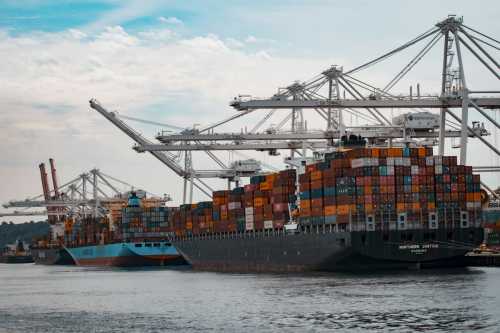
Consequently, a shadow insurance market is rapidly forming in Dubai, Shanghai, and Mumbai to underwrite the non-dollar energy fleet. This fragmentation of maritime risk pooling is highly inefficient. According to data from the United Nations Conference on Trade and Development (UNCTAD), maritime transport accounts for over 80% of global trade by volume. If Western insurers systematically withdraw from non-dollar energy routes to preserve their access to the US financial system, the cost of moving physical goods will spike dramatically, creating a localized inflationary shock that is entirely disconnected from traditional monetary policy levers.
The immediate result is a dual-tiered shipping market. Vessels operating within the Western-insured framework will enjoy lower premiums but will be restricted from loading cargoes destined for BRICS+ Unit settlement. Conversely, the shadow fleet will face significantly higher insurance costs, which will inevitably be passed down to the end consumer in the form of higher commodity prices. This physical bottleneck represents a far more immediate threat to global supply chains than any abstract shift in foreign exchange reserves.
The Liquidity Mirage
However, equating trade settlement volume with reserve currency dominance is a fundamental analytical error that overstates the immediate threat to the dollar. The dollar's hegemony is anchored in deep capital markets, not just current account transactions. The Bank for International Settlements (BIS) Triennial Central Bank Survey confirms the USD remains on one side of 88% of all global foreign exchange trades, demonstrating that the plumbing of the global financial system remains overwhelmingly dollar-denominated.
Furthermore, as former IMF Chief Economist Gita Gopinath has extensively documented, the dollar's exorbitant privilege stems from the unmatched depth and liquidity of US Treasury markets, which currently hold over $26 trillion in outstanding debt. Global central banks and sovereign wealth funds require a safe, liquid asset to park their reserves; the BRICS Unit lacks a corresponding sovereign bond market of sufficient scale and legal predictability to absorb global savings. Until the bloc can issue a unified, highly liquid debt instrument, the Unit will remain a mere transactional clearing mechanism rather than a true store of wealth.
Echoes of the 1971 Sterling Devaluation
This current fragmentation closely mirrors the gradual erosion of the British Pound Sterling in the mid-20th century. Following World War II, the Sterling Area attempted to maintain a closed, preferential trade bloc to preserve the pound's global status against the rising dollar. Yet, the structural deficits and the superior liquidity of the emerging US system inevitably forced a series of devaluations, culminating in the final decoupling of the pound's global reserve role in 1971.
The historical lesson is clear: reserve currency transitions are not sudden, binary flips. They are protracted, messy, decades-long processes characterized by overlapping spheres of influence, persistent friction, and periods where multiple currencies compete for regional dominance. The BRICS+ Unit is not the death knell of the dollar, but rather the formalization of a multi-polar trading bloc that will coexist—and frequently clash—with the existing Western financial architecture for the foreseeable future.
The Internal Cohesion Deficit
Furthermore, the assumption that BRICS+ operates as a monolithic geopolitical bloc ignores profound internal fissures that will limit the Unit's efficacy. The ongoing border disputes between China and India, coupled with Saudi Arabia's strategic hedging between Washington and Beijing, introduce severe friction into the governance of this new settlement mechanism. A multi-polar currency requires either a unified monetary policy or a highly trusted neutral arbiter, neither of which exists within this coalition.
The internal competition for economic dominance between Beijing and New Delhi will likely stall the Unit's expansion beyond basic bilateral trade clearing. Without a consensus on capital controls, intellectual property rights, and legal dispute resolution, the Unit will struggle to attract participation from neutral economies in the Global South, limiting its scope to a mechanism for sanctioned or semi-sanctioned states to bypass Western financial surveillance.
Hedging the Transition
For mid-market enterprises and institutional investors, the immediate priority is supply chain and treasury recalibration. Businesses heavily reliant on Eurasian energy or raw materials must secure dual-track logistics contracts, ensuring access to both Western-insured and non-aligned shipping lanes to mitigate the risk of sudden cargo immobilization. Treasury departments should diversify short-term liquidity buffers away from sole reliance on dollar-denominated money market funds, incorporating physical commodities, gold-backed instruments, or localized regional bonds to hedge against settlement failures.
Procurement officers must also audit their tier-one and tier-two suppliers to identify hidden exposure to the shadow shipping market. Companies that fail to map the insurance status of their physical supply chains will find themselves absorbing unexpected freight spikes and demurrage costs in the coming quarters.
The Six-Month Horizon
Looking ahead to April 2027, the landscape will not feature a collapsed dollar, but rather a bifurcated global pricing mechanism. We will see the emergence of a "shadow premium" on physical commodities traded outside the Western financial system, as the lack of deep capital markets and the higher cost of shadow insurance increases the risk premium for non-dollar transactions. Multinational corporations will face a 15 to 20 percent increase in compliance and transaction costs as they navigate the dual-ledger reality, fundamentally altering the calculus of globalized supply chains and accelerating the trend toward regionalized manufacturing hubs.
Related Articles

The Institutional Fracture: Reading World Politics Through Its Paralyzed Forums, Not Its Summit Communiqués
Nov 22, 2026
The Fragmented Meridian: Resource Nationalism, Carbon Tariffs, and the Death of the Multilateral Order
Nov 18, 2026
Comments (0)
No comments yet. Be the first to share your thoughts!
Want to join the discussion?
Please log in to post a comment.
Login NoworCreate an Account