
The Building Blocks of Tomorrow: Semiconductor Trends 2026 and the Rise of Chiplets

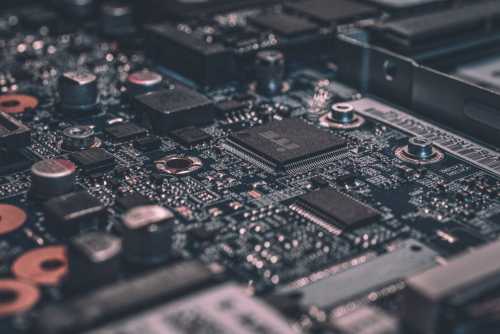
Imagine you are building the most complex Lego castle in the world. For decades, the rule was that you had to carve the entire castle out of one single, giant block of plastic. If you made a tiny mistake, the whole thing was ruined. But in 2026, the semiconductor industry—the companies that make the tiny computer chips inside your phone, laptop, and car—has changed the rules. They are no longer building one giant chip; they are building "Chiplets" www.componentsense.com . This small shift is causing a massive revolution in how technology works and how fast it gets.
A chiplet is exactly what it sounds like: a small piece of a larger chip. Instead of trying to fit the CPU (the brain), the GPU (the graphics), and the memory all onto one tiny piece of silicon, engineers now build them separately as chiplets and then stitch them together using advanced packaging techniques. It is like building a house by snapping together pre-made rooms instead of laying every single brick by hand. This approach is cheaper, faster, and allows companies to mix and match different types of technology to create the perfect custom chip for any task.
The biggest driver of this chiplet revolution is Artificial Intelligence. AI models require an insane amount of computing power and memory. Traditional chips were hitting a "memory bottleneck," meaning the brain of the chip was waiting around for data to arrive from the memory. In 2026, the industry is heavily focused on High-Bandwidth Memory (HBM) 领英企业服务 . This is a special type of memory that is stacked vertically, right on top of the processor, allowing data to flow between them at lightning speed. It is the difference between drinking water from a thin straw and drinking from a fire hose.
At the same time, the race to make the transistors (the tiny switches inside the chip) smaller continues. We are now entering the era of 2-nanometer (2nm) process nodes and even the Angstrom roadmap 领英企业服务 . To put this in perspective, a human hair is about 100,000 nanometers thick. We are now building structures that are almost invisible, manipulating individual atoms. This requires incredibly expensive and complex machines called Extreme Ultraviolet (EUV) lithography, which are essentially the most precise cameras ever built by humanity.
This technological race has massive geopolitical implications. Semiconductors are the new oil. Every country wants to secure its supply chain because these chips run everything from military jets to hospital equipment. Governments are pouring billions of dollars into subsidies to build local factories (fabs). The CHIPS Act in the US and similar programs in Europe and Asia are reshaping the global map of technology manufacturing, bringing jobs and strategic security back to local shores www.semi.org .
Finally, the industry is facing a new challenge: sustainability. Building these chips requires massive amounts of water and electricity. In 2026, semiconductor companies are under intense pressure to reduce their carbon footprint, recycle water, and use renewable energy. The future of tech is not just about making faster chips; it is about making them in a way that does not destroy the planet we live on. The building blocks of tomorrow are being laid right now, and they are smaller, smarter, and more crucial than ever.
Official Source Information
HCLTech's latest insights explore the next growth frontier in semiconductors, highlighting AI-driven demand, advanced packaging, and the geopolitical shifts shaping the industry in 2026.
Explore Semiconductor Trends 2026 on HCLTechRelated Articles
The Compute Reckoning: Navigating Sovereign AI, Quantum Tipping Points, and Antitrust Friction
Aug 23, 2026
The Structural Recalibration of Global Technology: Navigating Compute, Cryptography, and Geopolitical Faultlines
Aug 22, 2026
Comments (0)
No comments yet. Be the first to share your thoughts!
Want to join the discussion?
Please log in to post a comment.
Login NoworCreate an Account