
The Capex-Electron Paradox: AI’s Infrastructure Sprint and the Grid Constraint

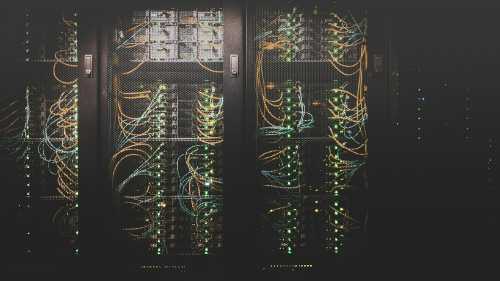
Imagine commissioning a fleet of supersonic jets, only to discover the only available runways are made of gravel and the fuel depots are rationing kerosene. This is the precise paradox defining the American artificial intelligence sector in August 2026. While Nvidia is reportedly discussing a staggering $250 billion financing guarantee to back OpenAI's long-term data center lease commitments in Ohio, nearly 50% of all U.S. AI data centers planned for this year remain offline or severely delayed due to acute electrical grid constraints www.facebook.com . The capital markets are pricing in an infinite supply of compute, entirely ignoring the physical reality that individual AI campuses are requesting 100 to 750 megawatts of power—loads that regional grids simply were not engineered to deliver on short notice www.gigenet.com .
The Hardware Bottleneck Shift
Mainstream tech media treats the data center bottleneck as a localized zoning or permitting issue, entirely missing its macroeconomic transmission mechanisms. The true bottleneck is no longer the GPU; it is the high-voltage step-up transformer, the switchgear, and the industrial cooling infrastructure. This scarcity is forcing a radical shift in the AI value chain. Sovereign nations and regional utilities with abundant, stranded baseload power—such as Canada’s hydro-rich provinces or the Nordic nuclear corridors—are rapidly capturing AI compute market share, bypassing traditional Silicon Valley hubs. The power constraint is effectively turning AI supremacy into a proxy war for copper, uranium, and electrical engineering labor, stripping software architects of their historical dominance.
The Capex-to-Compute Disconnect
Financial capital remains aggressively deployed, creating a severe disconnect between deployed dollars and operational flops. Goldman Sachs projects AI capex to grow from $765 billion in 2026 to $1.64 trillion annually by the early 2030s [[22]]. However, this capital is increasingly trapped in concrete shells waiting for utility interconnects. The rapid growth of artificial intelligence requires massive bandwidth and fiber optics, but without the requisite electrons, these facilities are essentially stranded assets [[7]]. This dynamic is quietly compressing the internal rates of return (IRR) for hyperscalers, as the carrying costs of idle, multi-billion-dollar campuses begin to erode quarterly earnings before the first token is ever generated. Furthermore, the sheer scale of the Nvidia-OpenAI financing backstop introduces unprecedented systemic risk into the tech sector; if the Ohio campus faces prolonged interconnect delays, the resulting debt servicing costs could trigger a localized credit event that spills over into the broader corporate bond market.
BREAKING: Nvidia is in talks with OpenAI to guarantee $250 billion in financing for a data center in Ohio. Details include: #AI#Nvidia
— The Kobeissi Letter (@KobeissiLetter) August 2026
The Algorithmic Deflation Defense
Venture capitalists and hyperscaler executives frequently argue that the impending power crunch is a transient friction that will be naturally solved by algorithmic efficiency. Proponents of this view point to the rapid adoption of Mixture-of-Experts (MoE) architectures, quantization, and edge-compute offloading, which drastically reduce the floating-point operations required for inference. From this perspective, the current gridlock is merely a lagging indicator; as model efficiency scales, the energy intensity per trillion tokens will plummet, rendering the aggressive physical buildout of gigawatt-scale campuses partially redundant. Under this thesis, software innovation will inevitably outpace hardware constraints, allowing AI adoption to scale without requiring a complete overhaul of the national electrical grid.
The Dark Fiber Echo
The current infrastructure sprint bears a striking, almost eerie resemblance to the late-1990s fiber-optic glut. During the dot-com boom, telecommunications companies laid millions of miles of "dark fiber" across the ocean floors and continental interiors, fueled by cheap capital and the assumption of exponential, unyielding internet traffic growth. When the capital cycle turned and traffic growth proved linear rather than parabolic, companies like Global Crossing collapsed, leaving behind stranded assets that took a decade to absorb. Today, McKinsey research indicates that AI-related data center infrastructure will require $5.2 trillion in investment by 2030 [[15]]. If enterprise AI monetization fails to materialize at the same velocity as the physical buildout, the tech sector will be left holding hundreds of billions of dollars in depreciating, power-starved concrete shells, triggering a brutal consolidation phase akin to the post-2001 telecom winter. The critical difference today, however, is the sovereign backing of these assets; when the private market inevitably balks at the carrying costs of idle gigawatt campuses, the federal government will likely be forced to step in as the buyer of last resort to prevent a strategic collapse of domestic compute capacity.
The Sovereign Grid Imperative
Conversely, defense hawks and industrial policy advocates argue that the grid constraint is not a market failure, but a deliberate national security vulnerability that necessitates aggressive federal intervention. From this vantage point, allowing local NIMBYism and state-level environmental reviews to stall AI infrastructure is tantamount to ceding artificial general intelligence supremacy to geopolitical rivals. Advocates for a unitary executive approach to energy policy maintain that the federal government must invoke the Defense Production Act to fast-track grid interconnects and eminent domain for transmission lines. Under this framework, the physical limitations of the grid are not a hard ceiling, but a policy choice that will inevitably be overridden by executive fiat to ensure domestic compute sovereignty, regardless of the localized economic or environmental externalities.
Tactical Reallocations for Q4
For institutional allocators and corporate treasurers, the immediate mandate is to aggressively rotate capital away from the AI software layer and into the physical picks-and-shovels of the energy transition. First, portfolios must overweight uranium miners, electrical grid component manufacturers, and industrial cooling firms, which possess immense pricing power in a supply-constrained environment. Second, venture capital firms must halt funding for compute-heavy generative AI startups that lack proprietary, long-term power purchase agreements (PPAs); without guaranteed electrons, their models are effectively stranded assets. Finally, retail and institutional investors should utilize the current euphoria to trim positions in hyperscalers that are over-leveraged on data center lease commitments, hedging against the inevitable margin compression that will occur when they are forced to buy spot power at premium rates.
The Insolvency Horizon
Looking six months ahead to the first quarter of 2027, the collision of infinite financial capital and finite physical power will trigger a severe repricing of the AI sector. We will likely witness the first wave of high-profile AI startup insolvencies, driven not by inferior models, but by compute-hosting bankruptcy as their cloud providers pass on surging energy costs. Concurrently, hyperscalers will be forced to pivot from leasing third-party data centers to outright acquiring regional utility companies, blurring the lines between big tech and regulated monopolies. Consequently, Q1 2027 will mark the end of the "growth at all costs" AI era, replacing it with a brutal, margin-focused regime where access to baseload power, rather than parameter count, becomes the ultimate moat in the artificial intelligence economy.
Related Articles

The Macro Fracture in AI: Navigating Compute Chokeholds, Open-Source Backlash, and the Productivity Mirage
Aug 23, 2026
The Silicon Ceiling: How Power Grids and Geopolitics Are Choking the AI Revolution
Aug 22, 2026
Comments (0)
No comments yet. Be the first to share your thoughts!
Want to join the discussion?
Please log in to post a comment.
Login NoworCreate an Account