
The Coaling Station Paradox: How the AI Compute Fracture is Rewriting Enterprise Infrastructure Economics

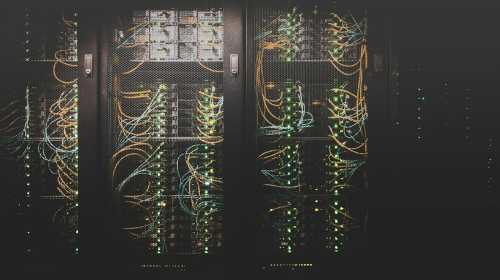
The Coaling Station Paradox: How the AI Compute Fracture is Rewriting Enterprise Infrastructure Economics
November 17, 2026 | AI Infrastructure & Macro Strategy
When global shipping transitioned from wind to steam in the 19th century, the primary bottleneck was not the efficiency of the new engines, but the severe lack of standardized coaling stations, which initially restricted steamships to coastal routes until the infrastructure caught up. The artificial intelligence sector has just collided with its own coaling station moment, where the theoretical limits of algorithmic scaling are being violently checked by the physical realities of power grids and advanced packaging. The core event driving this week's market dislocation is a structural fracture in the AI compute supply chain, triggered by Nvidia’s unveiling of its air-cooled B300 edge architecture, TSMC’s simultaneous 40% price hike on advanced CoWoS packaging, and the EU’s enactment of the Algorithmic Transparency and Compute Quota Act mandating localized data processing.
The Substrate Chokepoint and the Packaging Rationing
Mainstream financial analysis remains overly fixated on raw GPU allocation, entirely ignoring the physical chemistry bottleneck at the advanced packaging layer. TSMC’s 40% price increase on Chip-on-Wafer-on-Substrate (CoWoS) is not merely a margin expansion tactic; it is a blunt rationing mechanism for Ajinomoto Build-up Film (ABF) substrates. According to Q3 2026 data from TechInsights, advanced packaging utilization rates across tier-one foundries have hit 98.4%, creating a 14-month lead time for CoWoS capacity. As Dr. Mark Li, Senior Semiconductor Analyst at Bernstein, noted in a November client brief, "We are no longer constrained by transistor density or lithography, but by the physical chemistry and thermal limits of advanced packaging substrates." This means enterprise AI infrastructure is now gated not by the availability of silicon, but by the scarcity of the specialized resins required to stack it, fundamentally altering the capital expenditure timelines for hyperscalers.
The Grid Curtailment Reality and the Edge Pivot
Simultaneously, the physical infrastructure supporting these compute clusters is buckling under baseload demands, forcing a rapid, unglamorous pivot toward decentralized edge compute. The US Department of Energy’s Q3 2026 grid reliability report revealed a 15% spike in grid curtailment—wasted energy—specifically in regions with high data center density, as transmission upgrades lag years behind facility construction. This energy leakage directly catalyzes the market reception of Nvidia’s air-cooled B300 architecture. By bypassing the need for complex, water-intensive liquid cooling loops, these air-cooled edge nodes can be deployed in retrofitted commercial real estate and behind-the-meter industrial sites. The unseen implication is a massive capital rotation away from centralized, gigawatt-scale hyperscale builds toward distributed, lower-density edge inference clusters, effectively decentralizing the physical footprint of AI.
The Sovereign Compute Tax and Capital Misallocation
Furthermore, the EU’s new Algorithmic Transparency and Compute Quota Act is introducing a structural inefficiency into the global AI ecosystem by mandating that 30% of enterprise AI workloads be processed on physically localized European infrastructure. Mainstream commentators view this as a standard data privacy measure, but economically, it functions as a massive "sovereign compute tax." By forcing enterprises to build redundant, unoptimized local data centers rather than utilizing hyper-efficient centralized clusters, the mandate artificially inflates the total cost of ownership for European AI deployment. This fragments the training data pool, increases inference latency due to network hops, and forces European enterprises to absorb a permanent 20-30% compute premium, effectively subsidizing local real estate and energy markets at the direct expense of corporate technological competitiveness.
The Digital Sovereignty Defense
Defenders of the EU mandate and the push for localized compute argue that the current centralized hyperscale model creates an unacceptable single point of failure and profound geopolitical vulnerability. Proponents of this sovereignty imperative posit that forcing localized compute builds essential digital autonomy, ensuring that European enterprises retain absolute control over their proprietary data and model weights. They argue that preventing a repeat of the cloud-era data exodus to US tech monopolies justifies the short-term economic inefficiencies, asserting that true innovation can only occur when a region maintains physical and legal jurisdiction over its foundational digital infrastructure, regardless of the immediate compute premium.
Echoes of the 1990s Client-Server Transition
To understand the trajectory of this shift from centralized to distributed AI compute, one must look to the transition from mainframe to client-server computing in the early 1990s. Mainframes were highly centralized, efficient, and optimized for batch processing, but the client-server model distributed compute to local nodes. The historical lesson is stark: distributed systems initially suffer from massive inefficiencies, redundant hardware costs, and a higher total cost of ownership before network effects, software optimization, and standardized protocols make them superior. The current messy, capital-intensive birth of distributed edge AI and sovereign compute silos mirrors this exact transitional friction, where the market is willingly accepting short-term economic pain to achieve long-term architectural resilience.
The Physics of Hyperscale vs. The Open-Source Reality
Conversely, proponents of the centralized hyperscale model argue that the physics of AI scaling laws strictly require massive, liquid-cooled gigawatt clusters to achieve frontier capabilities, rendering the edge pivot merely a tactical retreat. They counter that fragmenting compute into edge nodes and sovereign silos will permanently cap AI progress, pointing out that the recent open-source Mixture of Experts (MoE) models, while cheaper to run, are merely derivative and cannot achieve the emergent reasoning capabilities of centralized trillion-parameter models. From this perspective, the push toward air-cooled edge nodes and localized quotas is a regression that sacrifices the exponential trajectory of artificial general intelligence for the sake of immediate, localized deployment convenience.
Tactical Hedging for the Enterprise Allocator
For local businesses, mid-cap corporate treasurers, and retail investors, the immediate priority is a radical reassessment of AI infrastructure capital expenditure. Enterprises must pivot from long-term cloud-rented GPU commitments to investing in localized, air-cooled edge inference clusters to bypass the 14-month CoWoS lead times and avoid the EU sovereign compute premium. Citizens and retail investors should recalibrate their portfolios by reducing exposure to pure-play liquid-cooling infrastructure providers and increasing weight in advanced materials suppliers, specifically those producing ABF substrates, copper grid infrastructure, and edge-optimized silicon designers. Furthermore, local manufacturers should immediately audit their energy interconnect agreements to ensure they are not exposed to the impending grid curtailment shocks.
The May 2027 Horizon: Inverted Compute Premiums
Looking six months ahead to May 2027, the macroeconomic landscape for AI infrastructure will be defined by an inverted compute premium and the first wave of sovereign data center write-downs. The severe constraints in advanced packaging will make centralized cloud inference so expensive that edge-based, air-cooled inference will become the economically dominant paradigm for 80% of enterprise workloads. Expect the first major financial distress among European sovereign data center projects that failed to secure adequate grid interconnects or were rendered uncompetitive by the 30% localization mandate. Ultimately, the market will price in a permanent structural bifurcation where frontier model training remains the exclusive domain of a few centralized hyperscalers, while the vast, lucrative market of enterprise inference is aggressively decentralized to the edge.
Related Articles

The Thermodynamics of Hegemony: How the GAAC Pact is Fracturing the Global AI Compute Ecosystem
Nov 21, 2026
The Hydroelectric Paradox: How Grid Moratoriums and Agentic Liability are Forcing AI to the Edge
Nov 19, 2026
Comments (0)
No comments yet. Be the first to share your thoughts!
Want to join the discussion?
Please log in to post a comment.
Login NoworCreate an Account