
The Cognitive Coaling Stations: How Silicon Embargoes, Grid Constraints, and Copyright Cartels are Enclosing the AI Frontier

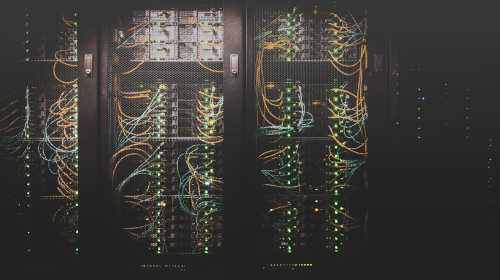
Think of the global artificial intelligence race not as a frictionless software sprint, but as the 19th-century scramble for naval coaling stations and submarine telegraph cables. The most advanced dreadnoughts and digital models are utterly useless without a secure, geographically distributed network of physical power depots and legally secured data pipelines to fuel them. Today, the frontier of compute is being aggressively enclosed by sovereign regulators and energy monopolists.
The Core Event
The United States has aggressively escalated semiconductor export controls via the 2026 Chip Security Act, colliding with severe domestic power grid constraints and a landmark $1.5 billion AI copyright settlement that fundamentally restructures the data licensing economy. This synchronized regulatory and thermodynamic squeeze is bifurcating the global compute stack into heavily guarded, power-starved fiefdoms while legally cartelizing the foundational training data market.
The Unseen Implications
The immediate shockwave impacting [[Global AI Infrastructure & Geopolitical Compute Allocation]] is the silent transition from a silicon bottleneck to a thermodynamic chokepoint. Mainstream financial media remains fixated on TSMC yields and GPU allocations, entirely ignoring the physical reality of municipal infrastructure. The Electric Power Research Institute (EPRI) estimates that data centers could grow to consume up to 9% of U.S. electricity generation annually www.energy.gov . Because a single large AI data center can use 100 MW to 1 GW of electricity, the physical utility layer is now the primary determinant of compute availability techplustrends.com . This massive draw is triggering a severe shortage in power IC supplies expected throughout 2026, effectively stalling the build-out of secondary hyperscale clusters accuristech.com . The unseen implication is that compute sovereignty is entirely bottlenecked by local utility transformers and cooling water rights, forcing hyperscalers to hoard silicon they cannot physically power and creating a massive phantom inventory of idle accelerators.
The second unseen implication is the rapid cartelization of the foundational training data market driven by the judicial resolution of copyright litigation. The era of the open-scrape gold rush is definitively over. Recently, Anthropic reached a landmark $1.5 billion settlement with authors in what's being called the largest US AI copyright case to date www.facebook.com . This massive capital deployment establishes an implicit price floor for proprietary human-generated text, images, and code. The unseen economic reality is that only mega-cap laboratories possess the balance sheet to absorb these multi-billion-dollar licensing fees. This effectively builds an insurmountable legal moat around incumbent models, pricing mid-market startups and open-source collectives out of the premium data required to eliminate hallucinations and optimize complex reasoning chains, thereby cementing an oligopoly over cognitive infrastructure.
The third implication involves the weaponization of open-source models as a geopolitical wedge to bypass Western hardware embargoes. As the U.S. restricts the export of closed frontier weights and physical accelerators, adversarial nations are pivoting to democratize the algorithmic layer. A recent strategic analysis notes that "The Chinese leadership has already positioned China as a global champion of open-source AI development" to reinforce its industrial dominance globally www.uscc.gov . By flooding the Global South with highly capable, open-weight models, Beijing enables developing nations to run world-class AI on decentralized, lower-tier silicon that is entirely immune to U.S. export controls. This creates a shadow compute ecosystem where the Global South trades access to its localized data and critical mineral supply chains in exchange for algorithmic sovereignty, permanently fracturing the unified global AI stack.
The Historical Precedent
The closest historical analog is the late 19th-century Standard Oil monopoly and the subsequent "Break of Gauge" railway wars. Standard Oil did not merely monopolize the oil wells; it monopolized the pipelines, the rail cars, and the barrel-making cooperages, controlling the physical logistics and legal chokepoints of the commodity. Simultaneously, competing railway empires deliberately built incompatible track gauges to strand rival cargo and control regional logistics. The lesson from the Gilded Age is stark: technological superiority in extraction or model generation is irrelevant without control over the physical logistics, energy substrates, and legal frameworks that sustain them. Just as Standard Oil used pipeline monopolies to enforce a global energy cartel, today’s hyperscalers and allied governments are using power grids, copyright settlements, and export controls to enforce a cognitive monopoly, stranding rival nations and mid-market startups in a state of permanent technological dependency.
Actionable Takeaways
For enterprise CIOs and AI infrastructure architects, the immediate mandate is to pivot procurement strategies away from pure GPU allocation and aggressively secure long-term Power Purchase Agreements (PPAs) and localized water-cooling rights, as the physical utility layer is now the primary determinant of compute availability. Corporate legal teams must prepare for the incoming data licensing oligopoly by securing multi-year, fixed-price enterprise agreements with legacy media and publishing conglomerates before the post-Anthropic settlement pricing cascade fully materializes. For citizens and retail investors, the playbook requires a defensive rotation out of pure-play AI software wrappers and into the physical "picks and shovels" of the thermodynamic and legal bottlenecks: high-voltage transformer manufacturers, liquid cooling infrastructure firms, and specialized intellectual property clearinghouses that will broker the newly financialized training data market.
Future Forecast
Over the next six months, the landscape will be defined by the first major "algorithmic embargo" enforcement action, where the U.S. Commerce Department penalizes a multinational enterprise for routing proprietary model weights through a non-aligned cloud jurisdiction, triggering a massive compliance panic in the open-source community. We will see a pronounced bifurcation in the energy market, as the Department of Defense invokes emergency procurement authorities to commandeer regional electrical grids, prioritizing military-aligned AI data centers over civilian residential loads. Concurrently, expect a wave of distressed M&A in the mid-market AI startup sector, as cash-constrained firms are forced to sell their proprietary, pre-scraped datasets to mega-cap incumbents to survive the newly established, billion-dollar copyright licensing floor.
Related Articles

The Biopharma Bottleneck: How Supply Chains and Regulatory Reality Are Restraining Medical Innovation
Aug 22, 2026
The Structural Faultlines of Modern Medicine: Navigating the Convergence of Capital, Compute, and Geopolitics
Aug 22, 2026
Comments (0)
No comments yet. Be the first to share your thoughts!
Want to join the discussion?
Please log in to post a comment.
Login NoworCreate an Account