
The Compute Cartel: How the Chip Security Act and Sovereign AI are Bifurcating the Global Tech Stack

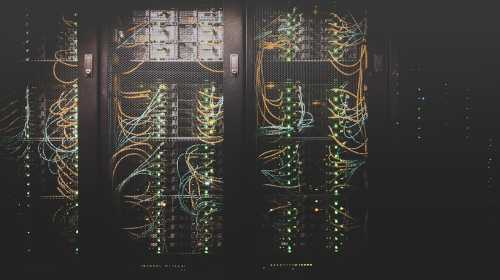
The global internet was originally engineered like a public library—open, decentralized, and universally accessible. Today, artificial intelligence is being constructed like a global system of hydroelectric dams, where upstream nations control the water flow, and downstream nations must either pay exorbitant tolls or build their own isolated, structurally inefficient reservoirs.
The Core Event
The United States has enacted the Chip Security Act of 2026, mandating bifurcated GPU export stacks for allied versus non-aligned nations, concurrent with the August 2 enforcement of the EU AI Act's general-purpose model obligations www.aljazeera.com . This dual regulatory shockwave has accelerated a massive global capital flight toward domestic hardware, driving the sovereign AI infrastructure market to a projected USD 24.8 billion in 2026 as nations scramble to escape foreign compute dependence www.rootsanalysis.com .
The Unseen Implications
The Bifurcation of the Enterprise Tech Stack and Procurement Fractures Mainstream financial analysis focuses on the immediate revenue bump for hyperscalers, entirely ignoring the catastrophic procurement friction this introduces to multinational enterprises. The Chip Security Act effectively forces global corporations to maintain dual AI architectures—one compliant with U.S. export controls for allied operations, and a heavily restricted, air-gapped stack for non-aligned markets. This destroys economies of scale in software deployment. When the United States controls approximately 75% of global AI compute, bifurcating that supply chain means multinational banks and logistics firms must now train and maintain separate localized models, effectively doubling their inference costs while fracturing their internal data gravity www.ces-intelligence.com .
Compute Inflation and the Misallocation of Sovereign Capital The rush to build sovereign AI clusters is generating severe compute inflation, misallocating national budgets away from foundational research and toward raw hardware hoarding. Governments are purchasing thousands of specialized GPUs without the domestic talent density required to optimize distributed training workloads. This is not an investment in innovation; it is a panic-driven stockpile of depreciating silicon. By prioritizing hardware acquisition over data curation, mid-tier nations are building sub-scale compute clusters that cannot mathematically train frontier models, resulting in stranded assets that will require massive state subsidies just to keep the cooling systems running.
Regulatory Arbitrage and the Weaponization of Open-Source The simultaneous enforcement of the EU AI Act and stringent U.S. export controls is creating a massive regulatory arbitrage opportunity, pushing frontier innovation into unaligned jurisdictions. Furthermore, the U.S. is increasingly treating open-weight models not as a public good, but as a dual-use technology subject to export restrictions. This effectively weaponizes open-source AI, forcing global developers into a fractured ecosystem where the underlying weights of foundational models are geo-fenced. As the Center for Strategic and International Studies (CSIS) notes in their recent policy paper on the "Sovereign Cloud–Sovereign AI Conundrum," nations cannot benefit from AI if they lack foundational compute, connectivity, and data infrastructure, forcing a geopolitical race for hardware independence genesishumanexperience.com .
Counter-Argument
Area 1: The Security Imperative vs. Innovation Stagnation Critics argue that bifurcating the global tech stack will fatally stifle innovation by fragmenting the developer community and destroying the network effects of a unified global AI ecosystem. However, defense analysts counter that the dual-use nature of advanced AI—particularly in autonomous swarm robotics and cyber-warfare automation—makes compute sovereignty a literal survival imperative. From this vantage point, the economic inefficiency of maintaining parallel tech stacks is an acceptable premium to pay for national security, preventing adversarial regimes from utilizing Western compute infrastructure to optimize military logistics or synthesize novel pathogens.
Area 2: The "Sovereign AI" Illusion vs. Strategic Autonomy Skeptics frequently dismiss sovereign AI initiatives as a massive boondoggle, arguing that no single nation outside the U.S. or China possesses the capital or energy grid to train a competitive frontier model. Industry architects counter that this fundamentally misunderstands the objective of sovereign AI. The goal is not to outgun Silicon Valley in parameter count; it is to achieve strategic autonomy over localized, fine-tuned Small Language Models (SLMs). By controlling the physical inference layer, nations ensure that domestic healthcare, legal, and governmental data never passes through foreign API endpoints, preventing cultural homogenization and protecting critical infrastructure from remote kill-switches.
The Historical Precedent
The current macroeconomic friction perfectly mirrors the geopolitical shock of the 1973 Oil Embargo and the subsequent birth of modern energy sovereignty. In the early 1970s, Western industrial economies realized they had built their entire post-war prosperity on the assumption of cheap, uninterrupted access to foreign crude. When the supply was abruptly throttled, it triggered stagflation and forced a painful structural realignment. Governments responded not just by rationing, but by establishing Strategic Petroleum Reserves and heavily subsidizing domestic nuclear and alternative energy grids. The crisis also birthed the International Energy Agency (IEA) in 1974 to coordinate allied responses. Today, compute is the new oil, and advanced GPUs are the refineries. The lesson from 1973 is stark: when a critical input for national survival is controlled by foreign cartels or rival superpowers, the free market's pursuit of efficiency will inevitably be overridden by the state's mandate for resilience, regardless of the short-term economic cost.
Actionable Takeaways
Enterprise CTOs: Immediately implement hardware-agnostic abstraction layers within your MLOps pipelines. Relying on a single vendor's proprietary CUDA ecosystem is now a severe geopolitical risk; you must be able to shift inference workloads between domestic and allied compute clusters without rewriting your underlying codebase. Sovereign Wealth Funds: Pivot capital allocation away from raw GPU procurement and toward localized data-curation startups and edge-inference optimization. The hardware bottleneck is being solved by state actors; the actual alpha lies in the proprietary, culturally aligned datasets required to fine-tune those models. Local Businesses: Audit your SaaS dependencies. If your core operational software relies on API calls to foreign-hosted frontier models, you are exposed to sudden latency spikes or service termination due to shifting export control lists. Citizens and Developers: Upskill in edge-computing and localized SLM deployment. The future of AI engineering will not be prompting massive centralized models, but optimizing quantized, open-weight models to run efficiently on localized, sovereign hardware.
Future Forecast
By February 2027, the mid-tier sovereign AI bubble will violently burst. We will witness a wave of distressed asset sales as mid-sized nations and undercapitalized sovereign wealth funds realize they cannot sustain the exorbitant energy and cooling costs of their idle GPU clusters. The sheer megawatt requirements of these sovereign clusters will force mid-tier nations to attempt building dedicated small modular nuclear reactors (SMRs), delaying their AI ambitions by another 3-5 years while hyperscalers leverage their existing power purchase agreements to quietly acquire these stranded silicon assets at pennies on the dollar. Simultaneously, the U.S. and EU will finalize a transatlantic compute-sharing treaty—an "International Compute Agency"—effectively creating a closed-loop Western AI grid that explicitly excludes non-aligned nations, permanently bifurcating the global internet into two distinct, incompatible technological spheres.
Related Articles

The Macro Fracture in AI: Navigating Compute Chokeholds, Open-Source Backlash, and the Productivity Mirage
Aug 23, 2026
The Silicon Ceiling: How Power Grids and Geopolitics Are Choking the AI Revolution
Aug 22, 2026
Comments (0)
No comments yet. Be the first to share your thoughts!
Want to join the discussion?
Please log in to post a comment.
Login NoworCreate an Account