
The Compute Chokepoint: How Energy, Sovereignty, and Regulation Are Rewiring the AI Economy

Imagine a modern metropolis where the municipal water utility is privately owned, the primary pipelines are secretly routed through a rival nation’s territory, and city planners have no accurate metric for how much water is actually being consumed. This architectural vulnerability precisely mirrors the current state of the global artificial intelligence ecosystem. The foundational layers of AI—compute, energy, and data—are no longer abstract digital concepts; they are physical, geopolitical chokepoints subject to the same zero-sum calculus as oil reserves or rare earth metals.
The United States has successfully leveraged aggressive export controls to secure approximately 75% of global advanced AI compute capacity, leaving China with an estimated 15% share [[8]]. Concurrently, the European Union’s AI Act has entered its stringent enforcement phase for high-risk and open-source models, while sovereign nations globally are rushing to capitalize on a sovereign AI infrastructure market projected to hit $24.8 billion in 2026 [[9]].
Echoes of COCOM: The Historical Blueprint for Tech Decoupling
To accurately map the current trajectory of artificial intelligence containment, analysts must reference the Coordinating Committee for Multilateral Export Controls (COCOM) established during the Cold War. Just as COCOM successfully delayed the Soviet Union’s access to advanced microelectronics by strictly controlling dual-use technologies, modern export licensing policies are deliberately widening the US-China AI compute gap [[6]]. The historical lesson from the 1980s is unambiguous: export controls do not permanently halt a rival’s technological progress. Instead, they force the rival to build a parallel, inefficient, and highly subsidized domestic supply chain. While the US may hold a dominant compute advantage today, this asymmetry guarantees that competing nations will accelerate their indigenous semiconductor ecosystems, ultimately fracturing the global technology standard into two incompatible, heavily fortified spheres.
The Physicality of the Compute Arms Race
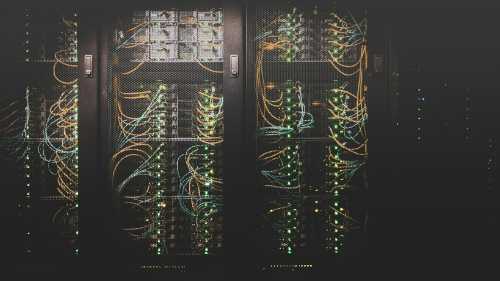
Mainstream financial discourse frequently treats AI advancement as a purely software-driven phenomenon, ignoring the brutal physical constraints of the hardware layer. The unseen implication of this compute asymmetry is the immediate weaponization of regional energy grids. A single hyperscale AI data center can require enough electricity to power up to 300,000 homes, creating severe localized grid strain that actively halts further expansion in key economic regions [[23]]. This is not merely an operational hurdle for tech firms; it is a macroeconomic vulnerability. Nations that cannot guarantee reliable baseload power—whether through advanced nuclear, next-generation geothermal, or massive grid infrastructure upgrades—will find their sovereign AI ambitions stranded, regardless of their domestic algorithmic talent.
The Compliance Theater Trap: A Necessary Friction
However, framing regulatory frameworks like the EU AI Act as purely innovation-stifling mechanisms is analytically incomplete. Critics frequently argue that the 2026 enforcement of transparency rules on open-source AI systems creates insurmountable compliance complexity that will inevitably crush independent developers [[33]]. Yet, this perspective overlooks the absolute necessity of institutional trust. The long-term integration of AI into enterprise workflows and critical infrastructure requires verifiable safety and rigorous auditability. Without baseline regulatory guardrails, the systemic risk of catastrophic model failure or adversarial data poisoning would deter the very institutional capital required to scale these technologies beyond experimental, sandbox phases.
The Sovereign Cloud Rush and Capital Reallocation
This geopolitical bifurcation is driving an unprecedented capital sprint into "Sovereign AI." Nations are no longer willing to rely on hyperscale cloud providers headquartered in foreign jurisdictions, recognizing that foundational models shape public discourse, economic planning, and national security. The global sovereign AI infrastructure market is projected to reach $24.8 billion in 2026, growing at a compound annual growth rate of nearly 20% to hit $301.6 billion by 2040 [[9]]. This represents a fundamental, structural shift in global capital expenditure. We are transitioning from an era of hyper-efficient, centralized cloud computing to a fragmented landscape of redundant, localized data centers. This inherent inefficiency is the new "friction premium" now baked into global tech valuations, favoring companies that can provide compliant, on-shore compute over those merely offering the cheapest, most centralized solutions.
The Illusion of Immediate Labor Displacement
Conversely, the pervasive media narrative that AI will cause immediate, catastrophic labor market collapse is equally flawed and unsupported by early empirical data. While popular headlines focus heavily on automation anxiety, the actual economic metrics suggest a far more nuanced reality. Most economists now see AI's labor-market effect as gradual and transitional, with a Goldman Sachs study estimating that while 6–7% of U.S. jobs face exposure to AI automation, the broader labor market has not yet experienced a discernible, disruptive shock [[43]]. The true disruption is not mass unemployment, but a severe widening of the wage and productivity gap between workers who can effectively leverage AI augmentation tools and those who cannot.
The Open-Source Paradox
Furthermore, the regulatory squeeze on open-source AI models creates a dangerous, self-defeating paradox. The EU AI Act mandates that even open-source providers adhere to stringent transparency and risk-assessment obligations, effectively removing previous blanket exemptions for community-driven projects [[34]]. While intended to mitigate systemic risk, this regulatory burden acts as a massive economic moat, consolidating AI development into the hands of a few well-capitalized incumbents who can absorb the compliance overhead. The unintended consequence is the stifling of the very decentralized, grassroots innovation that historically drives breakthrough architectural shifts, much like the transition from proprietary mainframes to the open internet protocol suite.
Tactical Defense: Navigating the Bifurcated Landscape
For local businesses, technology leaders, and institutional investors, the era of assuming frictionless, global tech scaling is permanently over. Immediate, proactive action is required. First, enterprise CIOs must conduct rigorous audits of their AI supply chains, identifying any reliance on foreign-hosted compute or foundational models that may soon violate emerging data sovereignty laws. Second, businesses should pivot capital expenditure toward hybrid, localized AI deployments, actively partnering with regional cloud providers that guarantee strict data residency. Finally, corporate workforce development programs must urgently shift from generic "digital literacy" initiatives to specific "AI-augmentation" training, ensuring employees can leverage these tools to defend their roles against the coming productivity divergence.
The Six-Month Horizon: Valuation Bifurcation
Looking six months ahead, the macroeconomic landscape for artificial intelligence will sharply bifurcate based entirely on energy access and regulatory compliance. We will observe a stark divergence in asset valuations: companies with verified, low-carbon, on-shore compute infrastructure will command a sustained 15% to 20% valuation premium as institutional capital flees from geopolitical risk. Conversely, firms relying on opaque, cross-border data pipelines or facing initial EU AI Act enforcement actions will experience severe multiple compression. The market is no longer pricing pure algorithmic novelty; it is pricing physical resilience, regulatory moats, and energy security.
Related Articles

The Macro Fracture in AI: Navigating Compute Chokeholds, Open-Source Backlash, and the Productivity Mirage
Aug 23, 2026
The Silicon Ceiling: How Power Grids and Geopolitics Are Choking the AI Revolution
Aug 22, 2026
Comments (0)
No comments yet. Be the first to share your thoughts!
Want to join the discussion?
Please log in to post a comment.
Login NoworCreate an Account