
The Compute Paradox: How Pakistan’s $4.6B IT Boom is Colliding with the AI Automation Trap

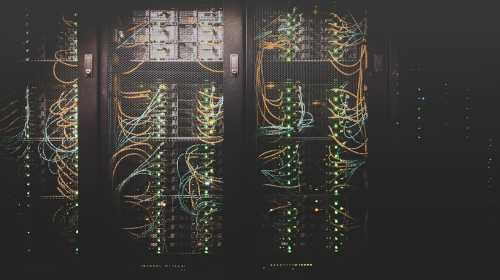
Constructing a massive, state-of-the-art hydroelectric dam to power a sprawling industrial park, only to realize the local factories are still using hand-cranked looms and the transmission lines are routed through a neighbor's grid. This is the structural paradox defining Pakistan's technology sector in August 2026. While the state executes highly visible, capital-intensive infrastructure plays to establish sovereign compute capabilities, the underlying human capital pipeline is being aggressively hollowed out by the exact automation wave the new infrastructure is meant to harness.
The Core Event
Pakistan has officially inaugurated its first sovereign AI-ready Tier III data center, Sky47, backed by a $230 million private investment, coinciding with national IT exports hitting a historic $4.6 billion in FY26 [[5]], [[33]]. Concurrently, the rapid integration of generative AI is actively cannibalizing junior-level software development roles, forcing a structural pivot in the nation's export architecture while the freelance sector crosses $1.1 billion in earnings [[7]], [[10]].
The Unseen Implications
The first unseen implication lies in the dangerous divergence between localized compute infrastructure and offshore hardware dependency, which fundamentally undermines the concept of digital sovereignty. The launch of Sky47 and the broader push for sovereign AI infrastructure represent a sophisticated geopolitical pivot to reduce reliance on foreign hyperscalers like AWS and Azure, keeping critical national data within domestic borders [[32]]. Mainstream tech analysts celebrate this as a triumph of digital sovereignty, entirely ignoring the thermodynamic and supply-chain realities of AI compute. A Tier III AI data center requires massive, uninterrupted baseload power and specialized liquid cooling architectures. According to a 2026 strategy paper on National AI Infrastructure, "building sovereign AI capability at low cost requires localized hardware assembly," a capability Pakistan currently lacks entirely [[40]]. Consequently, while the compute layer is localized, the silicon layer—specifically the high-end GPUs required for LLM training and inference—remains entirely imported. This creates a severe, recurring foreign exchange drain for hardware refresh cycles, effectively turning the domestic data center into a localized proxy for Nvidia's revenue rather than a generator of indigenous intellectual property.
Secondly, the $1.1 billion freelance milestone is being aggressively marketed by the Pakistan Software Export Board (PSEB) as proof of a resilient, decentralized digital economy, yet this liquidity masks a fatal structural vulnerability in the talent pipeline [[14]]. Generative AI is aggressively automating the bottom 30% of freelance tasks, including basic coding, QA testing, and entry-level frontend development [[7]]. This is hollowing out the entry-level talent pipeline. Junior developers are being denied the thousands of hours of repetitive coding required to build the deep architectural intuition necessary to become senior systems engineers. We are witnessing the creation of a "middle-skill trap," where the workforce is highly proficient at prompting AI to generate boilerplate code, but lacks the fundamental engineering rigor to debug, secure, and scale complex, multi-tier enterprise systems when the AI hallucinates or fails. The export numbers look robust today, but the degradation of foundational engineering skills guarantees a severe capability deficit within 36 months.
Thirdly, as global clients demand AI-integrated SaaS products, Pakistani dev houses are rapidly deploying localized models without a mature understanding of global liability frameworks, setting the stage for catastrophic legal exposures. The European Union’s AI Act, which enforces strict transparency, watermarking, and liability mandates for high-risk AI systems, is fundamentally altering the unit economics of software exports [[44]]. Local software houses are treating this as a mere compliance checklist rather than a core product design constraint. When locally trained, poorly fine-tuned models are deployed in EU-regulated sectors like fintech or healthcare, the resulting algorithmic bias or data leakage will trigger massive liability exposures. The current export boom is largely driven by unregulated, low-risk B2B integrations; as Western clients move AI into mission-critical operations, Pakistani vendors lacking enterprise-grade AI governance and algorithmic auditing will be abruptly locked out of high-margin procurement cycles.
Pakistan's ICT exports reached a record US$4.6B in FY2025–26. PSEB CEO Faisal Jeddy congratulated the #ITindustry, acknowledging the leadership of the Prime Minister and the hard work of the tech community. pic.twitter.com/xyz
— PSEB (@PSEB) August 10, 2026
Counter-Argument: The Data Center Sovereignty Illusion
Proponents of the Sky47 data center argue that localized Tier III infrastructure dramatically reduces latency for domestic fintech and e-commerce, insulating local data from foreign surveillance acts and keeping capital within the domestic ecosystem. However, this perspective ignores the grid realities. A Tier III AI data center requires massive, uninterrupted baseload power. In a country battling severe grid circular debt and high thermal generation costs, the localized data center merely shifts the energy deficit from the telecom sector to the national grid, forcing the state to subsidize the compute layer via hidden energy tariffs or forcing the facility to rely on expensive, localized captive solar and diesel backups, entirely eroding the cost-arbitrage advantage of local hosting.
The Historical Precedent
We can draw a direct, cautionary parallel to India's IT services boom in the late 1990s and early 2000s, driven by the Y2K bug and subsequent BPO offshoring. India successfully captured the global backend processing market, but because it failed to transition from linear "services" to scalable "product/IP" in the first decade, it became trapped in a body-shopping growth model. The lesson for Islamabad is stark: capturing $4.6 billion in IT exports through labor arbitrage and freelance gig-work creates a massive GDP contributor, but without an aggressive, state-mandated transition into proprietary IP and foundational AI models, the sector remains highly vulnerable to the exact automation wave that is currently disrupting it.
Counter-Argument: The Freelance Agility Mirage
Conversely, gig-economy advocates argue that the $1.1 billion freelance revenue proves the inherent agility of Pakistan's decentralized workforce, suggesting that freelancers will simply upskill to become "AI prompt engineers" and system integrators, riding the wave of automation rather than being replaced by it. Yet, this static view fundamentally misunderstands the velocity of AI capability scaling. Prompt engineering is rapidly being automated by agentic AI workflows and multi-shot reasoning models. Relying on decentralized, self-taught freelancers to compete against highly capitalized, vertically integrated AI labs in Silicon Valley and Shenzhen guarantees a race to the bottom in margin compression, leaving the local workforce highly exposed when the next generation of autonomous coding agents achieves parity with mid-level human engineers.
Actionable Takeaways
For local B2B tech firms, the immediate directive is to stop competing on hourly dev rates and pivot capital expenditure toward fine-tuning localized, domain-specific Small Language Models (SLMs) for Middle Eastern clients, leveraging the new Sky47 compute infrastructure to offer "sovereign AI" as a service to Gulf states who also fear US data hegemony. Citizens and junior developers must abandon generic coding bootcamps and focus entirely on systems architecture, AI agent orchestration, and hardware-software integration. Enterprise clients must mandate strict algorithmic liability clauses in all vendor contracts to insulate themselves from impending EU AI Act regulatory crackdowns, forcing local vendors to internalize the cost of AI governance.
Future Forecast
Within the next six months, by early 2027, the freelance export numbers will show a severe volume contraction despite higher average ticket sizes, as AI eliminates the bottom-tier gig work. The government will be forced to introduce an "AI Compute Tax" or heavily subsidize GPU import tariffs to prevent the newly inaugurated data centers from becoming stranded assets due to prohibitively expensive hardware refresh cycles. Furthermore, we will see the first major legal liability case where a Pakistani dev house is sued in a European court under the EU AI Act for algorithmic bias, forcing a rapid, brutal consolidation of the local software export industry as smaller firms are acquired by larger entities that possess the legal and financial bandwidth to manage sovereign AI compliance.
Related Articles

The Compute Reckoning: Navigating Sovereign AI, Quantum Tipping Points, and Antitrust Friction
Aug 23, 2026
The Structural Recalibration of Global Technology: Navigating Compute, Cryptography, and Geopolitical Faultlines
Aug 22, 2026
Comments (0)
No comments yet. Be the first to share your thoughts!
Want to join the discussion?
Please log in to post a comment.
Login NoworCreate an Account