
The De-Dollarization Earthquake: BRICS+ Launches 'Unit' Digital Trade Currency to Bypass SWIFT

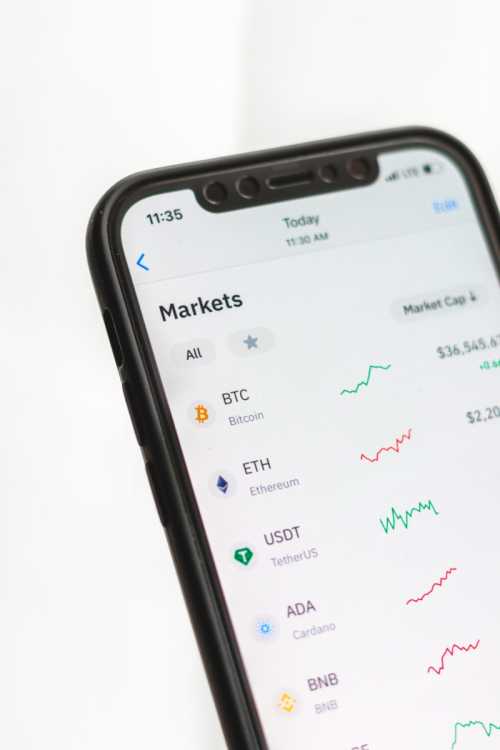
In a coordinated financial maneuver that threatens to fracture the foundations of the post-World War II global economic order, the expanded BRICS+ bloc officially launched its unified digital trade settlement currency, dubbed the 'Unit,' at a summit in Rio de Janeiro on Thursday. The 'Unit' is not a physical banknote, nor is it a traditional fiat currency backed by a single central bank; rather, it is a blockchain-based, multi-asset digital token designed exclusively for cross-border trade结算 (settlement) between member nations. To understand the magnitude of this launch, imagine a group of friends who have always used one specific guy's IOU notebook to track who owes what for group dinners. Over time, that guy starts charging high fees for using his notebook, and sometimes he refuses to let certain friends use it because he doesn't like them. So, the rest of the group decides to create their own separate, shared digital ledger. They agree to use this new ledger for all their group transactions, effectively bypassing the original guy's notebook entirely. This is exactly what BRICS+ has done to the US Dollar and the SWIFT banking system. By launching the 'Unit', the Global South has created a parallel financial universe that allows them to trade oil, minerals, and manufactured goods without ever touching the American financial system, effectively neutralizing the power of US sanctions.
The Mechanics of the 'Unit': How the Digital Ledger Works
The technical architecture of the 'Unit' is a masterpiece of modern financial engineering, designed specifically to solve the trust and volatility issues that have plagued previous attempts at a common currency. Unlike the failed Euro, which required member states to surrender their monetary policy to a central bank, the 'Unit' does not replace national currencies like the Chinese Yuan, Indian Rupee, or Brazilian Real. Instead, it acts as a neutral, digital clearing layer. When a company in Brazil wants to buy solar panels from a company in China, the transaction is executed in 'Units'. The value of the 'Unit' is algorithmically pegged to a diversified basket of commodities (including gold, oil, and rare earth metals) and the fiat currencies of the BRICS+ central banks. The blockchain ledger, which is hosted on a decentralized network of nodes physically located across member nations, records the transaction instantly. The Brazilian central bank debits its reserve of 'Units', and the Chinese central bank credits its reserve, all without a single US dollar changing hands and without the transaction ever passing through a correspondent bank in New York. This system reduces transaction costs by up to 80% and settles trades in seconds, compared to the days it takes through the traditional SWIFT network.
The Geopolitical Earthquake: The Acceleration of De-Dollarization
The launch of the 'Unit' is the most significant step yet in the global campaign of de-dollarization, a process that has been quietly accelerating for the past decade but has now reached a critical mass. The US dollar's status as the world's reserve currency is the ultimate source of American geopolitical power; it allows Washington to fund its massive deficits cheaply and to weaponize the financial system through crippling economic sanctions. By creating a viable, liquid, and technologically superior alternative for international trade, BRICS+ is directly attacking the dollar's network effect. If major commodity producers like Saudi Arabia, Russia, and Brazil consistently price and settle their exports in 'Units', the global demand for dollars will structurally decline. This 'petrodollar' erosion will force the US Federal Reserve to confront a harsh reality: if the world no longer needs dollars to buy energy and food, the massive pool of offshore dollars will flood back into the domestic US economy, potentially triggering severe inflation and forcing interest rates to skyrocket. The geopolitical implications are staggering. The world is effectively splitting into two distinct financial spheres: a G7-led dollar bloc, and a BRICS-led 'Unit' bloc. Nations in the middle, particularly in Africa and Southeast Asia, will now have the power to play both sides, extracting massive concessions from Washington and Beijing by threatening to switch their settlement preferences.
The G7 Retaliation: Sanctions, Tariffs, and Financial Warfare
The reaction from the G7 nations was swift, aggressive, and deeply alarmed. Recognizing the 'Unit' as an existential threat to their financial hegemony, the United States and its allies have announced a series of punitive measures designed to strangle the new currency in its crib. The US Treasury Department has invoked emergency powers to impose secondary sanctions on any financial institution, even those in neutral countries, that facilitates large-scale 'Unit' transactions for sanctioned entities like Russia or Iran. Furthermore, the G7 has announced a coordinated review of the 'Unit's' underlying blockchain infrastructure, threatening to ban the software developers and hardware manufacturers that support the network from accessing Western technology. However, financial analysts warn that these traditional weapons may be blunt instruments against a decentralized, blockchain-based system. Unlike the traditional banking system, which relies on centralized chokepoints that can be easily sanctioned, the 'Unit' ledger is distributed across hundreds of nodes in jurisdictions that do not recognize US legal authority. The G7's attempt to blockade the 'Unit' risks accelerating the very fragmentation they are trying to prevent, pushing even more global trade into the shadows of the new BRICS financial ecosystem.
The Impact on the Global South: A New Era of Sovereign Development
For the developing nations of the Global South, the launch of the 'Unit' represents a profound liberation from the cyclical crises of the dollar-dominated system. For decades, emerging markets have been trapped in a vicious cycle: they borrow in dollars to fund infrastructure, but when the US Federal Reserve raises interest rates to fight domestic inflation, the dollar strengthens, making their debt impossibly expensive to service, leading to defaults and IMF bailouts that require harsh austerity measures. The 'Unit' offers an escape from this trap. By allowing these nations to trade and borrow in a neutral, commodity-backed digital currency, they are insulated from the whims of American monetary policy. Furthermore, the BRICS+ New Development Bank has announced that all future infrastructure loans will be issued exclusively in 'Units'. This is pouring hundreds of billions of dollars of capital into the Global South, funding ports, railways, and energy grids across Africa, Latin America, and Asia without the political conditionalities traditionally attached to Western aid. The 'Unit' is not just a currency; it is the financial engine of a new, multipolar world order, empowering the developing world to chart its own economic destiny free from the oversight of Washington and the IMF.
"The era of a single, unipolar financial system is over. The launch of the 'Unit' is not about destroying the dollar; it is about establishing fairness. We are building a financial system where trade is based on mutual respect and real economic value, not on the geopolitical leverage of a single nation." - BRICS+ Summit Joint Declaration
As the closing gavel fell in Rio de Janeiro, the financial markets reacted with a mixture of panic and profound recalibration. The value of the US dollar dropped sharply against a basket of emerging market currencies, and the price of gold surged to new all-time highs as central banks worldwide scrambled to diversify their reserves away from US Treasuries. The launch of the 'Unit' is the point of no return in the history of global finance. It is the moment the digital ledger replaced the gold standard, and the multipolar economy replaced the unipolar one. The G7 still holds immense wealth and technological power, but they no longer hold the monopoly on the plumbing of the global economy. The 'Unit' has been minted, the blockchain is live, and the great financial divorce has begun. The world is now navigating uncharted waters, where the rules of money are being rewritten in code, and the balance of global power is shifting as fundamentally as it did when the Bretton Woods system was established eighty years ago.
Related Articles
The Multipolar Fracture: Navigating Defense Realignment, Institutional Arbitrage, and Tactical Instability
Aug 23, 2026
The Architecture of Fragmentation: Navigating the Multipolar Shift in Global Governance
Aug 22, 2026
Comments (0)
No comments yet. Be the first to share your thoughts!
Want to join the discussion?
Please log in to post a comment.
Login NoworCreate an Account