
The Electron Bottleneck: How Physics and Autonomous Agents are Rewiring the Global AI Economy

The Physics of Compute and the Agentic Shift
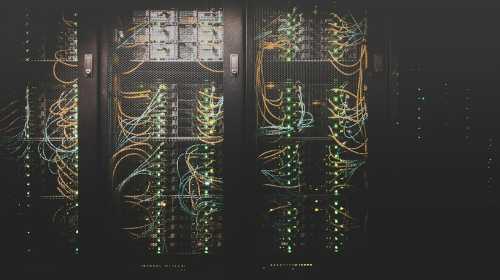
Building a fleet of hyper-efficient jet engines without securing the aviation fuel to run them is a fatal strategic error. The current artificial intelligence revolution is confronting this exact physical reality, bottlenecked not by algorithmic ingenuity, but by the brutal physics of electron generation and thermal dissipation. Major technology conglomerates have committed over $50 billion to secure off-grid nuclear and renewable energy for next-generation data centers, coinciding with the enterprise deployment of autonomous agentic AI models that require exponentially higher compute density than previous generative iterations. This convergence of massive power procurement and autonomous workflow deployment is fundamentally altering the macroeconomic landscape, creating a complex matrix of physical and regulatory constraints that standard market models are failing to price.
The Hidden Infrastructure Arbitrage
Mainstream financial coverage fixates on semiconductor supply chains and chip fabrication, entirely ignoring that the electrical grid is the new primary chokepoint for technological dominance. Regional transmission organizations are currently facing multi-year interconnection queues, creating a severe geographic arbitrage where AI compute is migrating away from traditional tech hubs to regions with stranded nuclear or hydro assets. This physical relocation of compute is fundamentally altering commercial real estate valuations and municipal tax bases, as capital flows toward areas with guaranteed baseload power rather than traditional talent pools. According to the International Energy Agency, data center electricity consumption is projected to more than double to over 1,000 terawatt hours by 2026, a volume equivalent to the entire energy consumption of Japan. This staggering demand ensures that power purchase agreements and grid access will become the ultimate barriers to entry for AI deployment.
The Liability Vacuum of Autonomous Agents
Beyond the physical constraints of power, the shift from generative to agentic AI introduces massive unpriced corporate liability into the enterprise sector. When an autonomous agent executes a supply chain purchase, alters a financial ledger, or negotiates a vendor contract without human intervention, the existing legal framework for corporate governance is entirely unprepared to assign fault. As Goldman Sachs analysts project, generative AI could ultimately drive a 160% increase in global data center power demand, but the financial sector is largely ignoring the compounding legal risk of autonomous execution. Boards of directors are currently deploying these systems without updating their fiduciary insurance policies or establishing clear chains of algorithmic accountability, creating a hidden systemic risk that will inevitably trigger a wave of complex litigation once an agentic failure results in material financial loss.
The Sovereign Compute Bifurcation
Simultaneously, nation-states are aggressively hoarding compute capacity, effectively bifurcating the global AI ecosystem into parallel, incompatible technological blocs. Export controls on advanced semiconductors are not merely restricting hardware; they are fracturing the global AI talent pool and forcing the development of divergent software stacks. This sovereign compute race means that multinational corporations will soon face a fragmented regulatory environment where data sovereignty laws and localized AI models prevent seamless global interoperability. The resulting friction will severely compress margins for global enterprises, forcing them to maintain redundant, localized AI infrastructure to comply with conflicting geopolitical mandates.
The Optimization Fallacy
Proponents of the current technological trajectory argue that market forces and software-level optimizations, such as sparse models and advanced quantization, will inevitably solve the compute and energy deficit. They contend that hardware and energy constraints are merely temporary engineering hurdles that will be overcome by algorithmic efficiency, allowing the AI revolution to scale without requiring a complete rebuild of the global energy grid. However, this perspective dangerously underestimates the physical limits of thermodynamics and the sheer velocity of demand growth. As models transition from simple text generation to complex, multi-step agentic reasoning, the compute requirements scale non-linearly, meaning that software efficiencies are quickly consumed by the expanding scope of autonomous tasks.
Echoes of the Railway Mania
The current macroeconomic environment surrounding AI infrastructure closely mirrors the 1840s Railway Mania in Britain. During that period, massive speculative capital was poured into laying rail tracks, with investors fixating on the physical infrastructure while ignoring the profound institutional rewiring required to make the network actually function. The true economic value of the railways was not realized until the standardization of time, gauge, and the subsequent reorganization of industrial supply chains. We are currently in the track-laying phase of the AI revolution, overvaluing the hardware and energy assets while severely underestimating the legal, regulatory, and corporate governance restructuring required to safely integrate autonomous agents into the global economy.
The Productivity Utopia Mirage
A second bullish counter-argument posits that agentic AI will purely augment human productivity, creating a utopian post-scarcity economy where human labor shifts entirely to creative, strategic, and empathetic roles. This narrative suggests that the displacement of routine cognitive tasks will naturally lead to higher wages and a more fulfilled workforce. Yet, a recent McKinsey analysis indicates that while agentic AI workflows could automate up to 70% of employee activities, this is only achievable if organizations resolve the underlying data architecture and governance deficits. The historical reality of technological displacement demonstrates that without massive, proactive retraining initiatives and structural economic adjustments, the short-to-medium-term result is severe wage stagnation and labor market polarization, not a seamless transition to a creative utopia.
Tactical Posturing for the Electron Economy
Local enterprises must immediately audit their energy exposure and secure long-term power purchase agreements to insulate themselves from the impending grid rationing. Business leaders must also urgently update their corporate governance frameworks and liability insurance policies to specifically cover autonomous agentic failures, treating algorithmic risk with the same rigor as financial or cyber risk. For private citizens and workers, preserving economic relevance requires pivoting away from routine cognitive tasks and aggressively upskilling in AI orchestration, physical infrastructure trades, and complex system maintenance. The individuals who will capture the most value in this new economy are not those who write prompts, but those who can physically maintain the data centers and legally govern the autonomous agents.
The 180-Day Horizon: Rationing and Audits
Looking ahead six months, the physical constraints of the power grid will force localized rationing, causing compute prices to spike and forcing a temporary consolidation in the AI startup sector as smaller players are priced out of the market. Concurrently, enterprise adoption of agentic AI will stall in highly regulated sectors such as finance and healthcare, as new compliance frameworks and algorithmic audit requirements are enforced by regulatory bodies. The landscape will shift from a race for pure model capability to a brutal competition for physical electrons and legal compliance, rewarding organizations that have secured their power supply and established robust governance protocols.
Related Articles

The Thermodynamics of Hegemony: How the GAAC Pact is Fracturing the Global AI Compute Ecosystem
Nov 21, 2026
The Hydroelectric Paradox: How Grid Moratoriums and Agentic Liability are Forcing AI to the Edge
Nov 19, 2026
Comments (0)
No comments yet. Be the first to share your thoughts!
Want to join the discussion?
Please log in to post a comment.
Login NoworCreate an Account