
The European Pivot: How the New 2026 EU Parliament is Balancing Green Dreams with Hard Security Realities


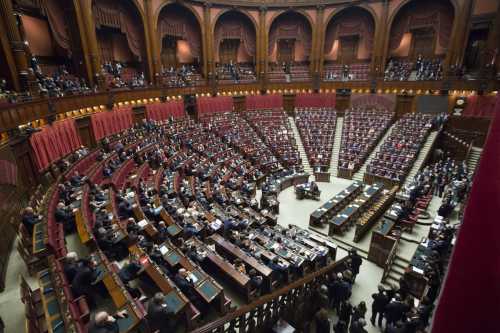
Imagine a massive, incredibly wealthy homeowners association (HOA) with 27 giant mansions. For years, the HOA spent all its time and money arguing about what color to paint the fences and how to make the community gardens perfectly organic. But recently, there have been break-ins in the neighborhood, and the security guards are underfunded. The homeowners are getting nervous. In June 2026, the European Union held its massive parliamentary session to elect a new board of directors for this HOA. The new parliament has a very clear, very serious message: we still love our gardens, but we are going to spend a lot more money on locks, alarms, and security guards. This is the story of the EU's 2026 political pivot, where the dream of a purely green, peaceful Europe is colliding with the hard, unforgiving realities of global security .
To understand this shift, we have to look at the election results. The 2026 European Parliament elections saw a significant shift to the right and center-right. Voters across France, Germany, Italy, and beyond expressed deep frustration with the cost of living, the speed of the green energy transition, and the influx of migrants. They sent a message to Brussels: "Fix our economy, protect our borders, and stop telling us how to live our daily lives." The new parliament, led by a coalition of pragmatic centrists and conservative factions, immediately set about rewriting the EU's legislative priorities for the next five years .
The most dramatic change is in the "European Green Deal." The original plan was to make Europe the first climate-neutral continent by 2050, with massive, aggressive targets for 2030. The new parliament is not canceling the Green Deal, but it is "pragmatizing" it. They introduced the "Industrial Competitiveness Clause." This clause states that no environmental regulation can be passed if it causes European factories to close or move to other countries where the rules are weaker. They are pausing some of the stricter bans on combustion engines and giving farmers more flexibility. The message is clear: we will save the planet, but not by destroying our own economy in the process .
The biggest winner in this new political landscape is defense. For decades, Europe relied on the United States, through NATO, to protect it. But with the political shifts in Washington and the ongoing conflicts on Europe's eastern and southern borders, the EU realized it needs to stand on its own two feet. The June 2026 session approved the "European Defense Integration Act," a massive €100 billion fund to jointly purchase weapons, build a unified drone defense network, and create a rapid reaction force of 50,000 troops that can be deployed anywhere in the world to protect European interests. It is the closest the EU has ever come to a true, unified European army .
Energy security is the bridge between the green dreams and the security realities. The parliament realized that buying gas from unreliable neighbors is a national security threat. The new "Energy Sovereignty Plan" accelerates the building of nuclear power plants (which are now officially classified as green under the new rules) and next-generation small modular reactors (SMRs). They are also investing heavily in deep-sea geothermal and advanced battery storage. The goal is to make Europe completely energy independent by 2035, so that no foreign dictator can ever turn off the heating in the winter to gain political leverage .
Immigration policy has also undergone a massive overhaul. The new parliament passed the "Strict Borders, Fast Integration" pact. This involves tripling the budget for Frontex, the EU border agency, and building high-tech, physical barriers at key external borders. At the same time, for the migrants who are legally granted asylum, the EU is launching a massive, continent-wide language and vocational training program. The political logic is simple: you cannot have a generous welfare state without strict borders. The voters demanded control, and the new parliament is delivering it .
The economic implications of this pivot are profound. The EU is moving away from pure free-market idealism and embracing "economic security." They are implementing strict screening on all foreign investments in critical infrastructure, ports, and tech companies. They are also launching massive subsidies for European tech champions, trying to create their own versions of Nvidia, Google, and Airbus. The era of European naivety in global business is over; they are now playing the game of geoeconomics with the same ruthlessness as the US and China .
For the regular European citizen, this pivot means a change in the daily conversation. The endless, bureaucratic arguments about the curvature of cucumbers or the exact decibel level of lawnmowers are being replaced by serious debates about energy independence, border security, and industrial strategy. There is a new sense of urgency and seriousness in the air. The European project is no longer just a peaceful economic experiment; it is a fortress trying to survive in a dangerous world .
As the June 2026 parliamentary session concluded, the new leadership stood before the flag of Europe. The message was unified and clear. The EU is still committed to democracy, human rights, and a sustainable future. But it is no longer a naive utopia. It is a hardened, realistic, and heavily armed geopolitical bloc that knows it must fight for its values, its economy, and its security. The gardens will still be tended, but the walls around them are now made of steel, and the gates are heavily guarded .
Official Social Media Update:
The new European Parliament has spoken. ???????? We are balancing our climate ambitions with the urgent need for industrial competitiveness and hard security. The European Defense Integration Act and Energy Sovereignty Plan will make Europe stronger, safer, and independent. #EU #Security #GreenDeal
— European Commission (@EU_Commission) June 23, 2026
Related Articles
The Multipolar Fracture: Navigating Defense Realignment, Institutional Arbitrage, and Tactical Instability
Aug 23, 2026
The Architecture of Fragmentation: Navigating the Multipolar Shift in Global Governance
Aug 22, 2026
Comments (0)
No comments yet. Be the first to share your thoughts!
Want to join the discussion?
Please log in to post a comment.
Login NoworCreate an Account