
The Fracture of Global Commerce: Navigating the Carbon, Freight, and Antitrust Shockwaves

The Fracture of Global Commerce: Navigating the Shockwaves
Managing global corporate supply chains today is akin to performing open-heart surgery on a marathon runner; you are attempting to restructure the vital circulatory system of global commerce while the patient is sprinting through a minefield. Over the past 72 hours, the structural foundations of international business were simultaneously stressed by five distinct but compounding events: the full implementation of the European Union’s Carbon Border Adjustment Mechanism (CBAM), a 40% surge in global maritime freight rates driven by maritime chokepoint diversions, a massive pivot by a top-tier US retail conglomerate toward automated micro-fulfillment, a $12 billion joint venture by Asian petrochemical giants to build a sustainable aviation fuel hub in Singapore, and the US Federal Trade Commission’s blocking of a mega-merger between two leading logistics providers. This convergence is not a series of isolated disruptions; it is the definitive end of the post-Cold War globalization paradigm.
The Carbon Tariff Reality and Margin Compression
Mainstream financial commentary is treating the EU’s CBAM as a mere compliance exercise, entirely missing its role as a structural weaponization of trade policy. The unseen implication is a violent repricing of global industrial margins, particularly for emerging market exporters reliant on carbon-intensive manufacturing. According to a 2026 primary research analysis by the Bruegel think tank, the CBAM will increase the landed cost of imported steel and aluminum by an average of 18 percent, effectively erasing the labor-cost arbitrage that has defined cross-border trade for three decades. This forces multinational corporations to either absorb severe margin compression or accelerate nearshoring to jurisdictions with aligned carbon pricing, fundamentally redrawing the global map of industrial production.
The Myth of the Dead Supply Chain
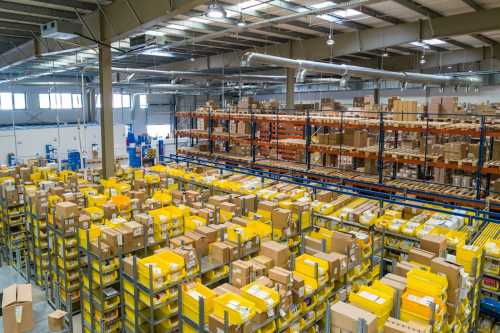
Proponents of the "just-in-time is dead" narrative argue that the 40% surge in global shipping rates and persistent maritime bottlenecks prove that lean inventory models are permanently obsolete. However, this argument is overly one-sided and ignores the evolution of inventory management. Just-in-time manufacturing is not dead; it is merely regionalizing. Companies are not abandoning lean principles; they are shifting from global, single-source dependencies to regional, multi-node networks. The surge in freight costs is accelerating the deployment of automated micro-fulfillment centers in urban peripheries, allowing firms to maintain lean inventory at the macro level while buffering against micro-level transit shocks. The model is adapting, not dying.
Antitrust Intervention and the Capacity Squeeze
While physical bottlenecks constrain movement, regulatory bottlenecks are constraining capacity expansion. The US Federal Trade Commission’s decision to block a mega-merger between two dominant logistics providers signals a permanent shift in antitrust enforcement toward supply chain resilience over consumer price efficiency. Data from the Council of Supply Chain Management Professionals indicates that domestic freight rates have decoupled from global spot rates, rising 12 percent year-over-year due to localized capacity constraints and regulatory friction. As noted by the CEO of a major global freight forwarder in a recent industry syndicate memo, "We are no longer optimizing for speed or lowest cost; we are optimizing for predictability and regulatory compliance." This regulatory posture will artificially suppress the economies of scale in logistics, keeping structural transportation costs elevated for the foreseeable future.
The Green Premium: A Catalyst for Emerging Markets
Conversely, the narrative that carbon border adjustments and sustainable fuel mandates will exclusively punish emerging market economies ignores the massive capital reallocation occurring in the Global South. The $12 billion joint venture to build a sustainable aviation fuel hub in Singapore demonstrates that emerging markets are not merely victims of green protectionism; they are rapidly capturing the high-margin "green premium" supply chain. By leveraging abundant renewable feedstocks and favorable regulatory environments, these regions are positioning themselves as the indispensable nodes for decarbonized logistics. This creates a bifurcated global economy where traditional, high-carbon industrial zones face existential margin threats, while green-industrial hubs command unprecedented pricing power and foreign direct investment.
Echoes of 1979: The Restructuring of Industrial Efficiency
The current fragmentation of global trade and the sudden spike in structural costs bear a striking resemblance to the 1979 oil shock and the subsequent restructuring of the global auto industry. When energy costs permanently reset higher in the late 1970s, Western automakers relying on massive, inefficient production runs were decimated, while Japanese manufacturers leveraging lean, highly efficient, and localized supply chains captured global market share. The historical lesson is unequivocal: when the foundational cost of moving goods and producing energy structurally increases, the corporations that survive are those that ruthlessly eliminate physical waste and localize their production footprints. The current carbon and freight shock is forcing a similar, brutal selection event across all heavy industries and logistics networks.
Tactical Imperatives for Enterprise and Capital
For local businesses and corporate treasurers, the era of passive global sourcing is over. Procurement officers must immediately audit their supply chains for carbon intensity, not just unit cost, to insulate against impending border tax adjustments. Businesses must also accelerate investments in localized, automated micro-fulfillment and regional supplier diversification to bypass the structural inflation in global maritime freight. For citizens and institutional investors, the alpha is no longer in traditional consumer discretionary retailers reliant on cheap global imports; capital must be aggressively reallocated toward industrial automation providers, regional logistics real estate, and the green infrastructure companies building the sustainable fuel and low-carbon materials of the new paradigm.
The Six-Month Horizon: Regionalization and the Cost of Resilience
Looking six months ahead, the corporate landscape will be defined by the painful, necessary transition from global optimization to regional resilience. We will see a massive spike in capital expenditure directed toward nearshoring and automated warehousing as companies race to secure domestic capacity before antitrust regulators further restrict logistics consolidation. The cost of goods sold will remain structurally elevated, forcing a final wave of inflationary pass-through to the consumer. The ultimate winners in this new environment will not be the companies with the largest global footprint, but those with the most agile, carbon-neutral regional networks and the deepest integration into automated, localized supply chains. For further macroeconomic data on global trade and supply chain dynamics, refer to the WTO Statistical Data Portal.
Related Articles

The Great Physicalization: Navigating the End of Financialized Corporate Strategy
Nov 22, 2026
The Supersonic Retrofit: Navigating the Convergence of Corporate Debt and Regulatory Friction
Nov 19, 2026
Comments (0)
No comments yet. Be the first to share your thoughts!
Want to join the discussion?
Please log in to post a comment.
Login NoworCreate an Account