
The Fractured Archipelago: How Geopolitical Friction is Rewiring Global Capital

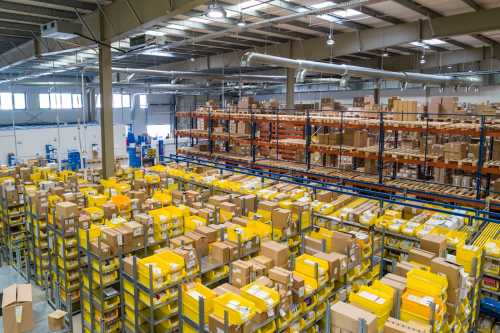
Modern global supply chains resemble a fractured tectonic plate rather than a seamless web. When one block shifts, the seismic shock is felt immediately in the cost of goods, capital allocation, and corporate survival.
The convergence of tightened US semiconductor export controls, the European Union’s definitive Carbon Border Adjustment Mechanism (CBAM), and persistent Red Sea shipping disruptions has catalyzed a structural decoupling of global trade. This triad of friction points is accelerating a shift from efficiency-driven globalization to resilience-driven regionalization, fundamentally altering capital flows and supply chain architectures.
The Hidden Inflationary Tax of Regulatory Fragmentation
Mainstream financial commentary often treats supply chain disruptions as transient logistical hiccups. This is a profound misreading of the macroeconomic landscape. The unseen implication of these converging events is a permanent, structural increase in the cost of capital and goods. The EU’s CBAM is not merely an environmental policy; it functions as a sophisticated non-tariff trade barrier. It disproportionately impacts emerging economies that lack the immediate capital expenditure capacity to decarbonize heavy industries, effectively locking them out of premium European markets and forcing a reallocation of global manufacturing footprints.
Similarly, the rerouting of maritime traffic around the Cape of Good Hope due to Red Sea insecurity is not a temporary spike. It adds 10 to 14 days to transit times, which translates directly into a structural increase in working capital requirements for global importers. Inventory holding costs, insurance premiums, and freight rates have established a new, elevated baseline. As a 2024 Eurasia Group macroeconomic briefing succinctly noted, "Geopolitical risk is no longer a tail risk; it is a core underwriting variable."
Furthermore, the aggressive implementation of technology export controls is forcing a bifurcation of global research and development. Multinational corporations are now compelled to maintain parallel, redundant technology stacks—one compliant with Western security paradigms and another for markets with divergent regulatory frameworks. This duplication destroys economies of scale and drags down global productivity growth, a reality largely absent from current equity market valuations.
The Compliance Theater Trap
However, a critical counter-argument must be acknowledged: the current corporate rush toward "friend-shoring" often borders on compliance theater. Many multinational entities claim to be de-risking their supply chains by moving final assembly to allied nations like Vietnam or Mexico. In reality, this frequently constitutes mere transshipment. A semiconductor component manufactured in a restricted jurisdiction and simply routed through a third country for final assembly does not mitigate underlying geopolitical risk. It merely adds a layer of regulatory opacity and customs friction, creating a false sense of security while leaving the core vulnerability intact.
Echoes of the 1970s Industrial Restructuring
To understand the trajectory of this fragmentation, analysts must look to the 1970s oil shocks. While the modern catalyst is geopolitical and technological rather than purely commodity-based, the structural parallel is striking. In the 1970s, the illusion of infinite, cheap energy was shattered, forcing a permanent, painful restructuring of industrial policy, automotive design, and global capital flows. Today, the illusion of infinite, frictionless globalization has been shattered. The historical lesson is clear: protectionism begets protectionism. Nations and corporations that attempt to insulate themselves entirely will find themselves burdened by inefficient, high-cost systems, while those that strategically adapt to the new friction will capture market share.
The Sovereignty Imperative vs. Market Reality
Another prevailing narrative requires objective nuance. Proponents of rapid de-dollarization point to the BRICS nations' aggressive expansion of local currency settlement mechanisms as an imminent threat to Western financial hegemony. While the political signaling is potent, the market reality is far more inert. As the Bank for International Settlements (BIS) highlighted in its latest triennial survey, the US dollar remains on one side of 88% of all foreign exchange trades. The network effects, liquidity depth, and institutional trust underpinning the dollar are too entrenched for a swift collapse. A bifurcated, parallel payment system for specific bilateral trade is emerging, but a wholesale replacement of the dollar-based architecture remains a distant prospect.
Strategic Hedging for the Corporate Vanguard
For local businesses and corporate strategists, passive observation is a liability. Immediate, actionable steps are required to protect margins and capitalize on this dislocation. First, companies must move beyond single-region sourcing. According to a 2024 McKinsey Global Institute report, companies that have actively diversified their supplier base across multiple geopolitical zones have seen a 15% reduction in supply chain disruption costs compared to peers relying on single-region sourcing. Second, treasury departments must expand currency hedging strategies beyond traditional USD/EUR pairs to account for increased volatility in emerging market currencies driven by commodity and trade shocks. Third, organizations must invest heavily in tier-2 and tier-3 supply chain visibility software to identify hidden transshipment risks before they trigger regulatory penalties.
The 2027 Horizon: A Bifurcated Equilibrium
Looking six to twelve months ahead, the landscape will not resolve into a new, stable globalization. Instead, we will solidify into a bifurcated equilibrium. We will see the formalization of a "premium" supply chain serving Western markets, characterized by higher costs, strict ESG compliance, and guaranteed regulatory alignment. Concurrently, a "value" supply chain will deepen its integration across the Global South, prioritizing cost efficiency and speed over Western regulatory adherence. The alpha in global markets over the next decade will not be generated by finding the cheapest producer, but by mastering the complex arbitration between these two divergent economic realities.
Related Articles

The Architecture of Fragmentation: Navigating the Multipolar Shift in Global Governance
Aug 22, 2026
The Friction Premium: How Geopolitical Realignment is Rewiring Global Capital and Trade in 2026
Aug 22, 2026
Comments (0)
No comments yet. Be the first to share your thoughts!
Want to join the discussion?
Please log in to post a comment.
Login NoworCreate an Account