
The Fractured Compass: Geo-Economic Realignment and the Illusion of Stability in South Asia

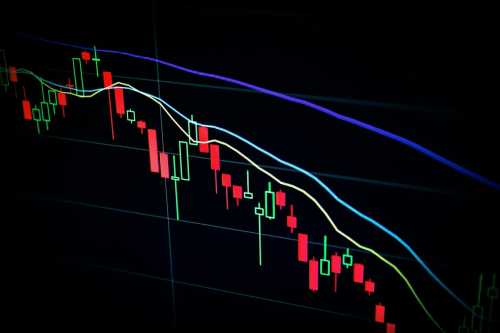
Like a vessel navigating by a compass that constantly recalibrates to hidden magnetic anomalies, global markets are attempting to price in a geopolitical landscape where traditional alliances no longer guarantee economic stability. The old maps are obsolete.
Navigating the New Geo-Economic Reality
A complex macroeconomic stabilization is currently underway under a stringent 37-month extended financial arrangement, aiming to restore fiscal discipline and project a cautious 3.2% growth trajectory for the coming fiscal year [[2]], [[3]]. Simultaneously, a massive $62 billion infrastructure and energy corridor is attempting a precarious pivot from a geopolitical showcase to a functional geo-economic engine, all while regional maritime supply chains face unprecedented fragmentation and negative supply shocks [[9]], [[27]]. This convergence of domestic fiscal tightening and external logistical volatility represents a fundamental restructuring of the regional economic order.
The Blind Spot in Mainstream Macro Analysis
Mainstream financial commentary frequently mischaracterizes structural conditionality as mere "austerity." In reality, these measures function as a forced decoupling from legacy subsidy models. The unseen implication is a systemic correction designed to prevent sovereign default cascades. By dismantling artificial price controls, the state is attempting to align domestic pricing with global realities, a painful but necessary mechanism to restore genuine market confidence rather than relying on temporary liquidity injections.
Furthermore, the narrative surrounding the multi-billion dollar economic corridor remains dangerously superficial. While primary research highlights that "investments exceed $62 billion, including $33 billion dedicated to energy projects," this aggregate figure masks severe micro-level friction [[9]]. Non-traditional security threats and targeted disruptions to infrastructure are systematically inflating the risk premium on foreign capital. The mainstream discourse ignores how these localized security failures translate directly into higher insurance costs and delayed project completions, eroding the projected return on investment.
Finally, the broader maritime supply chain fragmentation creates a compound risk profile that is rarely priced into emerging market sovereign debt. Geopolitical conflicts are inducing severe negative supply shocks that weaken regional output and structurally elevate inflation [[27]]. For an economy heavily reliant on energy imports, vulnerabilities near critical global chokepoints mean that external inflationary pressures are imported directly into the domestic economy, undermining the very stabilization efforts being implemented.
The Sovereignty Imperative: A Necessary Counter-Perspective
Critics of this deep integration with multilateral and bilateral frameworks argue that such dependency inherently erodes national sovereignty. They posit that stringent external conditionality and rigid debt structures create a neo-colonial economic trap, stripping the state of autonomous policy-making capabilities. While this concern carries historical weight, it overlooks the immediate alternative: without these external financial anchors, the domestic fiscal deficit would trigger hyperinflationary spirals, rendering the concept of sovereignty moot in the face of total economic collapse.
Echoes of 1997: Lessons from the Asian Financial Crisis
The current macroeconomic environment bears a striking resemblance to the 1997 Asian Financial Crisis. Then, as now, emerging markets faced sudden stops in capital flows, severe currency depreciation, and intense pressure to implement structural reforms. The historical lesson from economies like South Korea and Thailand is that externally imposed reforms, while politically toxic and economically painful in the short term, can lay the groundwork for a robust, export-led recovery—provided they are accompanied by genuine institutional transparency and an unwavering commitment to regulatory overhaul. The current trajectory mirrors this historical precedent, albeit complicated by the added layer of great-power competition.
The Compliance Theater Trap: A Valid Skepticism
Conversely, a segment of market analysts argues that the current stabilization effort is merely "compliance theater." This perspective suggests a cyclical pattern where the state meets short-term quantitative targets solely to unlock the next financial tranche, only to revert to populist, expansionary fiscal policies once political pressures mount. This skepticism is empirically warranted given historical precedents. However, the current global environment of elevated interest rates and fragmented supply chains leaves significantly less room for policy slippage than in previous decades, potentially forcing a more rigid, long-term adherence to reform.
Strategic Hedging for the Private Sector
Local enterprises must immediately pivot from import-dependent operational models toward export-oriented or import-substitution strategies. Hedging currency exposure is no longer a discretionary financial tactic; it is a baseline operational requirement for survival. Citizens and institutional investors alike should diversify holdings into inflation-resistant assets, as the lagged effects of global supply shocks and necessary energy tariff adjustments will continue to exert downward pressure on domestic purchasing power.
The Six-Month Horizon: A Bifurcated Landscape
Over the next six months, the regional economic landscape will likely bifurcate. On one hand, the current account will show signs of stabilization, driven primarily by suppressed import demand rather than genuine export growth. On the other hand, localized inflation will rise due to the unavoidable energy tariff adjustments mandated by financial agreements. The geopolitical risk premium on major infrastructure projects will remain elevated, necessitating enhanced security expenditures that could, paradoxically, strain the very fiscal targets the stabilization program seeks to protect.



Comments (0)
No comments yet. Be the first to share your thoughts!
Want to join the discussion?
Please log in to post a comment.
Login NoworCreate an Account