
The Fractured Ledger: Navigating Pakistan's 2026 Geoeconomic Tightrope

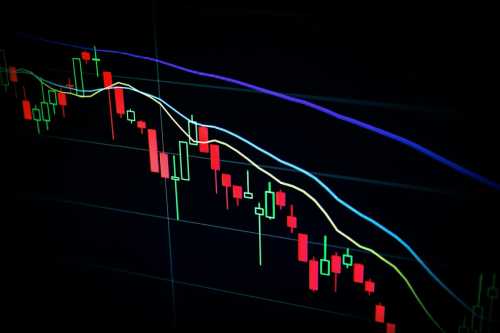
Like a vessel navigating a narrow strait with failing engines, shifting trade winds, and a hull breached by climate shocks, Pakistan’s economy in 2026 is being forced to rely on a single, newly installed digital thruster to stay afloat. This analogy perfectly encapsulates the nation's current geoeconomic reality, where macroeconomic headwinds are colliding with isolated microeconomic bright spots.
The Paradox of the Digital Lifeline Pakistan is simultaneously grappling with a projected 1.3% regional economic contraction, severe cross-border trade disruptions with Afghanistan and Iran, and compounding climate recovery costs, even as its IT export sector achieves record monthly revenues. This paradox defines the nation's current geoeconomic reality, presenting a facade of resilience that masks deeper structural vulnerabilities. The International Monetary Fund's projection of a 1.3% economic contraction across the Middle East, North Africa, and Pakistan in 2026 is not merely a statistical footnote; it is a leading indicator of tightening global financial conditions that will disproportionately punish frontier markets www.facebook.com .
On the surface, the technology sector appears to be the panacea for the country's balance of payments crisis. "Pakistan’s IT exports have recorded average annual growth of approximately 21% over the past four years, reaching around $435 million in September 2026," according to recent central bank data x.com . However, this digital surge masks a dangerous structural hollowing out of traditional manufacturing and agriculture. These legacy sectors remain acutely vulnerable to prohibitive energy tariffs and recurring climate shocks, creating a bifurcated economy where a dollarized tech elite thrives while the agrarian base stagnates.
The Geopolitical Hedging Dilemma Beyond domestic economics, Islamabad’s foreign policy is walking a razor-thin line. The country is actively balancing its geopolitical ties, evidenced by the recent China-Pakistan Mineral Cooperation Forum alongside deepening US outreach to the capital mofa.gov.pk . The mineral cooperation agreements are not just about resource extraction; they represent a strategic foothold in critical supply chains for rare earth elements, which Washington views with increasing apprehension. This forces Islamabad into a delicate balancing act, where every concession to Beijing is scrutinized by Western financial institutions, potentially complicating access to multilateral development bank financing.
Critics argue that Pakistan’s strategic hedging is a masterclass in realpolitik, extracting maximum concession from rival powers. However, this view ignores the diminishing marginal returns of such diplomacy. As global capital becomes increasingly risk-averse, the premium for "fence-sitting" shrinks rapidly, leaving the country exposed to sudden stops in foreign direct investment and conditional liquidity that demands heavy structural concessions.
The Asymmetric Climate Burden The environmental dimension of this crisis is equally stark and systematically underreported. "Pakistan emits under one per cent of global greenhouse gases, yet flooded catastrophically again in 2025," highlighting the disproportionate climate debt burden, as noted in recent academic research academic.oup.com . The catastrophic flooding of 2025 and 2026 has not only displaced millions but has also degraded arable land, directly impacting cotton and wheat yields. This agricultural shortfall translates directly into higher food inflation, which disproportionately affects the lowest income deciles, thereby increasing social friction and limiting the government's fiscal space for developmental spending. Global climate funds remain bogged down in bureaucratic disbursement mechanisms, leaving local municipalities to shoulder the immediate brunt of infrastructure collapse without adequate external backing.
The Sovereignty Imperative vs. Economic Reality Regional trade dynamics further complicate this precarious balance. "Trade between Iran and Pakistan was valued at approximately $3.1 billion to $3.2 billion in 2025," making the recent October 2026 border suspensions a severe shock to regional logistics, per regional analysis www.kurdistan24.net . The closure of all eight major official border crossings with Afghanistan since late 2025 has devastated local economies that historically relied on cross-border commerce docs.wfp.org . Some analysts contend that border closures with Afghanistan and Iran are necessary short-term pains to enforce sovereign security and curb illicit cross-border flows. Yet, primary data indicates that formal trade disruption merely shifts volume to unregulated smuggling networks. This deprives the state of critical customs revenue while empowering non-state actors, thereby achieving the exact opposite of its stated security objectives and exacerbating local unemployment in border provinces.
Echoes of the Late 1990s This current trajectory bears a striking resemblance to the late 1990s Asian Financial Crisis. During that period, economies like Thailand relied on narrow, export-oriented booms to mask deep structural banking deficits and overvalued currencies. When external capital flows inevitably reversed, the underlying fragility was exposed, leading to a sharper, more painful correction. Pakistan’s reliance on a singular tech export boom, while ignoring the rot in its broader industrial and agricultural base, risks a similar sudden-stop scenario if global tech demand softens or remittance channels face regulatory scrutiny.
Actionable Takeaways for Stakeholders For local businesses, the imperative is clear: diversify supply chains away from single-border dependencies and hedge currency exposure aggressively. Traditional manufacturers must explore joint ventures with the burgeoning tech sector to automate operations and reduce energy overhead. For citizens, the most prudent defense against projected IMF-mandated subsidy rollbacks is to maintain robust liquidity buffers and prioritize upskilling in high-demand digital services, which remain insulated from domestic inflationary pressures.
The Six-Month Horizon Looking ahead six months, the landscape will likely solidify into a deeply bifurcated economy. Expect a highly insulated, dollarized tech and services sector to continue its upward trajectory, operating almost as a separate economic entity. Conversely, the traditional economy will face stagnation and inflation-battered margins. This divergence will inevitably prompt renewed, albeit reluctant, International Monetary Fund program negotiations by the second quarter of 2027, as the state struggles to bridge the widening fiscal gap between its two parallel economies.



Comments (0)
No comments yet. Be the first to share your thoughts!
Want to join the discussion?
Please log in to post a comment.
Login NoworCreate an Account