
The Friction Premium: How Geopolitical Crosscurrents Are Rewiring Global Market Valuations

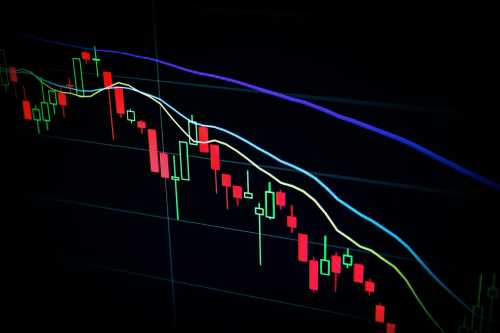
Imagine a high-performance Formula 1 engine forced to run on contaminated fuel while the pit crew actively removes essential aerodynamic components. This analogy accurately reflects the current state of the global macroeconomic apparatus. The convergence of entrenched monetary rigidity, acute commodity supply shocks, and weaponized regulatory trade barriers has created a synchronized global market friction point that defies traditional cyclical economic models. We are no longer observing a standard business cycle correction; we are witnessing a structural repricing of geopolitical risk across all major asset classes.
At its core, the global economy is navigating a triad of simultaneous constraints. The Federal Reserve is holding benchmark rates at 3.5% to 3.75% despite mounting growth concerns and mixed labor data [[12]]. Concurrently, the International Energy Agency has sharply cut its 2026 global oil supply forecast by 4.3 million barrels per day due to escalating Middle East disruptions [[56]]. Compounding this, the European Union has fully implemented its Carbon Border Adjustment Mechanism (CBAM), effectively imposing a stringent carbon tariff on imports [[43]]. This triad forms the new baseline for market valuation.
Echoes of 1973, Amplified by Digital Decoupling
To accurately map the current trajectory, analysts must reference the 1973 oil shock, but with a critical modern caveat: digital and technological decoupling. During the 1970s, severe supply-side shocks led to stagflation, which was eventually resolved by aggressive monetary tightening and the accelerating forces of globalization. Today, that historical resolution mechanism is fundamentally broken. The U.S.-China technology conflict has escalated far beyond simple tariff disputes into explicit, targeted export controls on advanced semiconductors and commercial drone technologies, actively weaponizing global supply chain chokepoints [[19]].
Unlike the 1970s, when capital could freely flow to the most efficient global producer, modern capital allocation is now heavily constrained by national security imperatives and foreign investment screening regimes. This creates a persistent "friction premium" across equities, fixed income, and commodities. The market can no longer assume that efficiency will trump security; security is now the primary driver of capital expenditure, inherently lowering long-term return on invested capital (ROIC) while elevating baseline inflation.
The Emerging Market Doom Loop: Beyond the Headlines
Mainstream financial media frequently frames the EU’s CBAM as a climate policy victory or a minor trade adjustment. This superficial perspective ignores the profound macroeconomic exposure it creates for the Global South. Beginning in January 2026, the EU fully enforced this climate-policy trade instrument, mandating that importers purchase certificates corresponding to the carbon price that would have been paid had the goods been produced under the EU's emissions trading system [[43]]. For emerging markets heavily reliant on carbon-intensive exports like steel, cement, and aluminum, this is not merely a compliance cost; it is an existential threat to their industrialization trajectories.
When layered with the Federal Reserve’s prolonged higher-for-longer interest rate environment, the debt servicing costs for these sovereign entities skyrocket. Developing nations are now forced into an impossible trilemma: fund essential domestic infrastructure, service elevated dollar-denominated debt, or pay punitive carbon levies to maintain access to European markets. A 2026 macroeconomic assessment highlights that the sensitivity of EU CBAM effects produces the highest negative GDP impacts precisely on these developing trade partners, accelerating capital flight and widening sovereign credit default swap (CDS) spreads [[66]].
Furthermore, the IEA’s recent coordination of a historic 400 million barrel emergency oil reserve release underscores the acute severity of the supply-side crisis [[54]]. However, this stopgap measure does nothing to address the underlying structural deficit. Emerging markets, which are predominantly net energy importers, face a devastating terms-of-trade shock. Their local currencies depreciate aggressively against the U.S. dollar, making both their dollar-denominated sovereign debt and their essential energy imports exponentially more expensive. This creates a self-reinforcing doom loop of inflation and currency devaluation that mainstream equity analysts are largely underpricing in their emerging market fund models.
The Innovation Catalyst: A Case for Regulatory Friction
However, viewing these geopolitical and regulatory constraints solely through a lens of economic destruction is analytically incomplete. A compelling counter-argument suggests that this enforced friction is the necessary catalyst for long-term systemic resilience. The weaponization of global supply chains has forced multinational corporations to abandon brittle, hyper-optimized just-in-time manufacturing models in favor of redundant, near-shored architectures. While this transition undeniably depresses short-term corporate profit margins, it builds a vital macroeconomic buffer against future exogenous shocks.
Similarly, the CBAM, despite its punitive short-term effects on developing economies, provides a definitive, market-based price signal. This signal is finally accelerating institutional capital allocation toward next-generation green hydrogen, carbon capture, and modular nuclear technologies in emerging markets, rather than allowing the perpetuation of stranded fossil-fuel assets. The short-term pain is the price of long-term structural adaptation.
Tactical Defense: Navigating the Bifurcated Landscape
For local businesses, treasury departments, and institutional investors, the era of passive index investing yielding reliable, inflation-adjusted returns is over. Immediate, proactive action is required to protect capital. First, corporate supply chain officers must conduct rigorous audits for CBAM exposure and single-point geopolitical failures, actively diversifying supplier bases into "friend-shored" jurisdictions such as Mexico, India, or Vietnam.
Second, corporate treasury departments should hedge currency exposure aggressively, utilizing forward contracts and options to protect against emerging market foreign exchange volatility driven by the strong U.S. dollar. Additionally, businesses should explore commodity-linked notes to hedge against raw material volatility, and consider localized energy microgrids to insulate operations from broader grid disruptions and carbon pricing mechanisms. Finally, portfolio managers must reallocate capital toward companies demonstrating tangible supply chain redundancy and verified pricing power. These specific entities will be the sole beneficiaries capable of passing the "friction premium" onto end consumers without destroying baseline demand.
The Monetary Anchor: Why Pain is a Feature, Not a Bug
Critics of the Federal Reserve’s current monetary stance argue that maintaining benchmark rates at 3.5% to 3.75% is unnecessarily crushing domestic demand and actively inviting a severe recession. Yet, this critique overlooks the absolute credibility imperative of the central bank. Federal Reserve Chair Kevin Warsh has explicitly pledged that inflation will be "a thing of the past," signaling an unwavering commitment to price stability over short-term political or economic growth [[48]].
Premature monetary easing in the face of persistent, commodity-driven inflation would permanently anchor inflation expectations at structurally higher levels, directly replicating the catastrophic policy errors of the 1970s. The current economic discomfort is not a policy failure; it is the necessary, albeit harsh, feature of restoring long-term monetary credibility and preventing a wage-price spiral.
The Six-Month Horizon: Valuation Bifurcation and the Friend-Shoring Premium
Looking six months ahead, the macroeconomic landscape will not normalize; it will sharply bifurcate. We will observe a stark divergence in asset valuations based entirely on geopolitical alignment and supply chain resilience. Companies with transparent, near-shored, and low-carbon supply chains will command a sustained 15% to 20% valuation premium as institutional capital flees from opaque, geopolitically vulnerable counterparts.
Meanwhile, emerging markets that fail to rapidly decarbonize their export bases or restructure their dollar-denominated debt will face prolonged capital scarcity and elevated borrowing costs. The market is no longer pricing pure earnings growth; it is pricing survival and adaptability in a permanently fragmented global order.
Related Articles

The Macro Fracture: Navigating AI Valuations, Bond Volatility, and the Emerging Market Debt Trap
Aug 23, 2026
The Market’s Fragile Equilibrium: Navigating Valuation Resets, Private Credit Risks, and Macro Fragmentation
Aug 22, 2026
Comments (0)
No comments yet. Be the first to share your thoughts!
Want to join the discussion?
Please log in to post a comment.
Login NoworCreate an Account