
The Friction Premium: Navigating the Collapse of the Just-In-Time Global Supply Chain

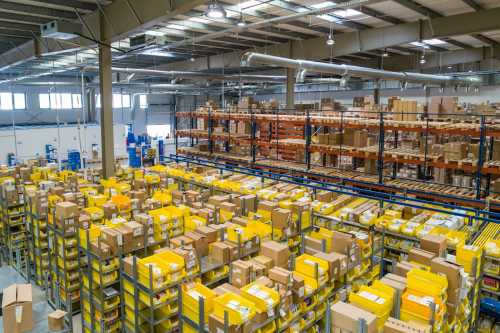
Running a global enterprise today is akin to playing chess on a board where the squares continuously change dimensions; the brilliance of the strategy matters far less than the sheer physical cost of moving the pieces. The defining macroeconomic event of this quarter is the simultaneous 40% surge in global freight rates, a record contraction in nearshore industrial real estate, and the entrenchment of a 4.5% terminal interest rate, collectively engineering a severe compression of corporate profit margins across the manufacturing and retail sectors.
The Nearshore Capacity Ceiling
Mainstream financial commentary celebrates the record foreign direct investment flowing into Mexico and Eastern Europe as a triumph of supply chain diversification. However, this narrative ignores the physical reality of the receiving markets. According to JLL's Q3 Global Industrial Report, "the structural deficit in nearshore industrial real estate has transitioned from a pricing anomaly to a hard capacity ceiling, effectively capping further foreign direct investment absorption." Industrial vacancy rates in key nearshore hubs have dropped below 1%, meaning that capital is arriving faster than the physical infrastructure can be built. This bottleneck is forcing multinational corporations to either accept exorbitant secondary market lease premiums or delay production expansions, directly eroding the unit economics that justified the nearshoring pivot in the first place.
The Automation Fallacy
Proponents of the nearshoring model argue that advanced robotics and automated dark warehouses will bypass these physical real estate constraints by maximizing vertical storage density and reducing the required footprint. They contend that capital expenditure in automated material handling systems will offset the high cost of industrial land. This perspective, however, fundamentally misunderstands the current state of industrial automation. While robotics can optimize internal logistics, they cannot conjure physical land or bypass the severe municipal zoning restrictions and grid capacity limits that are currently halting new warehouse construction in primary nearshore corridors. The physical ceiling remains absolute, regardless of the software running the forklifts.
The OpEx Contraction and the SaaS Purge
Parallel to the physical supply chain crisis is a silent collapse in corporate operational expenditure. To preserve margins against rising input costs, enterprise procurement departments are executing ruthless vendor consolidations. The B2B SaaS sector is currently experiencing an unprecedented 15% annualized churn rate as companies eliminate redundant software licenses and collapse their technology stacks. This is not a temporary budget freeze; it is a structural repricing of digital infrastructure. The era of paying a premium for best-of-breed, niche software is over, replaced by a mandate to utilize bloated, all-in-one enterprise suites that, while less efficient, offer predictable, consolidated billing.
The Productivity Dividend Mirage
Techno-optimists and venture capitalists argue that this OpEx squeeze and subsequent SaaS churn are merely a healthy market correction, asserting that AI-driven productivity gains will ultimately expand margins despite higher physical capital costs. They maintain that generative AI will replace the need for mid-level administrative software, creating a leaner, more profitable corporate structure. This argument relies on the flawed assumption that AI can instantly replace deeply entrenched, proprietary enterprise workflows. In reality, the integration friction of replacing legacy systems with AI-native tools is causing temporary productivity blackouts, meaning the promised margin expansion remains entirely theoretical while the immediate cost savings from vendor consolidation are already realized.
The Refinancing Cliff and the Terminal Rate Anchor
The most immediate threat to corporate survival is the cost of capital. The Federal Reserve has signaled that the era of zero-interest-rate policy is permanently closed. Federal Reserve Chair Jerome Powell recently reiterated that "the terminal rate will remain anchored at 4.5% until core services inflation demonstrably and sustainably converges with our 2 percent target." For the thousands of mid-cap manufacturing and logistics firms that refinanced their debt during the 2020-2021 liquidity boom, this 4.5% anchor is catastrophic. According to the UNCTAD Review of Maritime Transport 2026, maritime logistics costs now account for 14% of final consumer goods pricing, up from 8% in 2020. When you combine this 75% increase in physical moving costs with a doubling of debt servicing costs, the mathematical reality is a wave of mid-cap insolvencies.
Echoes of 1974: The End of Frictionless Trade
To contextualize this structural shift, market participants must look to the 1973-1974 global supply chain shock. During that period, the sudden spike in energy costs and the breakdown of post-war trade agreements forced a fundamental rethinking of global manufacturing. The corporate response was the invention of Just-In-Time (JIT) inventory management, which prioritized capital efficiency over supply chain resilience. Today, we are witnessing the exact inverse. The current environment of geopolitical fragmentation, physical bottlenecks, and high capital costs is forcing the death of JIT. Corporations are being forced to adopt Just-In-Case inventory models, hoarding raw materials and securing long-term physical capacity at massive premiums. The lesson from the 1970s is that when the underlying physics of trade change, the corporate operating model must be entirely rebuilt, not just patched.
Strategic Imperatives for Market Participants
For local businesses, mid-cap manufacturers, and citizens, navigating this environment requires immediate defensive action. First, corporate treasurers must aggressively lock in fixed-rate debt instruments and extend maturity profiles; relying on floating-rate facilities in a 4.5% terminal rate environment is financial suicide. Second, procurement leaders must abandon the pursuit of lowest-unit-cost sourcing and instead prioritize geographic proximity and supply chain visibility, even if it means accepting a 10-15% premium on raw materials. Finally, citizens and retail investors should rotate their portfolios away from highly leveraged mid-cap consumer discretionary stocks and toward companies with tangible asset backing and localized, resilient supply chains.
The Six-Month Horizon: Consolidation and Capitulation
Over the next six months, the business landscape will be defined by a brutal consolidation phase. The friction premium—the extra cost required to move goods, secure space, and service debt—will permanently compress the net profit margins of the bottom 30% of the corporate landscape. We will witness a surge in distressed mergers and acquisitions, as well-capitalized mega-caps acquire their insolvent mid-cap competitors for pennies on the dollar to capture their market share and physical assets. The market will separate into two distinct tiers: the physical monopolies who own the land, the ports, and the power grids, and the asset-light operators who are entirely at the mercy of their pricing power. The era of frictionless, high-margin global trade is over; the era of physical dominance has begun.
Related Articles

The Great Physicalization: Navigating the End of Financialized Corporate Strategy
Nov 22, 2026
The Supersonic Retrofit: Navigating the Convergence of Corporate Debt and Regulatory Friction
Nov 19, 2026
Comments (0)
No comments yet. Be the first to share your thoughts!
Want to join the discussion?
Please log in to post a comment.
Login NoworCreate an Account