
The G7 Summit and the US-Iran Ceasefire: A Fragile Peace and the Crucial 60 Days Ahead

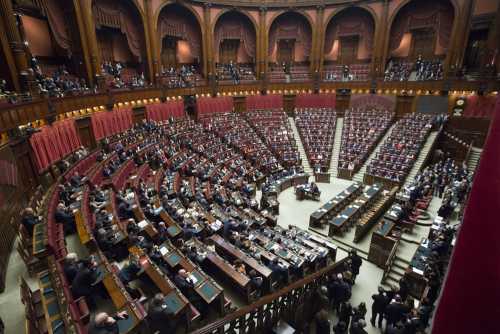
The world stage is currently witnessing one of the most dramatic and high-stakes diplomatic pivots in modern history. As world leaders gathered for the June 2026 G7 Summit, the atmosphere was electric with a mixture of profound relief and lingering skepticism. The headline dominating every international broadcast is the announcement of a ceasefire between the United States and Iran, effectively pausing the intense military hostilities that have defined the 2026 Iran war albertmohler.com . President Trump has boldly claimed victory before his global peers, touting the diplomatic breakthrough as a monumental achievement for American statecraft albertmohler.com . However, beneath the celebratory rhetoric and the photo opportunities, a much more complex and perilous reality is unfolding. Officials have formally read aloud the Memorandum of Understanding between the U.S. and Iran, but the true test of this agreement is not the signing ceremony; it is the grueling, highly volatile implementation phase that lies ahead www.pbs.org . For the average global citizen, the sheer speed of this diplomatic shift can be dizzying. Just weeks ago, the region was on the brink of an all-out regional conflagration. Today, we are staring down a critical 60-day window that will determine whether this ceasefire becomes a lasting peace or merely a brief intermission before a much larger war.
ELI5: What is a Ceasefire and a Memorandum of Understanding?
To truly grasp the magnitude of what happened at the G7, we need to break down the diplomatic terminology using a simple, everyday analogy. Imagine you and your neighbor have been fighting bitterly over a property line for years, and it has gotten so bad that you are both actively throwing rocks at each other's houses. A "ceasefire" is simply an agreement to stop throwing rocks. It does not mean you agree on who actually owns the land, and it certainly does not mean you are best friends now. It just means you both agree to put the rocks down so you can talk without getting hit. A "Memorandum of Understanding," or MOU, is like a written promise that says, "We agree on the basic rules of how we will negotiate a permanent solution." It is not a final, legally binding peace treaty that solves every single dispute. Instead, it is a crucial first step that proves both sides are serious about talking instead of fighting. It sets the agenda, the timeline, and the basic parameters for the real negotiations to come. The MOU read aloud at the G7 is the roadmap for the next two months, but the destination is still far from guaranteed.
The Road to the Summit: Escalation in Early June
To understand why this ceasefire is so shocking, we must look at the intense military escalation that occurred just weeks prior. The conflict, which has deeply entangled the Red Sea crisis and the vital shipping lanes of the 2026 Strait of Hormuz, reached a fever pitch in early June en.wikipedia.org . The United States launched a series of highly coordinated, precision strikes against Iranian radar installations, drone staging sites, and critically, the strategic island of Qeshm www.democracynow.org . This island is a massive logistical hub for Iranian naval operations, and its targeting was a clear message of American resolve. In response, Iran launched a retaliatory attack, demonstrating its capability to strike back and threatening to drag allied nations into a wider regional war www.democracynow.org . The global economy held its breath as oil prices spiked and shipping insurance rates skyrocketed. The fact that these two heavily armed adversaries managed to pivot from kinetic military strikes to a diplomatic MOU in a matter of days is a testament to the intense, back-channel pressure applied by global powers who simply cannot afford a prolonged disruption to global energy supplies.
The pivot from kinetic military strikes on Qeshm island to a diplomatic MOU in a matter of days highlights the intense, back-channel pressure applied by global powers desperate to secure energy supplies.
The 60-Day Crucible: Why the Next Two Months are Critical
While the headlines are focused on the signing of the deal, geopolitical analysts are universally warning that the next 60 days are the most crucial and dangerous period of the entire conflict albertmohler.com . Why 60 days? Because turning off a modern war machine is not as simple as flipping a switch. This period is designated for the initial phases of de-escalation, verification, and the physical repositioning of forces. Naval fleets must return to their home ports, missile batteries must be stood down from high alert, and proxy militias across the region must be ordered to halt their operations. Furthermore, this 60-day window is likely tied to the negotiation of specific, verifiable benchmarks regarding Iran's nuclear program and its support for regional militant groups. If either side fails to meet these benchmarks, or if a rogue actor commits a single act of violence that breaks the ceasefire, the entire agreement could collapse instantly, leading to a retaliation far more severe than what we saw in early June. The world is essentially holding its breath for two months, watching every radar screen and naval movement for a sign of bad faith.
The Israel Factor: Strikes in Lebanon Complicate the Narrative
Just as the international community began to exhale, a massive complication emerged that threatens to unravel the fragile diplomatic tapestry. Almost immediately after President Trump touted the emerging peace deal with Iran, Israel launched a series of intense airstrikes in Lebanon www.democracynow.org . This action highlights a fundamental reality of Middle Eastern geopolitics: a bilateral agreement between the US and Iran does not automatically bind Israel, nor does it instantly pacify the complex web of proxy conflicts in the region. Israel has consistently maintained that it reserves the right to defend itself against what it views as existential threats on its northern border. By striking Lebanon, Israel is signaling that it will not be constrained by a US-Iran ceasefire if it believes its security is compromised. This creates a terrifying dynamic where the primary architects of the peace deal (the US and Iran) are trying to maintain a ceasefire, while a key regional ally (Israel) is actively conducting military operations that could provoke Iran's proxy forces, like Hezbollah, into breaking the very peace the US just negotiated. It is a diplomatic tightrope walk where a single misstep could ignite the entire region.
- The G7 Breakthrough: World leaders witnessed the formal reading of a US-Iran Memorandum of Understanding, pausing the 2026 Iran war.
- The 60-Day Window: The next two months are critical for force repositioning, verification, and preventing a collapse of the agreement.
- Recent Escalation: The deal follows intense US strikes on Iranian radar, drone sites, and the island of Qeshm, met by Iranian retaliation.
- Regional Complications: Israel's continued strikes in Lebanon threaten to provoke proxy forces and undermine the broader ceasefire.
In conclusion, the June 2026 G7 Summit will be remembered as the moment the US and Iran stepped back from the brink of a catastrophic regional war. The signing of the Memorandum of Understanding is a monumental diplomatic achievement that has already begun to stabilize global energy markets and ease the tensions choking the Strait of Hormuz. However, we must not mistake a pause in the fighting for the arrival of peace. The next 60 days represent a crucible that will test the resolve, verification mechanisms, and political will of every nation involved. With Israel continuing its military operations in Lebanon and the deep-seated mistrust between Washington and Tehran still very much intact, the path forward is littered with potential tripwires. The world has been granted a precious, fragile opportunity to build a lasting security architecture in the Middle East. Whether that opportunity is seized or squandered in the coming two months will define the geopolitical landscape for the rest of the decade.
Related Articles

The Architecture of Fragmentation: Navigating the Multipolar Shift in Global Governance
Aug 22, 2026
The Friction Premium: How Geopolitical Realignment is Rewiring Global Capital and Trade in 2026
Aug 22, 2026
Comments (0)
No comments yet. Be the first to share your thoughts!
Want to join the discussion?
Please log in to post a comment.
Login NoworCreate an Account