
The Geneva AI Accords: How the US and China Agreed to Stop the Global Semiconductor Cold War in June 2026

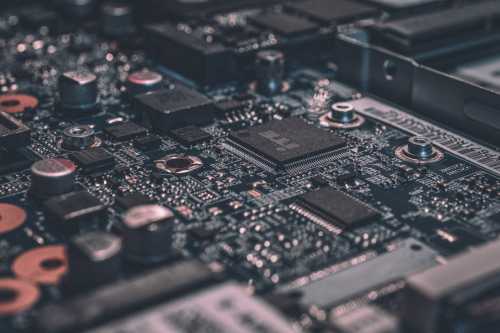
Imagine two giant kids in a sandbox. One kid has all the best, fastest, most magical toy cars (let us call them AI chips), and the other kid has all the best tracks and garages to build them (let us call them manufacturing and raw materials). For a few years, they kept throwing sand at each other, trying to steal the toys and break the tracks. The whole playground was getting messy, and the other kids were getting scared. But in June 2026, the two giants sat down in Geneva and signed the "Global AI and Semiconductor Non-Proliferation and Trade Accord." They finally agreed on the rules of the sandbox, stopping the chip war and ensuring that the magical toy cars are used to build things, not destroy them .
To understand why this is the most important political event of the decade, we have to look at what AI chips actually do. These tiny pieces of silicon are the brains of the future. They run the self-driving cars, the medical research that cures diseases, the financial systems that keep the global economy running, and the military defense systems that protect countries. The United States, led by companies like Nvidia and AMD, designs the best brains. China, led by companies like SMIC and Huawei, has the massive factories and the rare earth minerals needed to build them. When the US banned the sale of advanced chips to China, and China banned the export of the minerals needed to make them, the entire global technology supply chain froze. Factories stopped, prices skyrocketed, and innovation stalled .
The June 2026 Geneva Accords are a masterpiece of geopolitical compromise. The US and China realized that a complete decoupling of their technology sectors would cause a global depression. The accord establishes a "Tiered Access Framework." Imagine a library. Some books are available for everyone to read (basic consumer chips for phones and laptops). Some books require a special library card to check out (advanced AI chips for commercial research and medical use). And some books are kept in a locked vault and can only be read inside the library under strict supervision (military-grade AI and quantum computing chips). This framework allows normal, peaceful commerce to flow freely while strictly preventing the technology from being used for weapons of mass destruction .
A critical part of the accord is the establishment of the "International Semiconductor Supply Chain Resilience Fund." Both the US and China agreed to contribute billions of dollars into this fund, managed by a neutral international body. The fund is used to diversify the supply chain, building new chip factories in neutral countries like Vietnam, Malaysia, and even Pakistan. By spreading the manufacturing across multiple countries, the world ensures that if one factory has a problem, the global supply does not stop. It is like having multiple backup generators for the global economy .
The accord also tackles the wild west of Artificial Intelligence itself. With the chips flowing again, AI is advancing at lightning speed. The Geneva Accords include the first-ever binding international treaty on AI Safety and Ethics. It mandates that all AI models above a certain computing power must undergo rigorous "red teaming" (ethical hacking and safety testing) by an independent UN-appointed board before they can be released to the public. It strictly bans the development of Lethal Autonomous Weapons Systems (LAWS)—robots that can choose to kill without human intervention. The two giants looked at the monster they were creating and agreed to put a leash on it .
The economic impact was instantaneous. The moment the accord was signed, global tech stocks soared. Companies that had been hoarding chips suddenly released them into the market. The cost of building a new data center dropped by 40 percent overnight. This massive drop in computing costs means that startups, universities, and hospitals around the world can now afford to use advanced AI to solve their specific problems. The democratization of AI, which had been stalled by the chip war, is now in full swing, promising a new golden age of innovation .
For national security, the accord is a massive relief. The constant threat of a sudden cutoff of critical technology has been removed. Military planners in Washington and Beijing can now focus on traditional defense strategies rather than worrying about their supply chains being weaponized. The verification mechanisms in the accord are incredibly strict, with international inspectors having the right to audit chip foundries and data centers to ensure compliance. This transparency builds a fragile but real trust between the two superpowers .
The rest of the world is breathing a huge sigh of relief. Countries in Europe, Asia, and South America had been forced to choose sides in the tech war, which was devastating for their economies. The Geneva Accords allow them to trade with both the US and China without fear of secondary sanctions. The globalized world, which many thought was dead, has been resuscitated. The sandbox is peaceful again, and the kids are back to building incredible castles instead of throwing sand .
As the June 2026 summit concluded, the leaders of the US and China shook hands in front of the world's cameras. It was not a hug; they are still fierce competitors in business, culture, and influence. But it was an acknowledgment that in the realm of advanced technology, the cost of conflict is too high. The Geneva AI Accords prove that even the biggest rivals can sit down, look at the math, and realize that cooperation is the only way to survive the future. The chip war is over, and the era of guided, safe, and shared AI innovation has begun .
Official Social Media Update:
A historic step for global stability and innovation. ???????? The Geneva AI and Semiconductor Accords ensure a secure, tiered supply chain for critical technologies while establishing binding international safety standards for advanced AI. Competition will remain, but conflict is off the table. #GenevaAccords #AI #TechDiplomacy
— U.S. Department of State (@StateDept) June 23, 2026
Related Articles
The Multipolar Fracture: Navigating Defense Realignment, Institutional Arbitrage, and Tactical Instability
Aug 23, 2026
The Architecture of Fragmentation: Navigating the Multipolar Shift in Global Governance
Aug 22, 2026
Comments (0)
No comments yet. Be the first to share your thoughts!
Want to join the discussion?
Please log in to post a comment.
Login NoworCreate an Account