
The Geopolitical Fracture: Navigating the Multi-Polar Reality of 2026

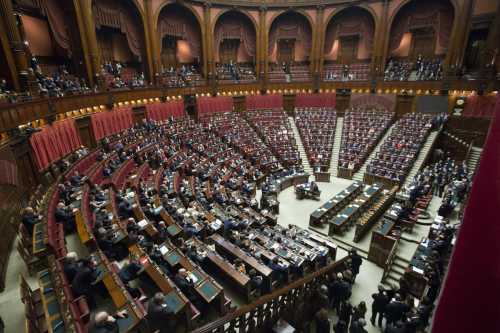
Managing global diplomacy today resembles attempting to patch a massive oil tanker's hull while the crew simultaneously argues over who owns the navigation wheel. As the 81st session of the United Nations General Assembly convenes on September 22, 2026, against a backdrop of deepening divisions and multilateral pressure, a parallel geopolitical architecture is being finalized through the BRICS summit in India, where leaders are actively pushing to institutionalize an alternative financial and diplomatic order for the Global South news.un.org , www.aljazeera.com .
The Institutional Erosion Beneath the Surface
The structural bypass of Western-led institutions is accelerating at a pace that mainstream diplomacy fails to quantify. The UN General Assembly’s focus on trust and transformation is being actively undermined by the rise of parallel forums like BRICS, which India used to position itself as a platform for practical Global South cooperation rather than an explicitly anti-Western alliance bowergroupasia.com . This creates a bifurcated diplomatic reality where international law and sanctions regimes are routinely circumvented by alternative payment mechanisms and bilateral security pacts. Parallel payment mechanisms and digital currency bridges are actively draining transaction volume from legacy systems, altering the velocity of global capital. The result is a severe degradation of universal multilateralism, replaced by transactional, regionalized blocs that prioritize economic sovereignty over collective security mandates.
The Permanent Risk Premium in Global Logistics
The ongoing multi-front war and US-Israel-Iran confrontations in the Middle East have permanently altered global energy risk premiums, shifting focus from immediate price spikes to long-term structural rewiring www.blackrock.com . The cascading economic fallout from this conflict is radiating well beyond the Gulf, fundamentally reshaping maritime supply chains and forcing European nations to permanently subsidize alternative energy imports to bypass volatile choke points. Mainstream coverage ignores the long-term recalibration of global freight insurance models, which now price in permanent geopolitical risk premiums for transit through the Red Sea and the Strait of Hormuz. Maritime insurers have effectively reclassified the Suez Canal transit as a high-risk war zone, forcing a structural shift toward the Cape of Good Hope route, which adds 14 days to global shipping cycles and permanently inflates working capital requirements for global importers.
The Exhaustion of Diplomatic Leverage in Eastern Europe
The US-led peace talks between Russia and Ukraine in Geneva and Abu Dhabi earlier this year have yielded no definitive breakthroughs, cementing a frozen conflict paradigm that neither side can afford to abandon baike.baidu.com . This diplomatic inertia forces both hemispheres to absorb continuous, localized military engagements without the political will for total mobilization or comprehensive settlement. The unseen impact is the normalization of a "managed war" economy, where defense industrial bases operate on perpetual, low-intensity production schedules. This reallocation of semiconductor fabrication capacity toward military-grade radars and drone optics is creating severe allocation constraints for the automotive and consumer electronics sectors, slowly cannibalizing civilian manufacturing capacity.
The Pragmatic Hedge: Multipolarity as a Buffer
Critics frequently dismiss the BRICS expansion as a fractured, internally contradictory bloc incapable of executing cohesive foreign policy. However, this perspective ignores the utility of multipolarity as a structural buffer for mid-tier powers. For nations like South Africa or Brazil, participation in alternative economic frameworks is not an ideological rejection of the West, but a necessary hedging strategy to prevent overexposure to weaponized dollar liquidity. As geopolitical analysts note, Russia sees BRICS as a geopolitical counterweight to the eastward expansion of the Atlantic system, while India leverages it for Global South leadership, creating a decentralized network that actually stabilizes regional economies by providing alternative avenues for sovereign debt restructuring www.facebook.com .
Echoes of the 1970s Non-Aligned Fracture
This current convergence of institutional paralysis and parallel bloc-building bears a striking resemblance to the fracturing of the Non-Aligned Movement during the 1973 oil crisis. During that era, the attempt to forge a unified New International Economic Order collapsed under the weight of divergent national interests and the sheer gravitational pull of Western capital markets. The critical lesson from the 1970s is that parallel financial architectures require deep, liquid bond markets to sustain them. While the Global South can successfully coordinate rhetorical challenges at the UN, the lack of a unified, convertible reserve currency ensures that these alternative blocs remain structurally dependent on the very dollar-denominated systems they seek to bypass. Without deep sovereign debt markets to absorb trade surpluses, local currency trading remains a localized accounting trick rather than a systemic threat to the global reserve currency.
The Burden-Sharing Mirage in European Defense
Optimists point to record European NATO defense spending and the new 5% target by 2035 as proof of a unified, rearmed Western alliance en.wikipedia.org . Yet, this view conflates nominal budget increases with actual combat power generation. Primary research indicates that while European NATO allies and Canada spent $574 billion on defence in 2025, Europe's largest military spenders—Germany, the UK, and France—have actually struggled with procurement bottlenecks www.cer.eu . Furthermore, NATO has revised its estimate of UK defence spending in 2025 downward to 2.31%, highlighting the discrepancy between political announcements and actual capital deployment www.friendsofeurope.org . Pouring capital into defense does not instantly generate interoperable stockpiles if the underlying manufacturing capacity remains bottlenecked by labor shortages and raw material dependencies. With 17 different types of main battle tanks and 20 different types of artillery systems currently in use across the continent, unified logistics remains a mathematical impossibility.
Strategic Imperatives for Capital and Citizens
For multinational corporations, the imperative is to aggressively bifurcate compliance and operational frameworks to navigate a permanently bifurcated global order. Supply chain managers must build redundancy into logistics routes, avoiding single points of failure in the Red Sea or Eastern Europe, while treasury departments must hedge against the gradual fragmentation of global payment messaging systems. For citizens and local businesses, capital preservation requires diversifying exposure away from defense-dependent civilian supply chains and focusing on domestic, recession-resilient sectors. The era of frictionless global trade is definitively over; operational resilience must now be priced into every long-term capital allocation decision.
The Six-Month Horizon: Stagnation and Realignment
Over the next six months, the geopolitical landscape will be defined by entrenched stagnation and quiet institutional realignment. The UN General Assembly will conclude with high-sounding declarations that fail to alter the material realities on the ground in Gaza or Eastern Europe. Concurrently, the structural friction of NATO's defense spending targets will force mid-tier European nations to quietly abandon procurement interoperability in favor of domestic, off-the-shelf purchases, further diluting the alliance's collective readiness. The global economy will settle into a high-friction, multi-polar equilibrium where localized conflicts are managed as permanent background noise, and sovereign capital flows are strictly gated by geopolitical alignment rather than pure market efficiency.



Comments (0)
No comments yet. Be the first to share your thoughts!
Want to join the discussion?
Please log in to post a comment.
Login NoworCreate an Account