
The Giant Farm Truce: French President Emmanuel Macron Survives Razor-Thin No-Confidence Vote Over 2026 Agriculture Subsidy Bill


Imagine a massive, beautiful bakery that has been famous for its perfect, delicious bread for hundreds of years. The bakers work incredibly hard, waking up at 3 AM every day to knead the dough. But recently, the owner of the bakery, President Emmanuel Macron, decided that to save money and protect the environment, he needs to change the recipe. He wants to stop using a certain type of cheap, imported flour and force the bakers to use more expensive, locally grown wheat. The bakers are furious. They say, 'If we use this expensive wheat, our bread will cost too much, nobody will buy it, and we will go bankrupt!' They park their giant delivery trucks in front of the bakery, block the doors, and throw flour all over the streets, refusing to bake anything. The owner's managers are so angry that they say, 'We refuse to work for you anymore! We are going to fire you and pick a new owner!' This is the dramatic, high-stakes political crisis that just unfolded in France.
The crisis centers around the 2026 Agriculture Subsidy and Market Stabilization Bill. France is the agricultural powerhouse of the European Union. Its farmers produce the wine, the cheese, and the wheat that feed the continent. But French farmers are under immense pressure. They are competing with cheaper agricultural imports from outside the EU, particularly from Ukraine and South America, which do not have to follow the strict, expensive environmental and labor regulations that French farmers must obey. Furthermore, the EU's own 'Green Deal' requires farmers to leave more land fallow and use fewer pesticides, which reduces their crop yields. The farmers are facing a massive income squeeze, and many are on the verge of losing their ancestral farms.
President Macron's government drafted the 2026 Bill to address this crisis. The bill proposes a massive 15 billion euro bailout package for farmers, funded by a new tax on large, industrial tech companies and a reduction in corporate tax breaks. It also introduces strict 'mirror clauses' that ban the import of any agricultural product that does not meet the exact same environmental standards as French products. On paper, this is a perfect solution to protect the farmers. But the political reality in the French National Assembly is incredibly complex. Macron's coalition does not have an absolute majority. He relies on the support of the center-right Republicans to pass laws. However, the center-right, influenced by the massive, violent protests by the farmers' unions on the streets of Paris, demanded even more money and stricter protections. When Macron refused to increase the budget further, citing the country's massive national debt, the center-right and the far-left joined forces to table a motion of no-confidence.
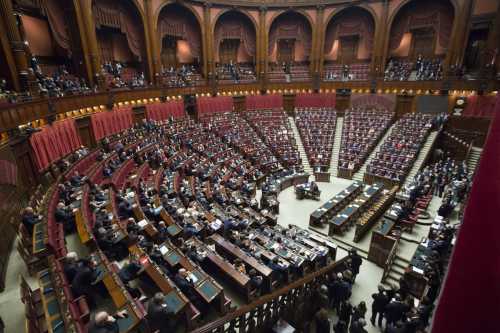
A motion of no-confidence is the ultimate political weapon. If it passes, the government falls, the Prime Minister is fired, and the President is forced to appoint a completely new government, often leading to snap elections and massive political chaos. The debate in the National Assembly on June 27, 2026, was legendary. The streets of Paris were surrounded by thousands of tractors, and the air was thick with the smell of burning hay and tear gas. Inside the assembly, the rhetoric was fierce. The opposition accused Macron of being out of touch, of sacrificing the rural heartland of France to please the urban elites and the tech billionaires. Macron's allies argued that the bailout was the most generous in European history and that the opposition was simply playing political games to destabilize the country.
When the votes were counted in the early hours of June 28, the result was incredibly tense. The no-confidence motion needed an absolute majority of 289 votes to pass. It fell just three votes short, reaching 286. Macron's government survived, but by the thinnest of margins. The survival of the government was secured only because a small group of centrist MPs, terrified of the chaos of snap elections and the rise of the far-right, decided to abstain rather than vote against their own President. The Agriculture Bill was immediately passed using a special constitutional provision that allows the government to bypass a parliamentary vote in times of extreme economic emergency, but the political damage is immense.
The French public and the European political community are watching to see if Macron can now govern effectively with such a fragile majority. Here is the official reaction from the French Presidency on the survival of the government:
Posted by Présidence de la République on Saturday, June 28, 2026
The survival of the government is a temporary truce, not a permanent peace. The farmers are still protesting, the national debt is still massive, and the political fractures in the National Assembly are deeper than ever. Macron has survived the vote, but he has lost his political momentum. The giant bakery is still open, but the bakers are still angry, and the owner is walking on a very thin tightrope. To read the full text of the Agriculture Subsidy Bill and the results of the no-confidence vote, you can visit the official French government portal at gouvernement.fr.
Related Articles
The Institutional Fault Line: How Judicial Overreach and Trade Wars Are Reshaping U.S. Markets
Aug 23, 2026
The Fractured Consensus: How Trade Volatility and Institutional Strain Are Rewiring U.S. Macroeconomics
Aug 22, 2026
Comments (0)
No comments yet. Be the first to share your thoughts!
Want to join the discussion?
Please log in to post a comment.
Login NoworCreate an Account