
The Giant Truce: Pakistan's Coalition Government Signs Historic "Charter of Economy" to Ensure Political Stability Ahead of IMF Review


Imagine a massive, incredibly difficult group project for your class. The project is to build a giant, beautiful castle out of blocks. But the problem is, the students in your group absolutely hate each other. Every time one student tries to place a blue block, another student knocks it down and insists on using a red block instead. They spend all their time fighting, screaming, and pulling the blocks apart, while the deadline to finish the castle gets closer and closer. The teacher, who is the International Monetary Fund (IMF), is watching them and says, 'If you do not finish this castle by Friday, I will fail the entire class and take away your recess.' Finally, the students realize that if they keep fighting, they will all lose. So, they sit down, shake hands, and sign a giant piece of paper called a 'Charter of Economy.' This paper says: 'We promise to stop fighting over the blocks. We will all agree on the same blueprint, and nobody is allowed to knock down what the other person builds.' This is exactly what has happened in Pakistan's politics.
For the last few years, Pakistan's political landscape has been incredibly toxic. The ruling coalition, consisting of the PML-N, PPP, MQM, and other smaller parties, has been constantly bickering with the opposition, led by PTI and JUI-F. Every economic decision, from raising taxes to cutting electricity subsidies, was used as a weapon to attack the other side. This political instability terrified foreign investors and made the IMF nervous. The IMF had given Pakistan a massive bailout loan to save the country from defaulting on its international debts, but the loan came with strict conditions: Pakistan had to fix its economy, increase its tax collection, and stop borrowing more money. But the IMF made it clear that these economic reforms would fail if the political leadership kept changing the rules every time there was a political crisis.
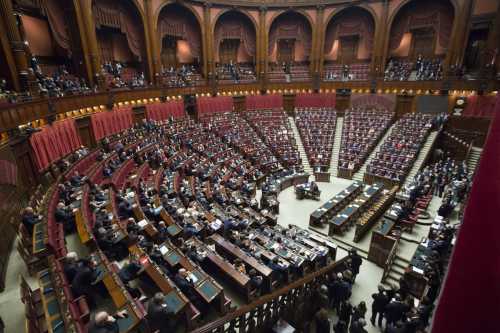
Enter the Charter of Economy. In a historic ceremony at the Prime Minister's House, the leaders of all the major political parties, including representatives from the government and the opposition, sat down and signed this unprecedented agreement. The Charter is not a law; it is a solemn political promise. It outlines ten core economic pillars that every party agrees to support, regardless of who is in power. These pillars include: broadening the tax net to include agriculture and retail, privatizing loss-making state-owned enterprises, maintaining the independence of the State Bank of Pakistan, ensuring that no new loans are taken for luxury development projects, and protecting the budgets for health and education. By signing this, the politicians have essentially taken the economy out of the political battlefield.
The impact of this Charter on the common citizen is profound. When the economy is politicized, the government is afraid to make tough decisions because they fear losing votes. For example, taxing the wealthy elite or cutting subsidies for the rich requires political courage. If the opposition promises to reverse those taxes just to win an election, the current government will back down. But with the Charter of Economy in place, all parties have promised not to use economic populism to win votes. They have agreed that the country needs to go through a period of strict austerity and structural reform to become truly independent. This means that the prices of things will stabilize, the value of the Rupee will strengthen, and the country will finally graduate from the IMF's program and stand on its own two feet.
The IMF has reacted with immense relief and optimism to this development. The Fund's mission chief in Islamabad stated that the Charter of Economy provides the 'political cover' that the government needs to implement the painful but necessary reforms. It signals to the global financial markets that Pakistan is no longer a risky, unpredictable country where the rules change every day. It is a mature democracy where the leadership can look beyond the next election and focus on the next generation. The Charter also establishes a joint parliamentary committee to monitor the implementation of these ten pillars, ensuring that no party can secretly break the promise without being called out by the others.
The signing of the Charter was a rare moment of unity in a deeply divided political landscape. Here is the official statement from the Prime Minister's Office on this historic consensus:
The Charter of Economy is a fragile truce, and it will be tested by the inevitable pressures of upcoming elections and public discontent over high prices. But it represents a fundamental shift in Pakistan's political maturity. It is an acknowledgment that the survival of the state is more important than the survival of any single political party. The students have finally agreed on the blueprint, and the building of the castle can begin. To read the full text of the ten-point Charter of Economy, you can visit the official Ministry of Finance portal at finance.gov.pk.
Related Articles
The Institutional Fault Line: How Judicial Overreach and Trade Wars Are Reshaping U.S. Markets
Aug 23, 2026
The Fractured Consensus: How Trade Volatility and Institutional Strain Are Rewiring U.S. Macroeconomics
Aug 22, 2026
Comments (0)
No comments yet. Be the first to share your thoughts!
Want to join the discussion?
Please log in to post a comment.
Login NoworCreate an Account