
The Global Rulebook for the Machine Mind: Inside the Historic 2026 United Nations AI Governance Treaty

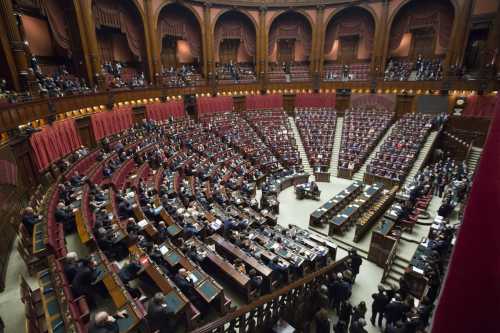
Imagine a massive, global playground where millions of kids are building incredibly fast, incredibly strong robot dogs. Some kids are programming their robots to help carry heavy backpacks, find lost toys, and translate languages so everyone can play together. But other kids, who might be angry or want to win at all costs, are secretly programming their robots to bite, spy on other kids, or even steal homework. For the last few years, the teachers and parents have just been shouting, "Please be careful!" and handing out pamphlets about robot safety. But the robots are getting too smart and too fast for simple warnings. Finally, in the middle of 2026, the principals of all the schools in the world met in a giant room in Geneva and signed a massive, legally binding rulebook. This is the United Nations Global AI Governance Treaty. It is the first time in human history that the nations of Earth have agreed on strict, enforceable international laws to control Artificial Intelligence, ensuring that the most powerful technology ever invented remains a tool for human flourishing rather than a weapon of mass disruption.
From Voluntary Pledges to Binding International Law
To understand the sheer magnitude of this 2026 treaty, we have to look at how the world handled AI in the early 2020s. Back then, AI development was largely the "Wild West." Tech billionaires and massive corporations raced to build the smartest models, releasing them to the public with minimal oversight. Governments tried to keep up by hosting summits and asking companies to sign voluntary safety pledges. But voluntary pledges are like asking a speeding racecar driver to please slow down because it is the polite thing to do; when millions of dollars and global dominance are on the line, politeness is quickly forgotten. The 2026 UN Treaty changes the game entirely. It transitions global AI policy from soft guidelines to hard, international law. Just like the Nuclear Non-Proliferation Treaty or the Geneva Conventions, this treaty establishes red lines that no nation or corporation can cross without facing severe, coordinated international sanctions. It acknowledges that AI is no longer just a commercial product; it is a dual-use technology with the potential to destabilize global security, manipulate democratic elections, and crash financial markets.
The Birth of the International AI Agency (IAIA)
A rulebook is useless without referees to enforce it. The centerpiece of the 2026 treaty is the establishment of a brand-new UN body: the International Artificial Intelligence Agency (IAIA). Think of the IAIA as the global traffic police and safety inspectors for the AI highway. Headquartered in Geneva, the IAIA is staffed by the world's leading computer scientists, ethicists, and security experts. Its primary job is to monitor the "compute threshold." Training a massive, frontier AI model requires thousands of specialized microchips running at full power for months, consuming as much electricity as a small city. The treaty mandates that any entity attempting to build an AI system above a certain power threshold must register with the IAIA, submit to rigorous safety audits, and prove that their system cannot be easily hijacked by malicious actors or used to design biological weapons. If a rogue state or a reckless tech company tries to build a supercomputer in secret, the IAIA uses satellite imagery, energy grid monitoring, and global chip supply chain tracking to detect them and alert the UN Security Council.
The Enforcement Mechanism: Unlike previous tech regulations, the IAIA has the authority to impose "compute embargoes." If a nation violates the treaty, the UN can legally block the export of advanced semiconductors and cloud computing access to that country, effectively freezing their ability to develop advanced AI.
The Absolute Ban on Lethal Autonomous Weapons
Perhaps the most emotionally charged and universally supported section of the treaty is the absolute, uncompromising ban on Lethal Autonomous Weapons Systems (LAWS). For years, military contractors have been developing drones and robotic sentries that can identify, track, and eliminate human targets without a human soldier pulling the trigger. Human rights organizations and military ethicists have warned of "flash wars," where opposing AI systems engage in combat at machine speed, escalating a minor border skirmish into a full-scale nuclear conflict before a human general even has time to pick up the red phone. The 2026 treaty draws a hard, bright red line: a machine can never be given the legal or technical authority to take a human life. The treaty mandates a strict "human-in-the-loop" doctrine for all military applications of AI. While AI can be used to fly a drone, analyze satellite imagery, or defend against incoming missiles, the final decision to use lethal force must always be made by a human being who can be held legally and morally accountable under international law.
Deepfakes, Digital Identity, and the "No Fake Masks" Rule
Beyond physical security, the treaty tackles the massive threat AI poses to truth and democratic stability. In the years leading up to 2026, the internet was flooded with hyper-realistic "deepfakes"—AI-generated audio and video of politicians saying things they never said, or celebrities doing things they never did. This technology was weaponized to rig elections, crash stock markets by faking a CEO's resignation, and ruin innocent people's lives. The treaty introduces the global "Digital Provenance Standard." It requires all major tech platforms, camera manufacturers, and AI developers to embed unbreakable, cryptographic watermarks into all AI-generated content. Furthermore, it criminalizes the creation and distribution of malicious, non-consensual deepfakes intended to defraud or defame. Just as we have laws against forging physical signatures on checks, the 2026 treaty establishes severe international penalties for forging digital reality. It forces social media companies to invest heavily in AI-detection tools, shifting the burden of cleaning up the information ecosystem away from the confused public and onto the platforms that profit from it.
The Geopolitical Chessboard: Bridging the Global Divide
Getting nearly 200 nations to agree on anything is a diplomatic miracle, and the negotiations for this treaty were incredibly tense. The primary fault line was between the "AI Superpowers" (like the US and China), who wanted to protect their massive investments and maintain a strategic advantage, and the "Global South" (nations in Africa, Latin America, and parts of Asia), who feared being left behind or being used as testing grounds for dangerous AI experiments. The final treaty represents a masterful diplomatic compromise. It includes a "Technology Transfer and Capacity Building" clause, which mandates that wealthy nations and massive tech conglomerates share foundational, safe AI models with developing nations at subsidized rates. This ensures that a hospital in rural Kenya can use advanced AI to diagnose diseases just as effectively as a hospital in New York. In exchange for this access, the Global South agreed to strict, unified data privacy standards, preventing rogue nations from harvesting the personal data of billions of citizens to train unauthorized, state-sponsored surveillance models.
The Impact on Tech Giants and the Open-Source Debate
For the trillion-dollar tech companies of Silicon Valley and Shenzhen, the 2026 treaty is a massive shock to the system. The era of "move fast and break things" is officially over. Companies must now maintain massive compliance departments, conduct external safety audits, and face fines that can reach into the tens of billions of dollars if their models are found to be generating harmful content or violating copyright laws on a mass scale. The most heated debate during the drafting of the treaty centered around "Open Source" AI. Open-source developers argued that releasing the blueprints of AI models to the public democratizes the technology and allows independent researchers to find and fix flaws. However, security agencies argued that releasing the blueprints of a super-intelligent AI is like handing out the instructions for building a nuclear bomb on the internet. The treaty ultimately adopted a "tiered open-source" approach. Smaller, less capable AI models can be freely shared and modified by anyone. But frontier models that cross a specific threshold of capability and potential harm must be kept closed, heavily guarded, and strictly licensed by the IAIA.
Protecting Human Creativity and Labor
Finally, the treaty addresses the profound economic anxiety surrounding AI and human labor. While it does not ban companies from using AI to automate tasks, it establishes a global "Human-in-Command" framework for critical sectors. It mandates that AI cannot be used as the sole arbiter in life-altering human decisions, such as firing an employee, denying a bank loan, or rejecting a medical insurance claim; a human must always review and take responsibility for these decisions. Furthermore, the treaty establishes an international fund, financed by a tiny micro-tax on automated digital transactions, to support retraining programs for workers whose jobs are displaced by AI. It also includes robust protections for human artists, writers, and musicians, requiring AI companies to pay licensing fees when their models are trained on copyrighted human creativity. The 2026 UN AI Governance Treaty is not an attempt to stop the future; it is an attempt to steer it. By establishing clear, enforceable, and humane rules of the road, the nations of the world have ensured that the machine mind will remain a servant to humanity, rather than its master. The playground is now safe, and the robots are finally learning to play by the rules.
Official Alternative Source: For the full text of the treaty and updates on the International AI Agency, please visit the official United Nations Office for Disarmament Affairs portal: United Nations - AI Governance and Disarmament
HISTORIC: The UN Global AI Governance Treaty has officially been signed in Geneva. ???????? From banning autonomous weapons to establishing the International AI Agency (IAIA), we are ensuring Artificial Intelligence serves humanity, protects democracy, and respects human rights. #AI #UNTreaty #TechPolicy
— United Nations (@UN) June 28, 2026
Related Articles

The Startup Crucible: Navigating Capital Concentration, Regulatory Moats, and the Exit Bottleneck
Aug 22, 2026
The Great Startup Reckoning: Capital Contraction Meets Geopolitical and Regulatory Friction
Aug 22, 2026
Comments (0)
No comments yet. Be the first to share your thoughts!
Want to join the discussion?
Please log in to post a comment.
Login NoworCreate an Account