
The Great AI Decoupling: How August 2026 Split the Global AI Stack Into Three Blocs

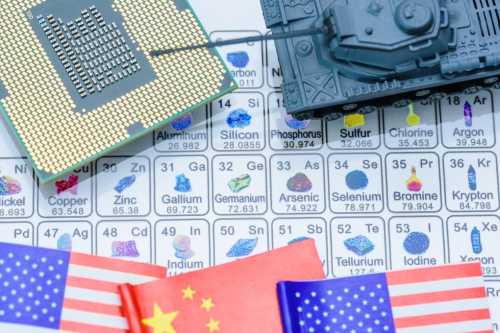
Anyone who has ever shipped a hardware product knows the drawer of power adapters: a tangle of plastic cubes, each bought to make one device work in one country. The world’s AI stack is heading into that same drawer. Over the past fortnight, Brussels switched on full enforcement of its AI Act, Washington extended chip bans to Chinese firms operating outside China, and London wrote a £500 million cheque for “sovereign” compute. Model cards, chip licences and conformity assessments are becoming the new plug adapters — the friction cost of crossing borders that no longer trust each other’s standards.
The August Convergence
On 2 August, the EU AI Act became fully applicable, activating high-risk system obligations, Article 50 transparency mandates and penalties of up to 7% of global turnover, with the European Commission now holding direct enforcement power over general-purpose AI models. In the same window, the United States extended its AI chip shipment ban to Chinese entities abroad just months after conditionally approving H200 exports under a volume-capped framework, and Britain launched a £500 million Sovereign AI Fund — a three-bloc divergence that effectively ends the era of a single global AI value chain.
The Compliance Moat Nobody Prices In
The first-order reading of the AI Act is consumer protection; the second-order reading is industrial organization. Industry compliance estimates run $8 million to $15 million per large enterprise, with third-party conformity assessment above $50,000 per AI system — a rounding error for a hyperscaler, a Series-B extinction event for a startup. The dynamic mirrors post-2008 banking regulation, where compliance overhead cemented the position of institutions too big to fail. Expect the European model market to consolidate around a handful of GPAI providers able to amortise legal overhead across billions of API calls, while smaller open-weights labs retreat behind geofences. Regulation, in this light, is a capital-expenditure moat.
In Defence of the Rulebook
To be fair, the fragmentation critique can shade into caricature. Harmonised rules also create markets. European Commission Executive Vice-President Henna Virkkunen’s defence — that the Act should “make it easier to innovate without lowering the bar on safety,” and that a single EU law beats a patchwork of national ones — has empirical traction: enterprise buyers in banking and healthcare consistently cite regulatory clarity as a deployment precondition. The GDPR precedent shows a credible rulebook can become the global default rather than a handicap, the so-called Brussels Effect. And without enforceable transparency duties, the market for AI output risks a lemons equilibrium in which synthetic spam drives trusted content out of circulation. The compliance burden is real; so is the trust dividend it purchases.
Compute Nationalism and the Subsidy Treadmill
The second under-reported shift is fiscal. The sovereign AI infrastructure market reached $24.8 billion in 2026, and the UK fund is only the most visible of dozens of state-backed compute vehicles. Yet the Stanford AI Index 2026 records US private AI investment at $109 billion — roughly 12 times China’s — a gap no consortium of treasuries closes. Subsidised domestic compute therefore functions less like innovation policy and more like an insurance premium: governments pay above-market prices for the option value of not being cut off. The hidden cost is duplicated fixed investment across blocs, raising the global cost curve for frontier training and slowing the diffusion of capability into productivity.
Why Domestic Compute Is Not Mere Vanity
Sovereignty sceptics, however, underweight tail risk. Advanced logic production remains concentrated in Taiwan and Korea — a single-contingency concentration that makes 1970s oil look diversified. A state that cannot fine-tune a model on its citizens’ data, or run inference during a diplomatic rupture, has outsourced a function that now sits inside the national-security perimeter. Sovereign compute funds are therefore better analysed as resilience capex, analogous to strategic petroleum reserves, than as vanity industrial policy. The correct critique is not that sovereignty is irrational; it is that mid-sized states pursuing it alone, without pooled demand, will strand assets.
The Splintering of the Model Economy
The third blind spot is the supply-side response. Export controls do not freeze capability; they redirect it. Jensen Huang’s assessment is blunt: Nvidia went from “90-some odd percent” of the Chinese market to zero — “100% out of China” — and the vacuum was filled by Huawei, which he describes as flourishing under the ban. The same physics now runs through compliance: labs will fork models into jurisdiction-specific variants, watermarking regimes will diverge, and a grey market in accelerated compute will price the risk of re-export violations. Gartner projects fragmented AI regulation will quadruple by 2030, reaching 75% of economies and forcing $1 billion in annual spending on governance platforms — a permanent rent extracted from the AI economy’s midstream.
Echoes of 1986: When Washington Contained Tokyo
The closest historical rhyme is the 1986 US–Japan Semiconductor Trade Agreement. Then, as now, a dominant incumbent faced tariffs, dumping penalties and managed market-share quotas in the name of national security. The accord did not preserve American supremacy: it raised downstream prices, pushed Japanese firms up the value chain, and left a vacuum filled by Samsung and TSMC — the companies that today define the industry. Containment redistributed capability rather than eliminating it. The lesson for 2026 is uncomfortable for both hawks and doves: controls buy time at the frontier, but they simultaneously sponsor parallel, non-Western supply chains that erode the very leverage the controls were designed to create.
The Playbook Before Q1 2027
- Inventory against Annex III now. Conformity-assessment pipelines are already queuing; a complete AI system register is the prerequisite for every subsequent decision.
- Push liability downstream. Contractually bind vendors to deliver technical documentation, provenance and watermarking evidence, with mislabelling liability assigned in writing.
- Buy, don’t build, compliance. Mid-cap firms should purchase compliance-as-a-service and diversify inference across at least two jurisdictions to hedge export-control shocks.
- Exercise your transparency rights. Citizens now have the right to be told when they interact with synthetic content — treat unlabelled emotional or financial advice as unlicensed advice.
- Upskill into the premium. AI skills already appear in 2.5% of US job postings, up 55% year-on-year per Stanford HAI; the wage premium sits with the compliant.
Six Months Out: The Enforcement Winter
By February 2027, expect the first coordinated enforcement actions under Articles 5 and 50, likely targeting a visible GPAI provider to establish deterrence. The governance-platform market will consolidate around a handful of audit vendors, and at least one mid-sized state will chase a headline sovereign-compute announcement it cannot fill. The H200 framework will either collapse into a stricter de facto embargo or be traded in a summit communiqué; incoherence of that kind does not persist. Open-weights releases will increasingly debut first in permissive jurisdictions, making regulatory arbitrage the defining business-model question of 2027. The adapter drawer, in short, is about to get a lot deeper.
Related Articles

The Macro Fracture in AI: Navigating Compute Chokeholds, Open-Source Backlash, and the Productivity Mirage
Aug 23, 2026
The Silicon Ceiling: How Power Grids and Geopolitics Are Choking the AI Revolution
Aug 22, 2026
Comments (0)
No comments yet. Be the first to share your thoughts!
Want to join the discussion?
Please log in to post a comment.
Login NoworCreate an Account