
The Great Desynchronization: Five Policy Levers, No Conductor, and the New Fragmentation Premium

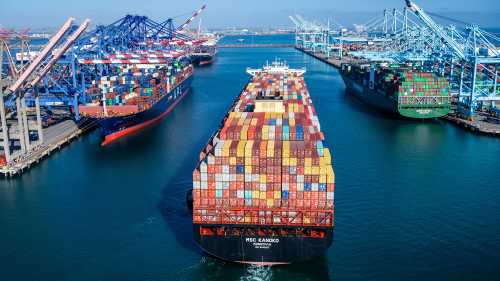
When traffic engineers teach system failure, they begin with a paradox: the most dangerous intersection is not the one with broken signals, but the one where every light turns green at once — each controller performing perfectly inside its own jurisdiction, the wreck produced by the absence of coordination. The global macro and geoeconomic order just entered such an intersection.
In a single compressed week, OPEC+ approved a fifth consecutive monthly quota increase of 188,000 barrels per day while its members pump far below target; a divided Federal Reserve held at 3.5%–3.75% with three dissenters demanding a hike; Washington layered capital-markets restrictions on tariffs already in the 25–40% band on Chinese goods; a record heatwave erased roughly one point of EU GDP; and BRICS finalized a New Delhi summit to codify a parallel governance architecture. Five mandates. Five contradictory signals. No conductor.
Phantom Barrels and the Mispriced Scarcity Premium
The energy story is being reported as a supply hike; it is better read as a signaling operation. The September adjustment is paper, not crude. UBS’s Giovanni Staunovo observed that the seven producers “kept unwinding their production cuts as widely expected” while “production is probably still below the group’s targets,” and Saxo Bank’s Ole Hansen supplied the physical caveat: “restarting production after prolonged shutdowns takes time.” The macro implication is a mispriced scarcity premium — quota headlines cap crude rallies while the physical market, still re-rating after the Hormuz disruption, trades tight. Importing states, utilities and airline hedging books absorb a false bearish signal. Note the structure as well: the identical 62,000 bpd allocation to Riyadh and Moscow is the visible signature of a Saudi–Russian axis now setting the marginal price of energy outside every Western forum. G7 inflation models are still running on the old governance assumption.
Capital Controls Are the New Tariffs
The August 6 push to restrict Chinese companies’ access to U.S. capital markets is the most under-analyzed of the five moves. Tariffs price goods; investment restrictions price ownership. Once access to the world’s deepest pool of capital becomes a revocable privilege rather than a standing offer, the discount rate applied to every cross-border asset changes: allocators begin pricing political adjacency into the cost of capital, and valuation fragments along bloc lines. Layer that on a Fed that, in Kay Haigh’s words at Goldman Sachs Asset Management, “appears to be running out of patience with above-target inflation, despite recent data coming in cold,” while the IMF projects global growth of just 3.1% for 2026, and emerging-market balance sheets get squeezed twice — by the level of the risk-free rate and by the politicization of the market where they raise dollars. That is a slow-moving liquidity tightening no central bank dashboard captures.
Climate Enters the Core Inflation Model
The third ignored variable is thermal. Triodos Bank estimates this summer’s heat will cost the EU €180 billion — about 1% of GDP, equal to the entire growth the bloc was projected to generate in 2026 — with lost labour productivity shaving roughly 0.6 points and agricultural output down 3–7%.
“The result is not simply ‘the hottest countries lose the most’… decades of acclimatisation imply that the marginal effect of any single hot day is comparatively small.” — Triodos Bank analysis
The uncomfortable corollary is that less-acclimatised northern economies are the marginal losers. For macro analysts this moves climate from ESG sidebar to core inflation input: a recurring negative supply shock landing exactly as European grids operate at thermal limits. The LSE’s Grantham Institute put the June heatwave’s UK cost at more than £1.15 billion and 24 million lost working hours — a quarterly drag no finance ministry has provisioned. Heat is becoming what oil was in the 1970s: an exogenous price-setter that models keep treating as one-off.
In Defense of the Hawkish Pause
The counter-argument deserves airtime, because the desynchronization thesis can slide into a lazy “policy failure” narrative. A 9–3 vote with three hike dissents is not dysfunction; it is a committee preserving optionality when tariff pass-through into core services — running 3.2% year-on-year — is genuinely hard to model. BMO’s Ian Lyngen reads the meeting as “a Committee with vocal hawks,” which is precisely what a central bank facing a terms-of-trade shock should want: deterrence against expectations without pre-commitment to a path. Likewise, capital-markets restrictions are not mere protectionism; they are sovereign instruments with a real record — advanced chip controls have slowed adversarial military-AI integration — and no serious legal theory obliges a state to finance its strategic rival. Prudence and paralysis are different animals; conflating them is the analyst’s error, not the Committee’s.
The 1973 Script, Rehearsed in Reverse
The last time the world ran this configuration — supply shock, monetary hesitation, fracturing trade order — was 1973–74: the Nixon shock had severed the dollar–gold link, OPEC imposed its embargo, and vacillating central banks allowed a relative price shock to harden into a wage–price spiral. The lesson is precise: oil does not cause entrenched inflation; policy desynchronization does. Today’s inversion sharpens the point. The supply shock is administered by producers in quota tranches; the trade fracture is regulatory rather than embargo-driven; the monetary hesitation arrives with inflation already above target for five years. The 1970s taught that the error is paid for in credibility, and credibility, once burned, is recovered only at Volcker-scale rates.
The Fragmentation Dividend Is Real
Yet the fragmentation-as-collapse thesis has its own blind spot. De-risking is generating real capital formation — Mexican, Vietnamese and Indian industrial parks are absorbing record FDI — and the BRICS payment architecture, despite 11 members and a Delhi summit, still settles the overwhelming share of intra-bloc trade in dollars; reserve shares erode slowly, they do not collapse. Europe’s €180 billion heat shock is of the same order as the bloc’s 2022 energy-import swing, a drawdown the EU survived. The premium paid for redundancy — duplicated capacity, compliance headcount, friend-shored capex — is expensive, but in a genuine crisis it is exactly what prevents the 1973 script from repeating. Insurance is not the accident.
The Operator’s Playbook for H2 2026
For treasurers, owners and households, the response is positioning, not prediction:
- Treat energy as a scarcity market, not a quota-headline market. Extend crude and freight hedges through Q1 2027, biased toward physically-backed contracts.
- Map suppliers to the capital-controls perimeter, not just the tariff schedule. A supplier that is solvent today but delistable tomorrow is counterparty risk; dual-source outside the restriction perimeter while spreads remain narrow.
- Price heat seasonality into working capital. For EUR and GBP exposure, indexation clauses should reference agricultural baskets explicitly; Q3 productivity shocks surface as delivery slippage and food-input inflation.
- Ladder fixed income into the 2027–28 window where the first cuts are now priced; in a desynchronized regime, carry is the only free lunch.
- Read the Sept 12–13 BRICS communiqué for settlement-currency language — not the photo-op — as the pacing signal for reserve diversification.
February 2027: The Baseline Scenario
Six months out, the probable landscape is desynchronized stagnation rather than recession: the Fed holding 3.5%–3.75% into Q1 2027 under conditional opacity; Brent in a band where phantom quotas cap rallies and post-Hormuz tightness caps declines; U.S.–China effective tariffs grinding sideways in the 25–40% corridor while capital restrictions do the marginal tightening; the EU booking near-zero growth as the heat shock compounds with gas volatility. The tail risk sits in credibility, not growth: if a second consecutive thermal summer meets services inflation above 3%, the 1973 mechanism activates — relative shocks hardening into expectations — and the rate path reprices from hold to hike. At a green-light intersection, the collision rarely comes in the first quarter. It arrives when every controller finally looks up at once.
Related Articles
The Multipolar Fracture: Navigating Defense Realignment, Institutional Arbitrage, and Tactical Instability
Aug 23, 2026
The Architecture of Fragmentation: Navigating the Multipolar Shift in Global Governance
Aug 22, 2026
Comments (0)
No comments yet. Be the first to share your thoughts!
Want to join the discussion?
Please log in to post a comment.
Login NoworCreate an Account