
The Great Global Balancing Act: How the US Federal Reserve's Mid-2026 Rate Decisions Are Steering the World Economy Away from the Brink

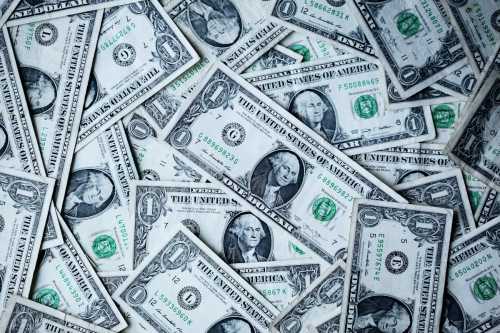
Imagine you are driving a massive, incredibly fast car down a winding mountain road. The speed limit is 60 miles per hour, but your car is currently going 90. If you slam on the brakes as hard as you can, the car will skid, crash, and everyone inside will get hurt. But if you don't brake at all, you will fly off a cliff at the next sharp turn. The only way to survive is to apply the brakes smoothly, gradually, and perfectly, slowing the car down to exactly 60 miles per hour right before the curve. In the world of global finance, the "car" is the United States economy, the "speed" is inflation, and the "brakes" are interest rates. The driver of this car is the Federal Reserve, often just called the "Fed." As we move through the middle of 2026, the global economy is watching with bated breath as the Fed executes this delicate maneuver, attempting to achieve what economists call a "soft landing"—slowing down inflation without causing a massive recession. The decisions made in the marble halls of Washington D.C. do not just affect American citizens; they send powerful shockwaves through every stock market, currency, and supply chain on planet Earth.
The Federal Reserve and Its Dual Mandate
To understand the Fed's power, we must first understand its job description, which is known as the "Dual Mandate." Congress has given the Federal Reserve two main tasks: first, to keep prices stable (which means keeping inflation low and predictable), and second, to maximize employment (which means keeping unemployment as low as possible). For the past few years, the Fed was entirely focused on the first task because inflation had skyrocketed to levels not seen in decades. When prices for groceries, rent, and cars rise too fast, people's money loses its value, causing immense economic distress. To fight this, the Fed raised interest rates aggressively. When interest rates go up, it becomes more expensive for businesses to borrow money to expand, and more expensive for consumers to get mortgages or car loans. This reduces spending, which cools down demand, which finally forces prices to stop rising. By mid-2026, inflation has largely returned to the Fed's target rate of around 2 percent. Now, the focus is shifting back to the second part of the mandate: ensuring that this fight against inflation doesn't destroy millions of jobs.
The Anatomy of a "Soft Landing"
The term "soft landing" is one of the most famous phrases in economics, and for good reason: it is incredibly difficult to achieve. Historically, whenever the Fed raised interest rates to fight inflation, the economy would inevitably tip into a recession, causing massive job losses and business bankruptcies—a "hard landing." The genius of the 2026 economic narrative is that the US appears to have pulled off the impossible. By carefully calibrating the rate hikes and then holding them steady for an extended period, the Fed allowed the supply chains to heal and the labor market to normalize without triggering a wave of layoffs. The unemployment rate has remained remarkably resilient, hovering near historic lows, while wage growth has stabilized at a healthy pace that outpaces inflation. This means workers are actually getting richer in real terms, able to afford more goods and services. This soft landing is the holy grail of monetary policy, and its success in the world's largest economy is providing a massive sigh of relief to global markets.
The Global Ripple Effect: Because the US Dollar is the world's reserve currency, any change in US interest rates instantly alters the flow of trillions of dollars across international borders, affecting borrowing costs and currency values in every single country on Earth.
The Global Ripple Effect: Capital Flows and Emerging Markets
When the US Federal Reserve changes interest rates, it acts like a giant vacuum cleaner for global capital. When US interest rates are high, global investors think, "Why should I risk my money investing in a factory in Brazil or a tech startup in India when I can get a guaranteed, risk-free 5 percent return just by buying US government bonds?" As a result, money flows out of emerging markets and into the US, causing the currencies of those emerging markets to crash and making their dollar-denominated debts much harder to pay back. However, as the Fed signals that it has finished raising rates and might even start cutting them in late 2026, the vacuum cleaner is turned off. Investors start looking for higher returns elsewhere, and capital begins flowing back into emerging markets. This is fantastic news for developing economies. Their currencies stabilize, their stock markets rally, and their central banks finally have the breathing room to lower their own interest rates to stimulate local growth. The Fed's successful soft landing is essentially a gift to the rest of the global economy.
The Housing Market and the "Lock-In" Effect
While the macroeconomic picture looks rosy, the microeconomic reality for everyday consumers, particularly in the housing market, remains complicated. When the Fed first started raising rates, mortgage rates in the US skyrocketed from around 3 percent to over 7 percent. This made buying a house incredibly expensive, causing the housing market to freeze. But a strange phenomenon occurred, known as the "lock-in effect." Millions of homeowners who had bought houses or refinanced during the ultra-low-rate era of the 2010s and early 2020s refused to sell their homes because they didn't want to give up their 3 percent mortgages and take on a new one at 7 percent. This created a severe shortage of existing homes for sale, which kept home prices artificially high despite the high cost of borrowing. As we move through 2026 and mortgage rates begin to slowly descend, the expectation is that more sellers will enter the market, increasing inventory and finally bringing some relief to exhausted homebuyers. However, the scar tissue from the pandemic-era housing boom means that affordability will remain a significant political and economic challenge for years to come.
Corporate Earnings, AI, and the Productivity Miracle
Another reason the US economy has avoided a recession despite high interest rates is the massive boost in corporate productivity driven by the Artificial Intelligence boom. In a traditional high-interest-rate environment, companies face a squeeze: their borrowing costs go up, and their labor costs go up because workers demand higher wages to keep up with inflation. Normally, this destroys profit margins and leads to layoffs. But in 2026, companies are using AI and automation to do more with less. Software developers are using AI coding assistants to write code twice as fast; customer service departments are using AI chatbots to handle routine inquiries; and logistics companies are using AI to optimize delivery routes, saving millions in fuel. This surge in productivity means that companies can absorb higher wages and higher interest costs without having to raise prices for consumers or fire workers. The AI revolution is not just a technological marvel; it is a critical macroeconomic shock absorber that has helped sustain the soft landing.
Geopolitical Risks and the Threat of Fragmentation
Despite the triumph of the soft landing, the global economy is not out of the woods. The greatest threats to this delicate balance are not economic, but geopolitical. The era of hyper-globalization, where companies sourced materials from wherever they were cheapest, is ending. In its place, we are entering an era of "friend-shoring" and supply chain fragmentation. Driven by tensions between the US and China, and the ongoing conflicts in Eastern Europe and the Middle East, countries and corporations are prioritizing security and resilience over pure efficiency. They are building factories in allied nations, stockpiling critical minerals, and accepting higher costs in exchange for supply chain certainty. This structural shift is inherently inflationary. If it costs more to build a microchip in Arizona than in Shenzhen, the price of electronics will go up. If oil tankers have to take longer routes to avoid conflict zones in the Red Sea, the price of energy goes up. The Fed's ability to maintain its hard-won victory over inflation will be constantly tested by these geopolitical supply shocks. A sudden escalation in global tensions could instantly reignite inflationary pressures, forcing the Fed to reverse course and raise rates again, plunging the world back into the chaos of 2022.
The New Normal: Navigating a Multipolar Economic World
As we look to the future, the global economy is settling into a "new normal." The days of zero interest rates and ultra-low inflation are likely gone for good. The massive government spending required to fight the pandemic, the trillions needed to transition to green energy, and the costs of deglobalization mean that capital will remain relatively expensive and scarce. For businesses and investors, this means the strategies of the past decade will no longer work. They can no longer rely on cheap money to fuel growth; they must focus on genuine profitability, operational efficiency, and resilience. For policymakers, it means they must be hyper-vigilant, ready to use both monetary and fiscal tools to manage the inevitable bumps in the road. The Federal Reserve's successful navigation of the 2026 soft landing is a monumental achievement that will be studied in economics textbooks for generations. It proves that with data-dependent decision-making, clear communication, and a bit of luck regarding supply chains, the impossible can be achieved. But in a world defined by polycrisis and rapid technological change, the driver of the global economic car must keep their hands firmly on the wheel, eyes on the road, and foot hovering just above the brake, ready for whatever curve comes next.
Official Alternative Source: For the most accurate and up-to-date monetary policy decisions and economic projections, please visit the official Federal Reserve portal: Federal Reserve - Monetary Policy
The Federal Open Market Committee (FOMC) decided to maintain the target range for the federal funds rate at 5.25 to 5.5 percent. Inflation has eased over the past year, but remains somewhat elevated. We remain highly attentive to inflation risks. ???????????? #FOMC #Fed
— Federal Reserve (@federalreserve) June 12, 2026
Related Articles
The Macroeconomic Inflection Point: Navigating Sovereign Debt, Labor Recalibration, and Trade Fragmentation
Aug 22, 2026
The Macroeconomic Reckoning: Navigating the Convergence of Debt, Trade, and Technological Shifts
Aug 22, 2026
Comments (0)
No comments yet. Be the first to share your thoughts!
Want to join the discussion?
Please log in to post a comment.
Login NoworCreate an Account