
The Great Logistics Consolidation: Navigating the Repricing of Global Freight and the Death of the Asset-Light Forwarder

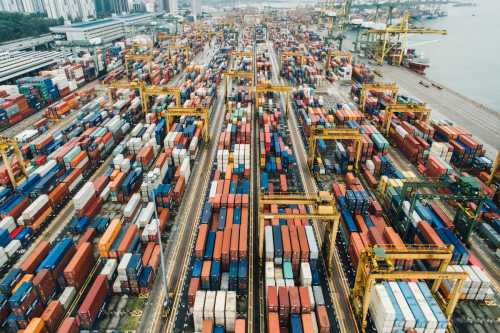
Managing a global supply chain today is like operating a municipal water system where the main arteries are suddenly narrowing, forcing the utility to aggressively buy up every local reservoir just to maintain baseline pressure. This is the precise dynamic currently playing out in global maritime logistics. The acceleration of mega-mergers and vertical integration among global ocean carriers—exemplified by CMA CGM’s acquisition of Bolloré and Maersk’s aggressive push into end-to-end logistics—coincides with a structural repricing of global freight rates. This consolidation is not merely a cyclical market correction; it is a permanent alteration of the global trade architecture.
The Death of the Asset-Light Forwarder
Mainstream financial coverage fixates on the expanded EBITDA margins of mega-carriers, ignoring the existential threat this poses to the traditional, asset-light freight forwarder model. As carriers internalize logistics, the independent middleman is being starved of capacity. The carriers are no longer content to simply move boxes from port to port; they are capturing the high-margin inland distribution and customs brokerage segments. As maritime analyst Lars Jensen recently observed, "The era of the asset-light forwarder is ending; the future belongs to those who own the steel and the software." This vertical integration is effectively foreclosing the market for mid-sized logistics providers, forcing them into low-margin niche services or acquisition.
The Hidden Inflation Tax on the Mittelstand
Furthermore, the narrative that consolidation only inflates consumer prices at the retail level ignores the severe margin compression hitting mid-market industrial manufacturers. According to the latest UNCTAD Review of Maritime Transport, the top 10 carriers now control over 85% of global container capacity, effectively creating an oligopoly that dictates terms to non-strategic shippers. Small and medium-sized enterprises (SMEs) lacking the volume to negotiate direct service contracts are being relegated to the spot market, where rates are highly volatile and subject to massive premium markups. This creates a hidden inflation tax that disproportionately damages the competitiveness of the industrial middle class, a dynamic entirely absent from consumer price index calculations.
The Illusion of Resilience: The Single-Point-of-Failure Trap
However, the prevailing assumption that vertical integration guarantees absolute supply chain resilience is overly simplistic and ignores the systemic risks of concentrated assets. When a single entity controls the port terminal, the ocean vessel, and the inland rail, a localized disruption—such as a dockworker strike or a regional rail failure—cascades through the entire network without alternative routing options. The mega-carriers have optimized for margin extraction, not systemic redundancy. By owning the entire chain, they have inadvertently created massive single points of failure. If a carrier's proprietary terminal experiences a software outage or a labor dispute, the shipper has no alternative asset-light forwarder to pivot to, as the carrier has already bought them out.
Echoes of the Hub-and-Spoke: Lessons from 1990s Aviation
To contextualize this market concentration, analysts must look to the global airline consolidation of the late 1990s and early 2000s. The shift toward the hub-and-spoke model and mega-carrier alliances initially promised consumers lower fares through operational efficiency, but ultimately resulted in systemic fragility. This was starkly exposed during the 2010 Eyjafjallajökull volcanic eruption and the 2020 pandemic, where the lack of redundant, decentralized routing options led to massive network collapses. The historical lesson is that extreme consolidation yields short-term margin expansion at the expense of long-term network elasticity. The maritime industry is currently replicating this exact trajectory, prioritizing balance sheet optimization over operational redundancy.
The Stabilization Myth: Why Consolidation Actually Tames Spot Volatility
Conversely, the bearish argument that this consolidation inevitably leads to unchecked freight rate inflation for all shippers misinterprets the mechanics of long-term contract negotiations. For mega-shippers with massive volume, carrier consolidation actually provides a stabilizing effect by absorbing spot market volatility and locking in predictable, multi-year capacity allocations. Data from the Federal Reserve Bank of New York’s Global Supply Chain Pressure Index indicates that while headline pressures have normalized, the variance in contract versus spot rates has widened to historic levels, highlighting this bifurcation. The carriers are not simply raising prices; they are selling certainty. For the largest global retailers, this consolidation is a hedging mechanism, transferring the risk of port congestion and equipment shortages from their own balance sheets to the carriers.
Weaponizing the Chokepoints: The Geopolitics of Port Equity
A third, often overlooked implication lies in the geopolitical weaponization of port infrastructure. As carriers acquire terminal operating rights globally, they are effectively privatizing sovereign chokepoints. A recent analysis by the Rhodium Group highlighted that foreign state-owned enterprises now hold equity in over 10% of European port terminals, transforming commercial logistics nodes into potential leverage points in geopolitical disputes. When a state-backed carrier controls the critical unloading infrastructure at a strategic port, it gains the ability to subtly prioritize its own vessels or delay competitors during times of diplomatic friction. The commercial supply chain is rapidly being subsumed by national security imperatives.
Tactical Repositioning for the Mid-Market
For mid-market manufacturers and local businesses, the immediate imperative is to abandon reliance on single-carrier contracts and secure dual-source capacity agreements, even at a slight premium, to mitigate the risk of being deprioritized during peak seasons. Businesses must also invest in supply chain visibility software to track container-level telemetry, as the carriers' proprietary systems will increasingly obscure true transit times to protect their own operational metrics. For citizens and consumers, the pragmatic response is to anticipate localized inflation in imported durable goods and automotive parts, as the hidden logistics tax is inevitably passed down the supply chain by manufacturers unable to absorb the spot market premiums.
The Six-Month Horizon: The Emergence of Logistics Tiers
Looking ahead six months, the macroeconomic landscape will be defined by the formalization of "logistics tiers." The market will bifurcate into a primary tier of strategic partners who receive guaranteed capacity and fixed rates, and a secondary, highly volatile spot market for everyone else. As noted in a recent Gartner supply chain executive survey, 68% of procurement leaders plan to restructure their logistics spend away from traditional forwarding toward direct carrier contracts by the end of the year. The era of the neutral, asset-light supply chain is over. The future belongs to those who own the infrastructure, and the rest of the market will be forced to pay a steep premium for access.
Related Articles

The Great Physicalization: Navigating the End of Financialized Corporate Strategy
Nov 22, 2026
The Supersonic Retrofit: Navigating the Convergence of Corporate Debt and Regulatory Friction
Nov 19, 2026
Comments (0)
No comments yet. Be the first to share your thoughts!
Want to join the discussion?
Please log in to post a comment.
Login NoworCreate an Account